

Ginger cinnamon tea is a warming, caffeine-free drink made by simmering fresh ginger root and a cinnamon stick in water. This simple homemade recipe takes about 10 minutes and creates a naturally spicy, aromatic infusion. You can enjoy it plain or add honey and lemon for extra flavor.
Unlike regular ginger tea, this version combines two distinctive spices for a deeper, sweeter taste. It’s especially enjoyable on chilly mornings, relaxing evenings, or whenever you want a comforting hot drink without caffeine. This article covers the recipe, brewing tips, possible benefits, and important safety considerations.
Medical disclaimer: This recipe is a beverage, not a treatment for medical conditions. Research on ginger and cinnamon supplements doesn’t automatically apply to homemade tea. Speak with a healthcare professional if you’re pregnant, take medication, or have a medical condition.
What Is Ginger Cinnamon Tea?
Ginger cinnamon tea is a homemade herbal infusion prepared with fresh ginger, whole cinnamon sticks, and hot water. The ingredients release their natural flavors during simmering, producing a fragrant drink with a warming, mildly sweet, and spicy taste.
Despite its name, this drink doesn’t contain traditional tea leaves. That means it is naturally caffeine-free when prepared with just ginger, cinnamon, and water.
Fresh ginger gives the drink a lively, slightly peppery flavor. Cinnamon adds a sweet, woody aroma that balances ginger’s sharpness. Together, they create a comforting spiced drink that’s easy to prepare using everyday kitchen ingredients.
You can drink it without sweeteners or customize it with honey, lemon juice, or a fresh lemon slice.
Ingredients for Ginger Cinnamon Tea
You only need a few ingredients to make this simple spiced drink. Fresh ingredients provide the best flavor, although you can adjust the quantities to suit your taste.

Fresh Ginger
Fresh ginger root is the main ingredient in this recipe. It provides a distinctive spicy flavor and aromatic compounds called gingerols.
Choose a firm ginger root with smooth skin. Avoid pieces that look shriveled, moldy, or unusually soft.
For one cup, use approximately 1 inch of fresh ginger. Slice it thinly to help release its flavor during simmering.
Peeling is optional. Wash the ginger thoroughly before slicing if you prefer to keep the skin.
Cinnamon Stick
A whole cinnamon stick gives this drink its signature sweet, woody aroma. It also creates a smoother infusion than adding large amounts of ground cinnamon.
Use one small cinnamon stick for a balanced flavor. Ceylon and cassia are two common cinnamon varieties.
Ceylon cinnamon has a delicate, mildly sweet flavor. Cassia cinnamon is generally stronger and more pungent.
You can learn more about this spice in the Wikipedia guide to cinnamon tea.
Hot Water
Use one cup of fresh drinking water for this recipe. Filtered water works well, but regular potable tap water is also suitable.
Water provides the base for extracting the ginger and cinnamon flavors.
Optional Honey and Lemon
Honey adds natural sweetness and softens the spicy taste. Start with half a teaspoon and adjust according to your preference.
Fresh lemon juice provides a bright, citrusy finish. Add a small squeeze after straining to preserve its fresh flavor.
Both ingredients are optional, so you can enjoy the original infusion without them.
How to Make Ginger Cinnamon Tea
Making ginger cinnamon tea is straightforward. Simmer fresh ginger and a cinnamon stick together to create a flavorful, aromatic drink.
Step 1: Prepare the Ginger
Wash a 1-inch piece of fresh ginger under running water. Peel it if desired, then slice it into thin pieces.
Thin slices expose more surface area to the hot water, helping release the ginger’s flavor.

Step 2: Combine the Ingredients
Pour one cup of water into a small saucepan. Add the sliced ginger and one cinnamon stick.
Place the saucepan over medium heat and bring the mixture to a gentle boil.
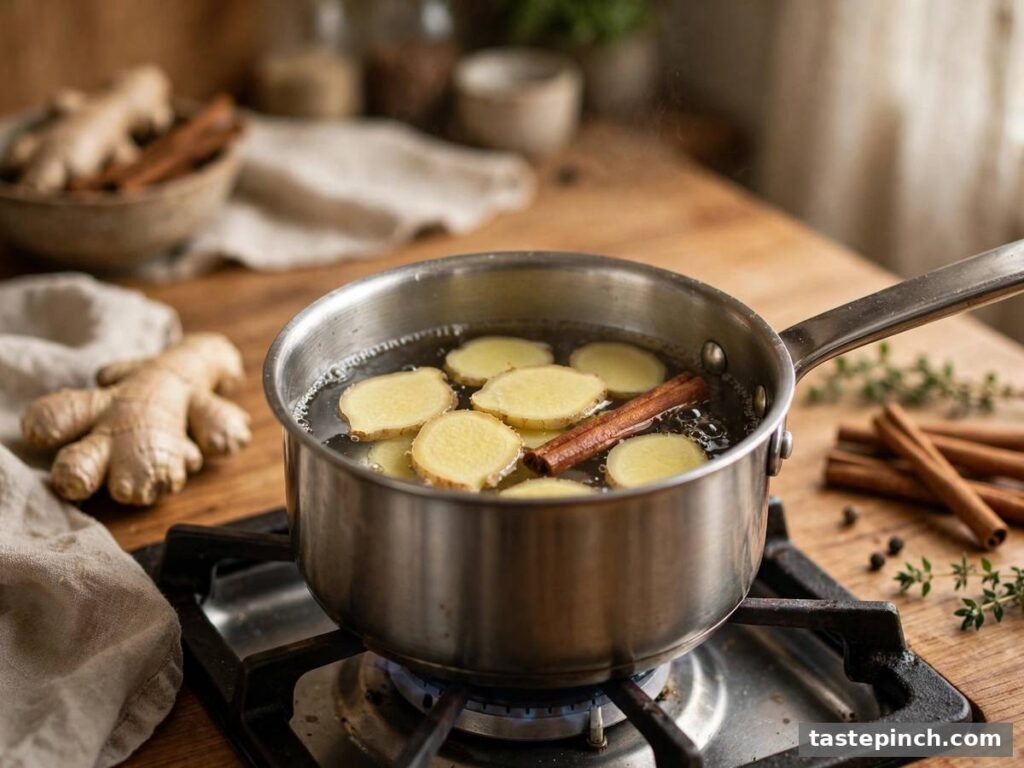
Step 3: Simmer the Tea
Reduce the heat and simmer the mixture for approximately 8–10 minutes.
Keep the saucepan uncovered or partially covered. The water will gradually develop a light golden-brown color.
For a stronger flavor, simmer for a few additional minutes. Avoid boiling aggressively because gentle simmering provides good flavor extraction without unnecessary evaporation.
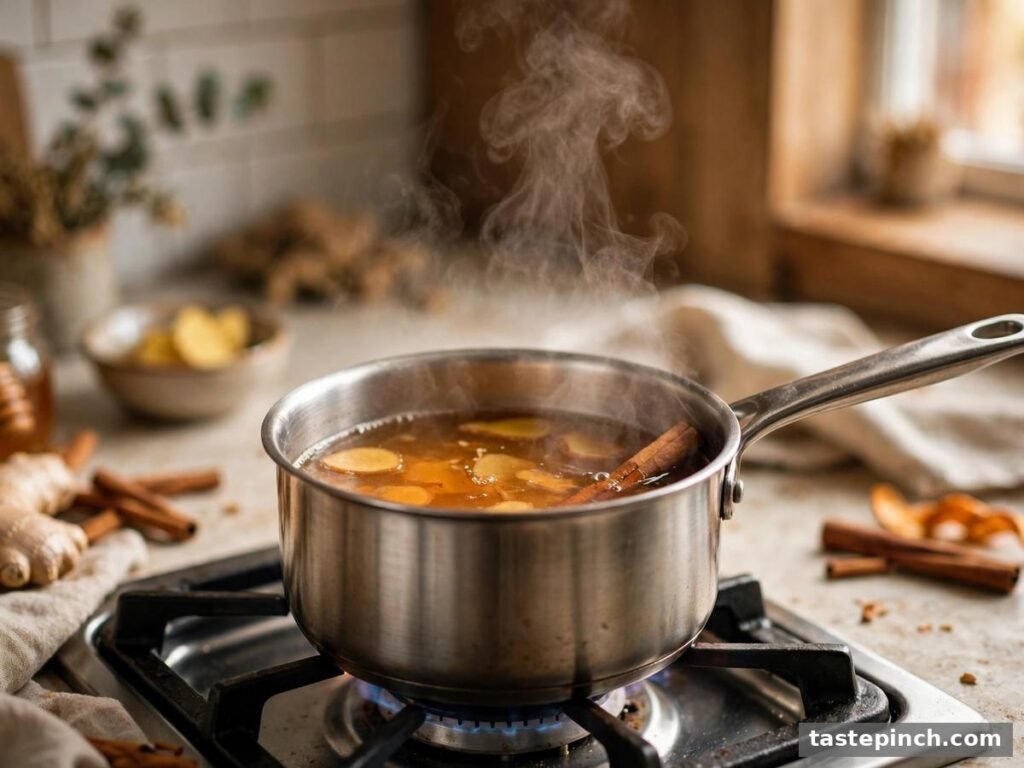
Step 4: Strain and Serve
Remove the saucepan from the heat. Carefully strain the drink into your favorite mug.
Discard the ginger slices and cinnamon stick.
Let the tea cool slightly before drinking. Stir in honey or lemon juice if desired.
Enjoy your freshly prepared ginger cinnamon tea while it’s warm.

Tips for the Best Ginger Cinnamon Tea
A few small adjustments can make a noticeable difference in flavor and consistency.
Use fresh ginger: Fresh ginger produces a brighter, more aromatic drink than dried ginger powder.
Slice ginger thinly: Thin pieces release flavor more efficiently during simmering.
Choose whole cinnamon sticks: They make straining easier and provide a balanced cinnamon flavor.
Adjust simmering time: Eight minutes creates a relatively mild infusion, while longer simmering produces a stronger taste.
Add honey after straining: This makes it easier to control sweetness.
Add lemon before serving: Fresh lemon gives the finished drink a pleasant citrus note.
Avoid excessive spices: Too much ginger or cinnamon can make the drink overpowering.
For a smoother cup, use a fine-mesh strainer to remove small ginger fibers.
What Are the Potential Benefits of Ginger Cinnamon Tea?
Ginger and cinnamon contain naturally occurring plant compounds that have attracted scientific interest. However, the benefits of consuming these ingredients in a homemade tea aren’t fully established.
It’s important to distinguish between traditional uses, laboratory findings, supplement studies, and research involving actual tea.
Contains Antioxidant Compounds
Ginger contains gingerols and related compounds, while cinnamon contains polyphenols and other naturally occurring plant substances.
These compounds have demonstrated antioxidant activity in laboratory research.
Antioxidants help protect cells from oxidative damage. However, drinking this particular tea hasn’t been proven to prevent diseases or provide specific clinical benefits.
Offers a Caffeine-Free Alternative
This recipe contains no black tea, green tea, coffee, or other naturally caffeinated ingredients.
That makes it a useful alternative when you want a warm drink without caffeine.
You can enjoy it in the morning or evening, depending on your preferences. Remember that adding caffeinated tea leaves would change this characteristic.
May Support Everyday Hydration
Water is the main ingredient in ginger cinnamon tea.
Drinking it contributes to your daily fluid intake, just like other nonalcoholic beverages.
If you enjoy flavored water but prefer something warm, this spiced infusion provides another way to maintain your hydration routine.
Ginger Has Been Studied for Digestive Comfort
Ginger has a long history of traditional use for digestive discomfort. Researchers have also investigated ginger preparations for nausea and other gastrointestinal concerns.
However, much of this research involves supplements, extracts, or specific ginger preparations.
You shouldn’t assume that one cup of ginger cinnamon tea produces the same effects as the doses used in clinical trials.
Cinnamon Contains Naturally Occurring Plant Compounds
Cinnamon contains compounds such as cinnamaldehyde and polyphenols.
Researchers have investigated cinnamon preparations for possible effects on blood sugar and other health markers. However, the evidence remains mixed, and research doesn’t establish this homemade tea as a treatment for diabetes, inflammation, or weight management.
Enjoy cinnamon for its flavor rather than relying on it for a medical outcome.
Easy Variations of Ginger Cinnamon Tea
The basic recipe is flexible. You can adjust the flavor using a few simple ingredients without changing its main character.
Ginger Cinnamon Lemon Tea
Add one or two teaspoons of fresh lemon juice after straining. Lemon provides a refreshing citrus flavor that balances the warmth of ginger and cinnamon.
You can also add a thin lemon slice as a garnish.
Ginger Cinnamon Honey Tea
Stir half a teaspoon of honey into the finished drink. Add a little more if you prefer a sweeter taste.
Honey complements cinnamon’s natural sweetness and reduces the sharpness of ginger.
Stronger Ginger Cinnamon Tea
If you enjoy bold flavors, increase the ginger slightly or simmer the ingredients for a few additional minutes.
Start with a small adjustment because too much ginger can make the drink excessively spicy.
Iced Ginger Cinnamon Tea
Prepare the recipe as usual and allow it to cool completely. Refrigerate it until chilled, then pour it over ice.
Add lemon slices for a refreshing caffeine-free drink.
How to Store Ginger Cinnamon Tea
Freshly brewed ginger cinnamon tea tastes best immediately after preparation.
However, you can prepare a little extra and save it for later.
Allow the tea to cool, then transfer it to a clean, covered container. Refrigerate promptly and use it within 2–3 days for the best quality.
When you’re ready to drink it, reheat the desired amount gently on the stovetop or in a microwave-safe mug.
Avoid leaving prepared tea at room temperature for extended periods. Discard it if you notice an unusual smell, appearance, or taste.
For the freshest flavor, add honey and lemon just before serving rather than during storage.
Is Ginger Cinnamon Tea Safe to Drink?
Ginger cinnamon tea is made with familiar culinary ingredients, but natural ingredients aren’t automatically suitable for everyone.
The quantity and frequency of consumption matter, particularly when using cinnamon regularly.
Pregnancy: Some traditional herbal references caution against cinnamon tea during pregnancy because of concerns about possible uterine stimulation or contractions. This warning isn’t established proof that an ordinary culinary-strength cup causes contractions. Nevertheless, avoid medicinal-strength cinnamon infusions during pregnancy unless your obstetric healthcare professional specifically approves them.
Liver concerns: Cassia cinnamon contains coumarin, a naturally occurring compound that can affect the liver when consumed in excessive amounts over time. People with liver disease should discuss regular cinnamon consumption with their healthcare professional. Ceylon cinnamon generally contains much less coumarin.
Medication interactions: People taking blood-thinning medication, diabetes medication, or other prescription drugs should ask a healthcare professional about frequent consumption of concentrated ginger or cinnamon preparations.
Digestive sensitivity: Ginger and cinnamon may cause heartburn, stomach irritation, or other digestive discomfort in some people, especially in larger quantities.
For an occasional culinary beverage, use modest amounts rather than preparing highly concentrated mixtures.
Frequently Asked Questions
Is ginger cinnamon tea caffeine-free?
Yes. Ginger cinnamon tea made with fresh ginger, cinnamon sticks, and water is naturally caffeine-free. It contains no traditional tea leaves or coffee ingredients.
Can you drink ginger cinnamon tea every day?
Many healthy adults can enjoy modest amounts of ginger and cinnamon as part of their regular diet. However, research hasn’t established an ideal daily amount for this particular tea. Frequent consumption of concentrated cinnamon, especially cassia, deserves additional caution because of its coumarin content.
Does ginger cinnamon tea help with weight loss?
There isn’t sufficient clinical evidence to show that ginger cinnamon tea directly causes weight loss. Drinking an unsweetened cup instead of a high-calorie beverage may help reduce overall calorie intake, but the tea itself isn’t a weight-loss treatment.
Can you make ginger cinnamon tea with ground cinnamon?
Yes. You can substitute approximately ¼ teaspoon of ground cinnamon for one small cinnamon stick. Ground cinnamon may leave sediment at the bottom of your cup, so strain it carefully if you prefer a smoother drink.
Is ginger cinnamon tea better than plain ginger tea?
Neither is universally better. Plain ginger tea has a more direct, peppery ginger flavor, while ginger cinnamon tea offers additional sweetness and warmth from cinnamon. The best choice depends on your taste preferences.
Can you drink ginger cinnamon tea at night?
Yes. This recipe is naturally caffeine-free, so it doesn’t contain caffeine that would normally interfere with sleep. However, individual responses to spicy ingredients vary. If ginger or cinnamon causes heartburn, avoid drinking it close to bedtime.
How long should you boil ginger and cinnamon for tea?
Simmer fresh ginger and a cinnamon stick for approximately 8–10 minutes for this recipe. You can extend the simmering time slightly if you prefer a stronger infusion.
Can you reuse a cinnamon stick for another cup?
You can reuse a cinnamon stick once, but the second infusion will generally have a milder flavor. Fresh ginger and cinnamon usually provide the most aromatic results.
Final Thoughts
Ginger cinnamon tea is a simple, comforting drink that combines the spicy character of fresh ginger with cinnamon’s naturally sweet aroma. You only need a few ingredients and approximately 10 minutes to prepare it.
Enjoy it plain, add honey for sweetness, or finish it with fresh lemon. Its caffeine-free nature also makes it a convenient alternative to traditional tea and coffee.
As with other herbal drinks, enjoy it in moderation and remember that potential ingredient benefits shouldn’t be confused with proven medical effects.
For another spiced herbal infusion with ginger, try our Costa Rican tea recipe weight loss guide.
More from TastePinch
Looking for more refreshing drinks, simple recipes, and everyday wellness ideas? Explore these related TastePinch articles: TastePinch homepage, Does Herbal Tea Break a Fast?, Lemon Water 7 Day Challenge, Hydrogen Water for Weight Loss, Apple Cider Vinegar Drink, Ginger Tea.

Ginger Cinnamon Tea
Ingredients
Method
- Wash and thinly slice the fresh ginger.
- Add water, ginger slices, and cinnamon stick to a small saucepan.
- Bring to a gentle boil over medium heat.
- Reduce heat and simmer for 8–10 minutes.
- Remove from heat and strain into a mug.
- Add optional honey and lemon juice.
- Serve warm.
Notes

Dana Whitfield is a recipe developer and food writer with a love for bold flavors and creative drinks. From restaurant copycat recipes to handcrafted cocktails like the Pistachio Martini and Blackberry Margarita, Dana believes great food should be approachable — no culinary school required. She’s spent years testing and perfecting recipes across cuisines, specialty diets, and everything in between. TastePinch is her corner of the internet where every pinch of flavor tells a story.