

Ginger tea is a simple, caffeine-free herbal drink made by steeping fresh ginger root in hot water. You only need two ingredients: fresh ginger and water. Slice the ginger, simmer it for about 10 minutes, then strain the warm liquid into your favorite mug. Add honey or lemon if you like, but plain ginger tea tastes delicious on its own.
This homemade ginger tea has a naturally spicy, warming flavor that works well in the morning or after meals. Ginger also contains plant compounds called gingerols, which researchers have studied for their potential health effects. However, drinking ginger tea isn’t the same as taking concentrated ginger supplements. Here’s how to brew a fresh cup and understand what its benefits may actually be.
Medical disclaimer: This article provides general food and nutrition information, not medical advice. Ginger tea isn’t a treatment for medical conditions. If you’re pregnant, take medication, or have an ongoing health concern, ask your healthcare professional about regular ginger consumption.
What Is Ginger Tea?
Ginger tea is a caffeine-free herbal infusion made by steeping fresh ginger root in hot water. Unlike traditional black or green tea, it doesn’t contain leaves from the Camellia sinensis plant.
The main ingredient is ginger, botanically known as Zingiber officinale. This aromatic root has a distinctive spicy flavor and a long history of culinary use across Asian and other international cuisines.
When fresh ginger meets hot water, it releases flavorful compounds that give the drink its characteristic warmth. The resulting infusion usually has a pale golden color and a clean, slightly peppery taste.
Plain ginger tea contains just two ingredients:
Fresh ginger root
Drinking water
You can enjoy it without sweeteners or additional flavors. Honey and lemon are optional additions, not essential ingredients.
For this recipe, we’re keeping things simple. It isn’t a ginger cinnamon blend or a complicated wellness drink. It’s the everyday ginger infusion that you can prepare in your kitchen in approximately 10 minutes.
You can learn more about this drink in the Wikipedia guide to ginger tea.
How to Make Ginger Tea at Home
Making ginger tea from fresh ginger root is straightforward. You don’t need special equipment, tea bags, or complicated preparation techniques.
The easiest method is to slice fresh ginger and gently simmer it in water. This helps release its flavor and creates a more noticeable ginger infusion.
Ingredients You’ll Need
Fresh ginger: Use one small, approximately 1-inch piece of fresh ginger root.
Water: One cup of clean drinking water.
Honey (optional): Add a little if you prefer a sweeter drink.
Fresh lemon (optional): A small squeeze adds a bright citrus flavor.
Fresh ginger is the star of this recipe. Choose a firm piece with smooth skin and a fresh, spicy aroma.

Step-by-Step Instructions
Wash the ginger root.
Rinse the ginger under cool running water. Use your fingers or a clean vegetable brush to remove dirt from the skin.
You can peel it with a spoon or leave the skin on after washing. Peeling is optional when the ginger is clean and fresh.
Slice the ginger thinly.
Cut a roughly 1-inch piece of ginger into thin slices. Thin pieces expose more surface area to the water, helping release the ginger’s flavor.
You can also grate the ginger if you prefer a stronger, more intense infusion. However, sliced ginger is easier to strain.

Add ginger and water to a saucepan.
Place the ginger slices into a small saucepan. Pour in one cup of drinking water.
Make sure the ginger pieces are submerged so they can infuse evenly.
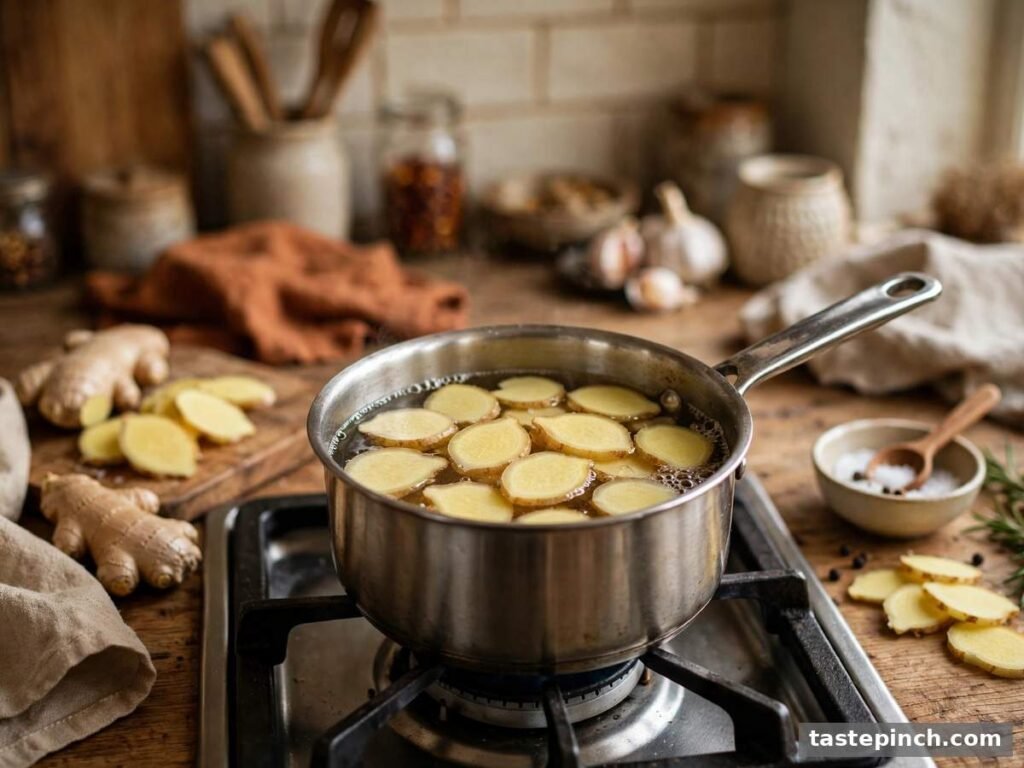
Bring the mixture to a gentle boil.
Heat the saucepan over medium heat until the water begins to boil. Then lower the heat and let everything simmer gently for approximately 10 minutes.
Keep an eye on the saucepan to prevent excessive evaporation.

Strain and serve.
Remove the saucepan from the heat. Pour the liquid through a fine-mesh strainer into your favorite mug.
Discard the ginger pieces or save them for another culinary use if appropriate.

Add optional honey or lemon.
Taste your freshly brewed ginger tea. Add a little honey or fresh lemon juice if desired.
Enjoy it warm while the ginger aroma is fresh.
How to Make Ginger Tea Taste Better
Plain ginger tea has a naturally spicy, earthy flavor. Some people enjoy this clean taste, while others prefer a little sweetness.
You don’t need to change the basic recipe to make it more enjoyable.
Here are a few simple adjustments:
For a milder taste: Use fewer ginger slices and reduce the simmering time.
For stronger ginger flavor: Add a little more fresh ginger or simmer it longer.
For sweetness: Stir in a small amount of honey.
For citrus flavor: Add freshly squeezed lemon juice.
For a lighter drink: Add a little more hot water after straining.
Start with a mild brew if you’re new to ginger tea. You can gradually adjust the ginger quantity to suit your taste.
Remember that stronger tea isn’t automatically healthier. A concentrated drink may also cause discomfort in people who are sensitive to ginger.
What Is Ginger Tea Best For?
Ginger tea is popular because it’s warm, flavorful, and easy to prepare. Many people enjoy it after meals or as a comforting alternative to coffee and traditional tea.
Ginger has also been investigated for several possible health effects. However, it’s important to distinguish research involving ginger supplements or standardized preparations from research involving an ordinary homemade cup.
Some people enjoy ginger tea for:
A warming drink during cold weather.
A caffeine-free alternative to regular tea.
A flavorful beverage after a meal.
A simple way to include fresh ginger in their diet.
A comforting drink when they want something warm.
These are practical reasons to enjoy ginger tea, not guarantees of medical benefits.
Health Benefits of Ginger Tea
Fresh ginger contains naturally occurring plant compounds, including gingerols and shogaols. Researchers have studied these compounds for their antioxidant, anti-inflammatory, and gastrointestinal effects.
However, many clinical studies use ginger powder, capsules, extracts, or measured doses. A homemade infusion contains a variable amount of ginger compounds, depending on the quantity of root, water, and brewing time.
Here are some potential benefits worth understanding.
1. Provides Ginger’s Naturally Occurring Plant Compounds
Ginger contains gingerols, particularly 6-gingerol, which contributes to its distinctive spicy taste.
Research has investigated ginger’s antioxidant activity and its potential influence on inflammatory processes.
Fresh ginger tea can provide an enjoyable way to consume ginger as part of a varied diet. However, the amount of these compounds in each cup isn’t standardized.
2. May Support Digestive Comfort
Ginger has a history of traditional use for digestive discomfort. Researchers have investigated its effects on gastrointestinal movement and stomach emptying.
Some people find a warm ginger drink comforting after eating.
However, don’t assume that every finding involving ginger supplements applies equally to homemade tea. The strength and concentration of the preparation matter.
Also, ginger doesn’t suit everyone. People with acid reflux or sensitive stomachs may experience heartburn or irritation.
3. Ginger Has Been Studied for Nausea
One of the best-known areas of ginger research involves nausea.
Studies have investigated ginger preparations for different types of nausea, including pregnancy-related nausea and nausea associated with certain medical treatments.
However, this doesn’t establish that a regular cup of ginger tea will provide the same results. Research doses and preparations can differ significantly from homemade drinks.
If nausea is persistent, severe, or associated with dehydration, seek medical advice instead of relying on tea.
4. Contains Compounds Studied for Inflammatory Effects
Gingerols and other ginger compounds have attracted scientific interest because of their potential effects on inflammatory pathways.
Some studies suggest ginger preparations may influence certain inflammatory markers.
Nevertheless, these findings don’t establish plain ginger tea as an anti-inflammatory treatment. More research is needed to understand the effects of ordinary dietary preparations.
5. Offers a Naturally Caffeine-Free Drink
One straightforward benefit of plain ginger tea is that it doesn’t contain caffeine.
That’s because the recipe uses fresh ginger root and water rather than traditional tea leaves.
You can enjoy it when you want a warm beverage without the caffeine found in coffee, black tea, or green tea.
It’s also a useful alternative when you’re trying to reduce sweetened drinks. Just remember that adding honey increases the drink’s sugar and calorie content.
Ginger Tea Caffeine Content
Does ginger tea contain caffeine? No. Plain ginger tea made with fresh ginger root and water is naturally caffeine-free.
Ginger isn’t a traditional tea leaf. It’s a rhizome, an underground plant stem commonly used as a culinary ingredient.
This distinction matters because some commercial ginger tea products contain additional ingredients.
For example, a ginger blend may include:
Black tea
Green tea
White tea
Other caffeinated ingredients
Always check the ingredient label if you’re avoiding caffeine.
Homemade ginger tea is a straightforward choice because you control everything that goes into your cup.
How to Serve Ginger Tea
Fresh ginger tea tastes best when served warm, shortly after brewing.
Pour the strained infusion into a ceramic mug or heat-resistant glass. Let it cool slightly before drinking.
You can serve it plain or add a small amount of honey or lemon.
For warmer days, allow the tea to cool before refrigerating it in a covered container. Serve it over ice for a refreshing alternative.
If you enjoy exploring homemade drinks, visit the TastePinch homepage for more simple beverage ideas.
You may also enjoy our Ginger Cinnamon Tea recipe. It’s a separate spiced drink that combines ginger with cinnamon, rather than the plain ginger-and-water infusion featured here.
Ginger Tea Side Effects and Precautions
Ginger is commonly consumed as a food ingredient, and ordinary culinary amounts are generally well tolerated by many adults.
However, consuming ginger can cause unwanted effects in some people, particularly when the preparation is strong or the amount is excessive.
Possible side effects include:
Heartburn or acid reflux.
Stomach discomfort.
Gas or bloating.
Diarrhea.
Mouth or throat irritation.
If ginger tea causes discomfort, try a weaker preparation or stop drinking it.
Who Should Be Careful With Ginger Tea?
Some people should discuss regular or increased ginger consumption with a healthcare professional.
People taking blood-thinning medication: Ginger may have effects on blood clotting, particularly at higher or supplemental doses. Discuss regular consumption with your healthcare professional rather than assuming every preparation carries the same risk.
People with acid reflux: Ginger may aggravate heartburn in some individuals. A weaker drink may be more comfortable, but stop if symptoms worsen.
Pregnant individuals: Ginger has been studied for pregnancy-related nausea, but supplement research shouldn’t be treated as proof that every ginger preparation is appropriate for every pregnancy. Ask your healthcare professional about your circumstances.
People taking prescription medication: If you’re considering consuming unusually large amounts of ginger or using concentrated ginger products, check for possible interactions with your medication.
A normal food-based drink and a concentrated supplement aren’t interchangeable. Don’t use ginger tea to replace prescribed treatment.
Frequently Asked Questions About Ginger Tea
Is It Safe to Drink Ginger Tea Every Day?
Many healthy adults can enjoy ordinary food-based ginger tea regularly without experiencing problems. However, there’s no universal daily amount that suits everyone.
The strength of homemade tea varies according to how much ginger you use and how long you brew it.
If you take medication, have a medical condition, or experience heartburn after drinking ginger tea, ask your healthcare professional about regular consumption.
Is It OK to Drink Ginger Tea Before Bed?
Yes. Plain ginger tea contains no caffeine, so it doesn’t have the caffeine-related stimulation associated with coffee or traditional tea.
However, some people experience heartburn or stomach discomfort after consuming ginger. If this happens to you, avoid drinking it close to bedtime.
What Is the Best Time to Drink Ginger Tea?
There’s no scientifically established best time for everyone.
You can enjoy ginger tea in the morning, after meals, or during the afternoon. Choose a time that fits your routine and doesn’t cause digestive discomfort.
Because plain ginger tea is caffeine-free, you don’t need to schedule it around caffeine consumption.
What Does Ginger Do to the Body?
Ginger contains natural compounds such as gingerols and shogaols. Researchers have investigated their potential antioxidant, anti-inflammatory, and gastrointestinal effects.
Some studies involving specific ginger preparations have reported benefits for certain types of nausea and other health outcomes.
However, these findings shouldn’t be interpreted as proof that ordinary ginger tea produces the same effects. The preparation, dose, and individual circumstances all matter.
Does Ginger Tea Contain Caffeine?
No. Homemade ginger tea prepared using only fresh ginger root and water is naturally caffeine-free.
However, packaged blends may include black tea, green tea, or other caffeinated ingredients. Check the label before purchasing.
Can I Make Ginger Tea Without Peeling the Ginger?
Yes. Peeling fresh ginger isn’t necessary if you wash it thoroughly.
Use a clean vegetable brush to remove dirt from the skin. Then slice the root and add it directly to the water.
If the ginger is old, damaged, or difficult to clean, peeling it with a spoon is a practical option.
Can I Drink Ginger Tea Without Honey or Lemon?
Absolutely. Plain ginger tea needs only fresh ginger and water.
Honey and lemon are optional additions that change the flavor. You can leave them out if you prefer an unsweetened drink or want to keep the recipe as simple as possible.
Final Thoughts
Homemade ginger tea is one of the easiest ways to enjoy fresh ginger. It requires minimal preparation, uses everyday ingredients, and delivers a naturally spicy, warming flavor.
The basic method is simple: slice fresh ginger, simmer it in water for approximately 10 minutes, and strain it into a mug.
You can drink it plain or add a little honey or lemon. Enjoy it as a caffeine-free beverage and part of a balanced eating routine.
Although ginger contains interesting plant compounds, don’t treat homemade ginger tea as a cure or assume it provides the same effects as concentrated supplements.
Brew a fresh cup, adjust the strength to your taste, and enjoy the simplicity of this everyday drink.
More from TastePinch
Explore more homemade drinks and wellness-focused recipes from TastePinch: TastePinch homepage, Ginger Cinnamon Tea, Does Herbal Tea Break a Fast, Lemon Water 7 Day Challenge, Natural GLP-1 Drink, Hydrogen Water for Weight Loss.

Ginger Tea
Ingredients
Method
- Wash the fresh ginger root thoroughly.
- Peel it if desired.
- Cut the ginger into thin slices.
- Add the ginger slices and water to a small saucepan.
- Bring the water to a gentle boil over medium heat.
- Reduce the heat and simmer for approximately 10 minutes.
- Remove the saucepan from the heat.
- Strain the tea into a mug.
- Add honey or fresh lemon juice if desired.
- Serve warm.
Notes

Dana Whitfield is a recipe developer and food writer with a love for bold flavors and creative drinks. From restaurant copycat recipes to handcrafted cocktails like the Pistachio Martini and Blackberry Margarita, Dana believes great food should be approachable — no culinary school required. She’s spent years testing and perfecting recipes across cuisines, specialty diets, and everything in between. TastePinch is her corner of the internet where every pinch of flavor tells a story.