

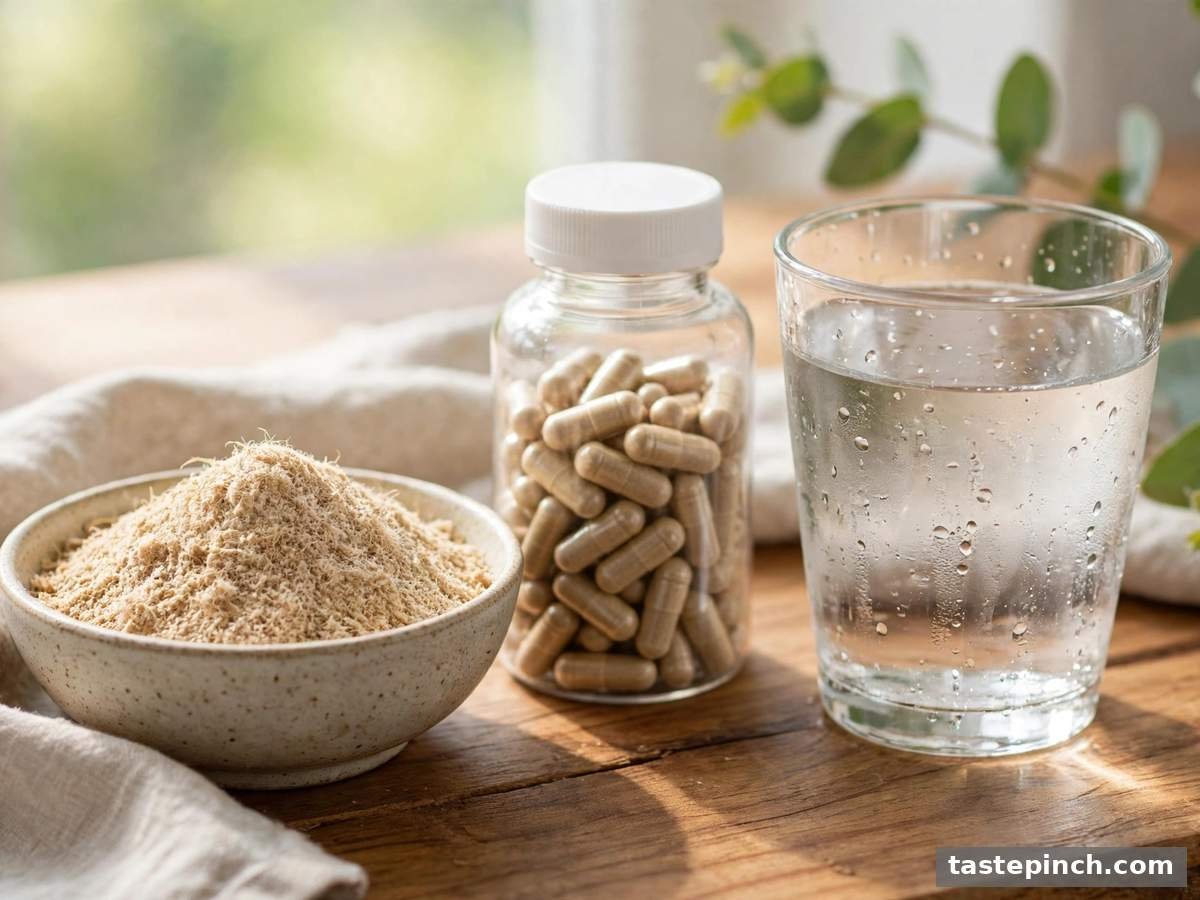
Choosing between psyllium husk powder and capsules can feel confusing, especially when both contain the same type of fiber. The main difference comes down to convenience, serving size, cost, taste, and how easily you can adjust your intake. Powder usually offers more flexibility and better value, while capsules provide a simpler, portable option without the thick texture of mixed fiber drinks.
Important medical disclaimer: Psyllium is a fiber supplement, not a medicine or a proven treatment for any health condition. Always take it with enough water, including a full glass with every dose. Never swallow psyllium powder dry. Start with a small amount and increase gradually according to the product label. Psyllium can interact with medications, so ask your doctor or pharmacist about timing. Anyone with swallowing difficulties, a history or risk of bowel obstruction, or who is pregnant or breastfeeding should consult a healthcare professional before using it.
At TastePinch, we believe choosing a supplement should be about understanding what you’re taking and how it fits your routine. Let’s compare both forms so you can make an informed decision.
What Is Psyllium Husk and How Does It Work?
Psyllium husk is a natural, plant-based fiber obtained from the seeds of Plantago ovata. This plant grows mainly in India and other parts of Asia. Its outer seed covering contains soluble and insoluble dietary fiber.
Psyllium is especially known for its ability to absorb water. When it comes into contact with liquid, it swells and forms a thick, gel-like substance. This property makes it a popular ingredient in fiber supplements.
You can find psyllium in several forms, including:
- Fine psyllium husk powder.
- Whole psyllium husks.
- Psyllium husk capsules.
- Flavored fiber powders containing psyllium.
Psyllium is often used by people who want to increase their daily fiber intake. However, supplements shouldn’t replace fiber-rich foods such as vegetables, fruits, beans, oats, and whole grains.
You can learn more about this plant-based fiber through the psyllium overview.
What Makes Psyllium Different From Other Fiber Supplements?
Psyllium contains a substantial amount of soluble fiber. This fiber absorbs water and creates a viscous gel rather than dissolving completely into a thin liquid.
Different fiber supplements have different properties. For example, wheat dextrin, inulin, and methylcellulose don’t behave exactly like psyllium.
Psyllium’s gel-forming property is one reason manufacturers offer it in both powder and capsule formats.
Psyllium Husk Powder vs Capsules: What’s the Difference?
Psyllium powder and capsules contain the same basic fiber ingredient. The biggest difference is how manufacturers package and prepare it.
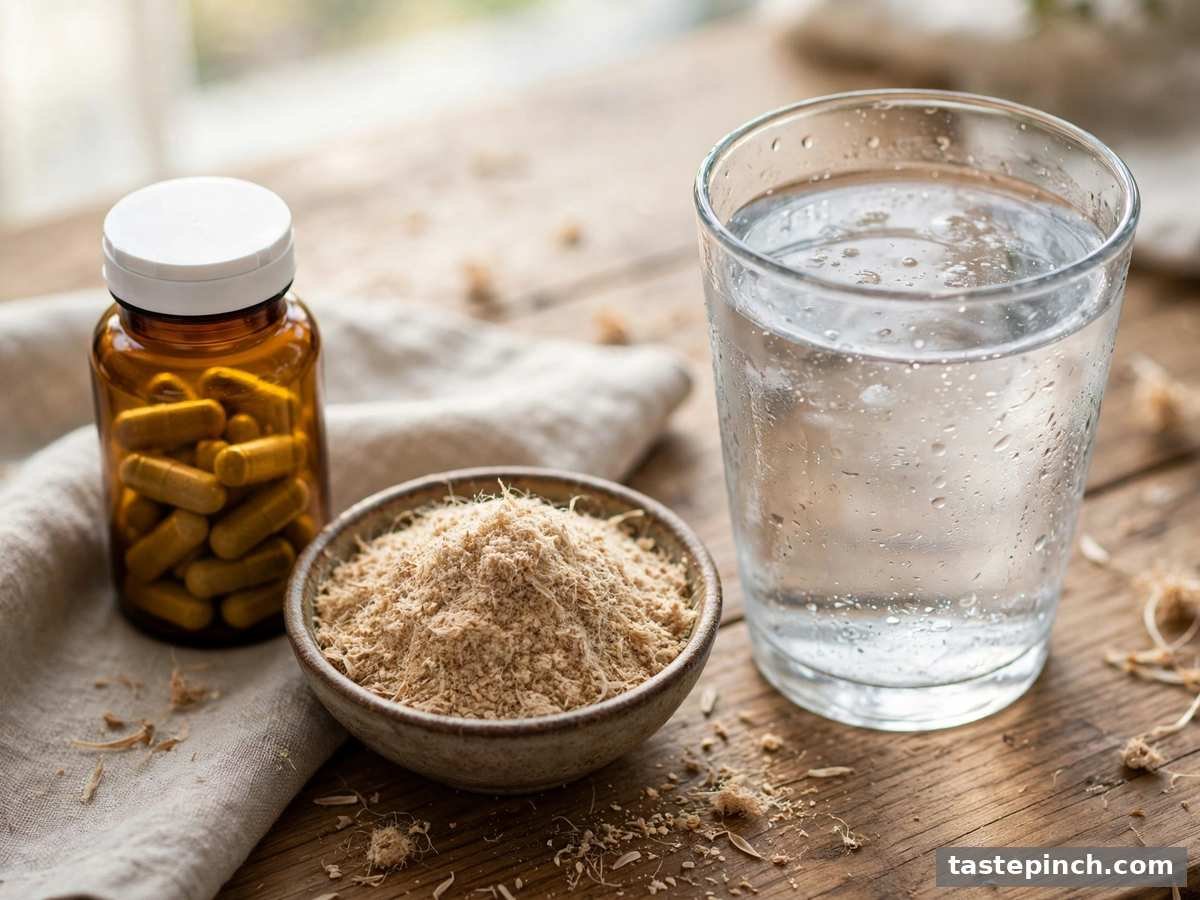
Powder comes in a loose form that you measure and mix with liquid. Capsules contain measured amounts of psyllium inside small shells that you swallow with water.
Neither format is automatically superior. The amount of psyllium and dietary fiber per serving matters more than the packaging.
Here are the main differences:
1. Serving Size and Fiber Content
Psyllium powder generally provides more fiber in a single measured serving than capsules.
A typical powder serving may contain several grams of psyllium. Capsule servings often contain smaller amounts because each capsule has limited space.
For example, some supplement labels list approximately 500 mg of psyllium per capsule. A serving containing several capsules may therefore provide only a few grams of the ingredient.
However, these amounts vary considerably between manufacturers.
Always check three details on the package:
- Psyllium husk weight per serving.
- Total dietary fiber per serving.
- Number of capsules or scoops in one serving.
Remember that the weight of psyllium isn’t always identical to the amount of dietary fiber listed on the Nutrition Facts or Supplement Facts panel.
2. Cost and Value for Money
Powder is often more economical when you compare the price per gram of psyllium.
A single container can provide multiple servings without requiring you to purchase a large number of individual capsules.
Capsules may cost more per comparable amount of fiber. Their manufacturing, packaging, and convenience can contribute to the difference.
However, prices depend on the brand, ingredients, container size, and retailer.
To compare products fairly, calculate the price per gram of labeled dietary fiber rather than comparing the price of two containers.
3. Convenience and Portability
Capsules have an advantage when convenience matters.
You don’t need a measuring spoon, mixing glass, or stirring utensil. You can carry a bottle in your bag and follow its serving instructions when needed.
Powder requires a little preparation. You must measure it, mix it with liquid, and drink it promptly before it becomes too thick.
This difference can matter when traveling, working outside the home, or maintaining a busy schedule.
4. Taste and Texture
Taste is another important difference between the two forms.
Plain psyllium powder has a mild, earthy taste. However, its texture can become thick, slippery, or slightly gritty after mixing with water.
Some people dislike this consistency, particularly when the mixture sits for several minutes.
Capsules avoid most of these taste and texture concerns because the psyllium stays inside the capsule until swallowed.
Flavored powders offer another option, although you should check their added sugars, sweeteners, flavors, and other ingredients.
5. Speed and Preparation
Neither format should be considered a faster-acting version simply because of its packaging.
Both contain psyllium, and the fiber’s behavior depends on its ability to absorb water and form a gel.
Powder begins thickening when mixed with liquid. That’s why manufacturers generally recommend drinking it immediately after preparation.
Capsules don’t require mixing, but they still need enough water to pass safely through the digestive tract.
The time needed to notice any change varies between individuals. Don’t assume that capsules or powder will produce immediate results.
6. Flexibility in Adjusting Serving Sizes
Powder offers more flexibility because you can measure smaller quantities according to the product’s directions.
This can be useful when someone is gradually introducing additional fiber into their diet.
Capsules provide fixed amounts. Adjusting the total serving may require taking more or fewer capsules, depending on the label.
However, flexibility doesn’t mean you should independently increase your intake beyond the manufacturer’s instructions or your healthcare professional’s recommendations.
Psyllium Husk Powder vs Capsules: Comparison Table
| Feature | Psyllium Powder | Psyllium Capsules |
|---|---|---|
| Main ingredient | Psyllium husk | Psyllium husk |
| Form | Loose powder | Encapsulated powder |
| Serving measurement | Scoop or spoon | Number of capsules |
| Fiber per serving | Often higher | Often lower |
| Cost per gram | Often lower | Often higher |
| Taste | Mild, earthy | Usually no noticeable taste |
| Texture | Can become thick | No drink texture |
| Preparation | Requires mixing | Requires swallowing |
| Portability | Less convenient | More convenient |
| Dose flexibility | Generally greater | Limited by capsule size |
| Water requirement | Full glass per dose | Full glass per dose |
| Best suited for | Home routines | Travel and convenience |
Actual fiber amounts, serving sizes, and costs depend on the individual product label.
What Are the Benefits of Psyllium Husk Powder?
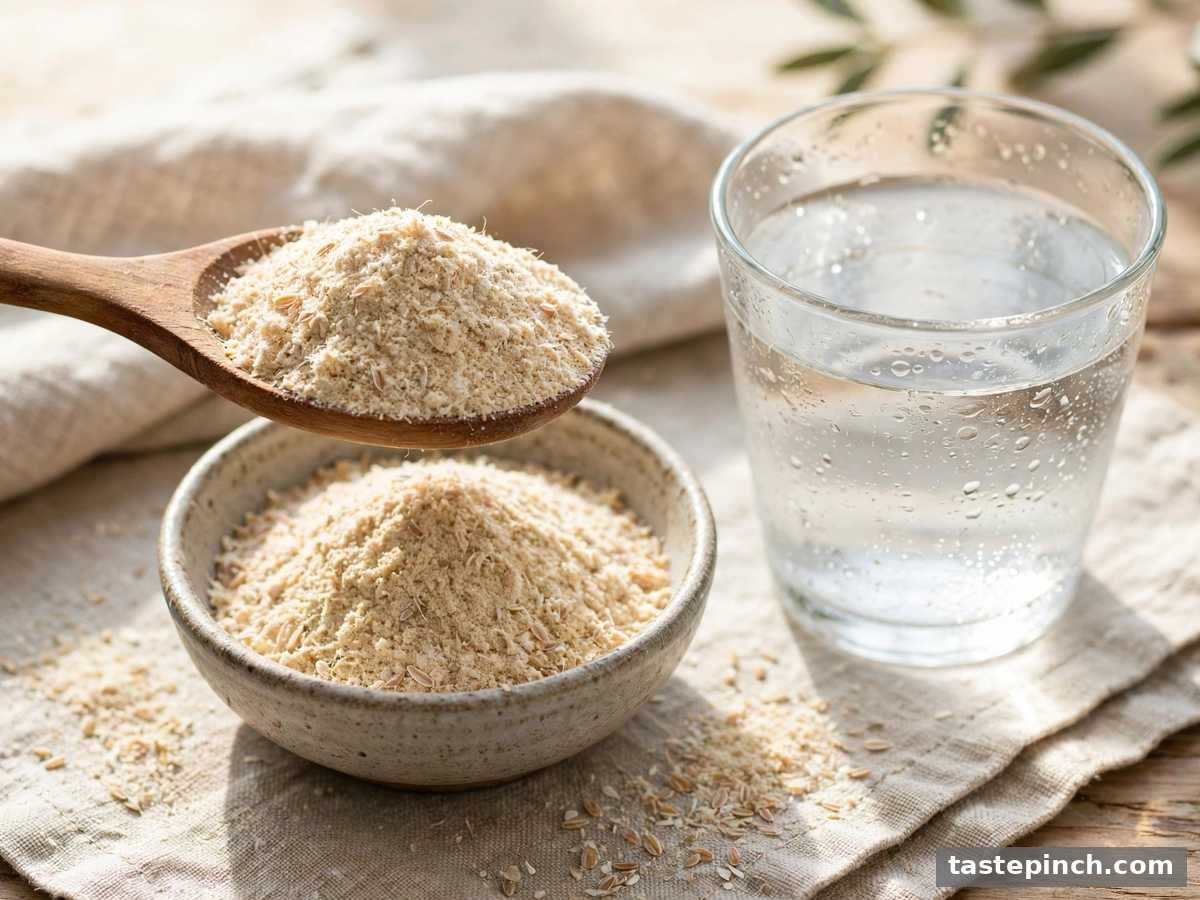
Psyllium powder offers several practical advantages for people who want to increase their dietary fiber intake.
1. More Fiber in a Single Serving
Many powder products provide several grams of fiber in one serving.
This can make it easier to incorporate a meaningful amount of psyllium into a daily routine without swallowing numerous capsules.
Check the actual dietary fiber amount because different formulations contain different concentrations.
2. Easier Serving Adjustments
Powder allows you to measure smaller amounts when introducing fiber gradually.
This can help people avoid suddenly increasing their fiber intake, which may cause temporary digestive discomfort.
Always follow the product’s preparation and serving instructions.
3. Often Better Value
Larger powder containers frequently provide more servings for the price.
People who use psyllium regularly may find this format more economical.
Compare the actual amount of fiber per dollar before choosing a product.
4. Multiple Ways to Mix It
Depending on the manufacturer’s directions, plain psyllium powder may be mixed into water or another suitable liquid.
Some people prefer incorporating it into a smoothie or yogurt.
However, never use a thick food mixture as a reason to skip the required water. Follow the product’s full-fluid instructions.
What Are the Disadvantages of Psyllium Husk Powder?
Powder isn’t the perfect choice for everyone.
Consider these potential disadvantages before purchasing it.
- Thick texture: It can become gel-like quickly after mixing.
- Preparation time: You need to measure and mix each serving.
- Taste: Some unflavored products have an earthy taste.
- Storage: Containers can create dust or spills if handled carelessly.
- Travel inconvenience: Carrying powder and measuring equipment isn’t always practical.
Another important consideration is preparation safety. Dry psyllium powder should never be swallowed directly.
What Are the Benefits of Psyllium Husk Capsules?
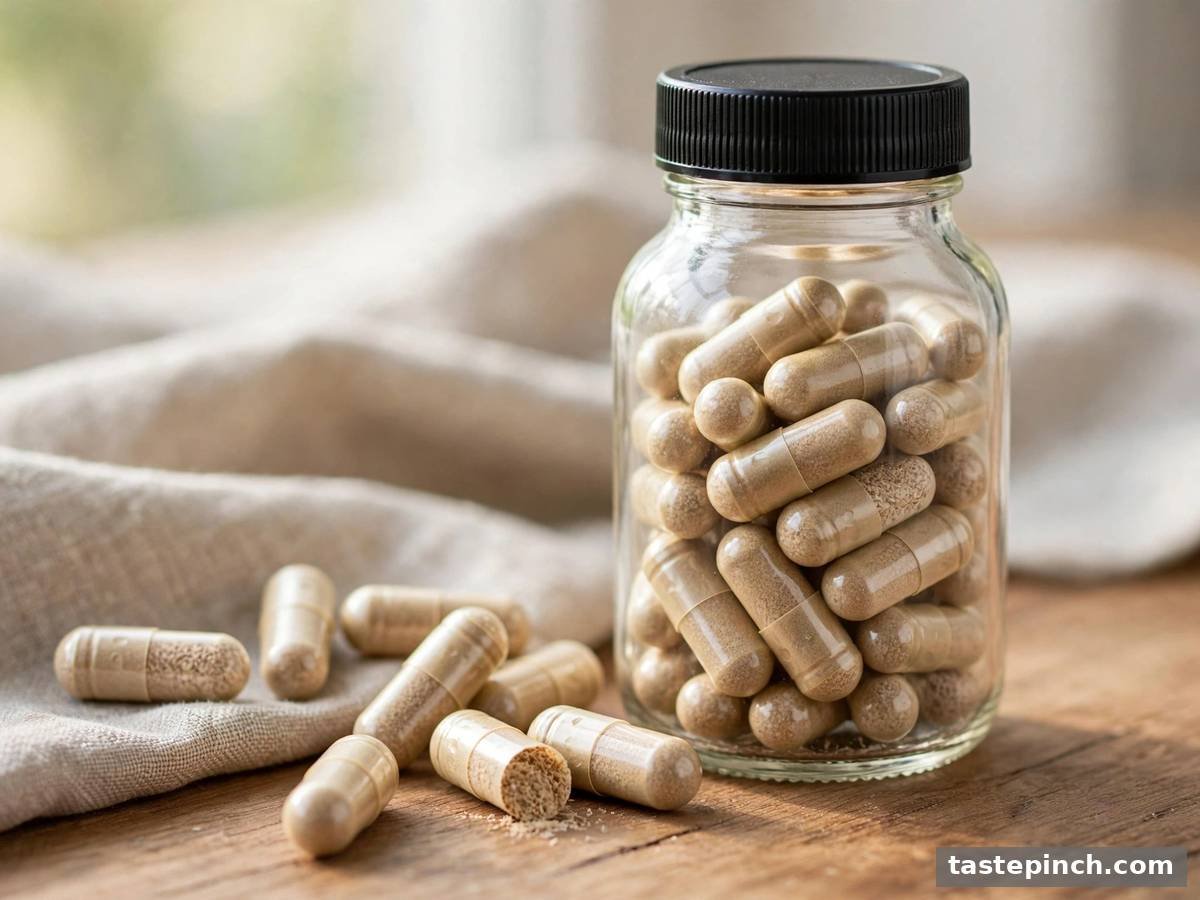
Capsules provide a convenient alternative for people who dislike mixing fiber powder.
1. Easy to Carry
Capsules come in bottles that fit easily into a handbag, backpack, or travel bag.
They can be useful when you spend considerable time away from home.
2. No Mixing Required
You don’t need to prepare a separate fiber drink.
Simply follow the product’s instructions and swallow each capsule with the required amount of water.
3. No Thick or Gritty Drink
Capsules eliminate the need to deal with psyllium’s gel-like texture.
This makes them appealing to people who dislike the consistency of fiber drinks.
4. Pre-Measured Servings
Each capsule contains a predetermined quantity of psyllium.
This makes it easier to follow a consistent serving routine without measuring loose powder.
However, you must still check how many capsules make up one labeled serving.
What Are the Disadvantages of Psyllium Husk Capsules?
Capsules also have limitations that deserve attention.
- More capsules may be necessary: Individual capsules often contain relatively small amounts of psyllium.
- Potentially higher cost: Comparable amounts of fiber may cost more in capsule form.
- Limited flexibility: You cannot adjust capsule contents as easily as loose powder.
- Swallowing difficulty: Some people find several capsules uncomfortable to swallow.
- Water is still necessary: Capsules aren’t a way to avoid the fluid requirement.
People who struggle to swallow pills should not assume capsules are the safer or easier option.
Which Is Better for Your Daily Routine?
The right choice depends on your preferences, product labels, and ability to follow preparation instructions.
Neither format has an established universal advantage simply because it comes as powder or capsules.
Here’s how different preferences may influence your decision.
Choose Psyllium Powder If:
- You prefer measuring your own servings.
- You want to compare products by fiber content and value.
- You don’t mind mixing a drink.
- You prefer having more control over serving adjustments.
- You usually take supplements at home.
Powder can be a practical choice for someone who wants a straightforward way to add psyllium to their daily routine.
Choose Psyllium Capsules If:
- You dislike thick fiber drinks.
- You prefer pre-measured servings.
- You travel frequently.
- You want a portable supplement.
- You find capsules comfortable to swallow.
Capsules may make a supplement routine simpler, provided you can swallow them comfortably and drink enough water.
Can You Switch Between Powder and Capsules?
Some people prefer powder at home and capsules when traveling.
Switching formats requires checking the labeled amounts carefully. One capsule isn’t necessarily equivalent to one teaspoon of powder.
Compare the total psyllium and dietary fiber amounts rather than assuming that one serving of each product is interchangeable.
Also, follow the fluid instructions for whichever product you’re using.
How to Take Psyllium Husk Powder Safely
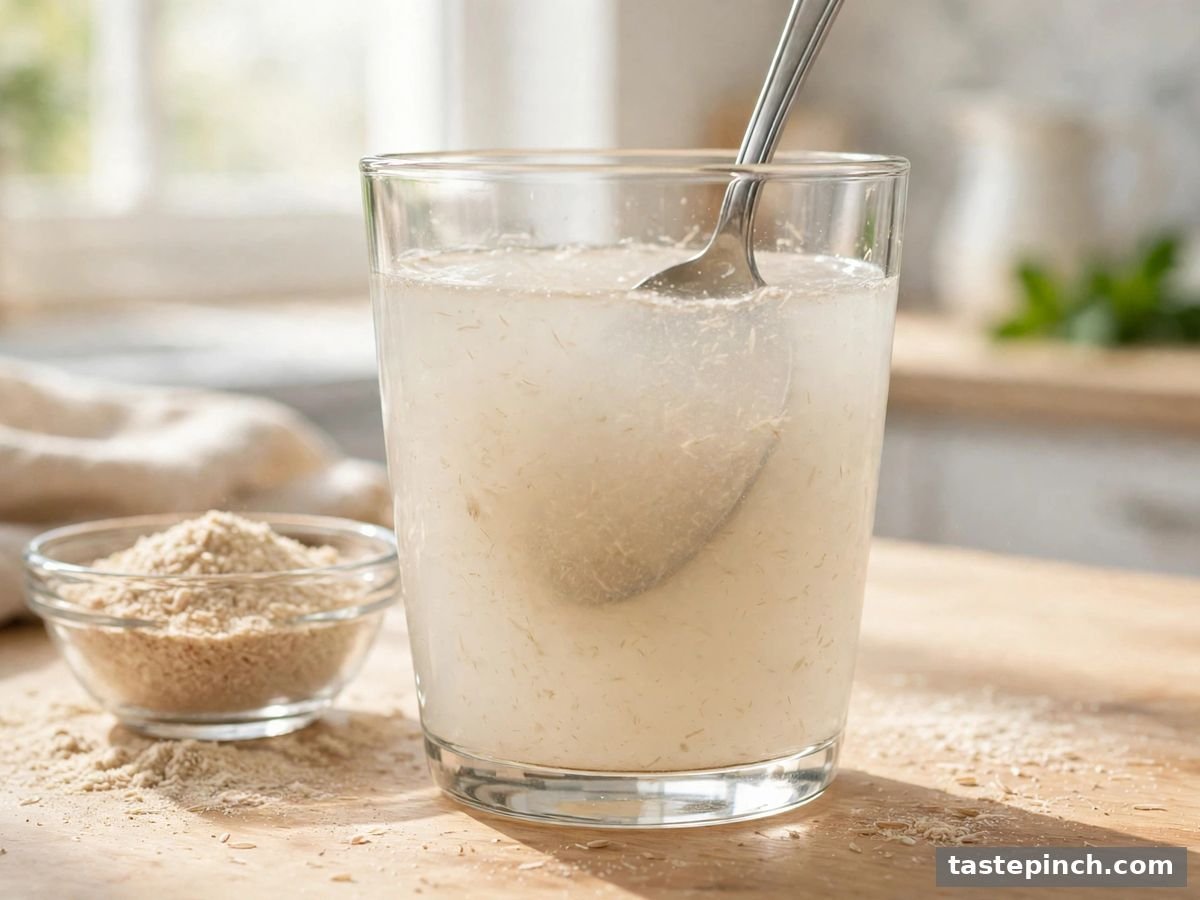
Taking psyllium correctly is essential because it absorbs water and expands.
Follow these general safety steps:
1. Read the Product Label
Different brands have different serving sizes and preparation instructions.
Check the recommended serving, water requirement, frequency, and warnings before using a product.
Don’t treat measurements from another brand as instructions for your own supplement.
2. Mix It With Enough Water
Always mix psyllium powder with enough liquid according to its label.
Use at least a full glass of water per dose, unless the product specifically requires more.
Stir thoroughly and drink immediately before the mixture becomes too thick.
Never swallow dry psyllium powder. Taking it without enough liquid can create a serious choking or blockage risk.
3. Start With a Small Amount
If you’re new to fiber supplements, avoid suddenly increasing your intake.
Follow the label’s starting instructions and increase gradually only as appropriate.
This approach may help your digestive system adjust and reduce temporary bloating or gas.
4. Keep Your Water Intake Adequate
Psyllium needs liquid to swell properly.
Continue drinking enough fluids throughout the day, considering your individual hydration needs and any fluid restrictions recommended by your healthcare professional.
How to Take Psyllium Husk Capsules Safely
Capsules require less preparation, but they still need careful use.
1. Follow the Capsule Instructions
Check the number of capsules recommended for one serving.
Don’t assume every brand contains the same amount of psyllium.
2. Swallow With a Full Glass of Water
Take each dose with a full glass of water, following the product’s specific instructions.
Never swallow psyllium capsules dry or with only a small sip of liquid.
3. Take Capsules One at a Time
If the label recommends taking multiple capsules, follow its instructions for swallowing them.
Avoid rushing or swallowing several capsules together, particularly if you’re not comfortable swallowing pills.
4. Avoid Taking Them Immediately Before Bed
Follow the product’s timing instructions. Taking a swelling fiber supplement immediately before lying down may be unsuitable.
If you’re unsure about the best timing, ask your pharmacist.
Can Psyllium Husk Interact With Medications?
Yes. Psyllium can affect how certain oral medications are absorbed.
This is an important consideration for people who regularly take prescription or over-the-counter medicines.
Fiber supplements may delay or interfere with the absorption of some medications. The exact timing depends on the medicine and the product.
A practical approach includes:
- Ask your doctor or pharmacist about possible interactions.
- Take medications at a different time from psyllium, as advised.
- Don’t assume a two-hour gap is appropriate for every medication.
- Follow any specific separation instructions on the product label.
Never change prescription medication schedules without professional advice.
People taking multiple medications should check before introducing a psyllium supplement.
What Are the Possible Side Effects of Psyllium?
Some people experience digestive discomfort when introducing psyllium, especially when they increase fiber intake too quickly.
Possible side effects include:
- Bloating.
- Gas.
- Abdominal discomfort.
- Changes in bowel habits.
- Nausea or stomach discomfort.
These symptoms can vary between individuals.
Taking too much without adequate liquid can also increase the risk of digestive complications.
Important: Difficulty breathing, choking, difficulty swallowing, severe abdominal pain, vomiting, or signs of an allergic reaction require prompt medical attention. Don’t continue taking the supplement if you experience a concerning reaction.
Who Should Ask a Doctor Before Taking Psyllium?
Although psyllium is a common fiber supplement, it isn’t appropriate for everyone.
Speak with a healthcare professional before starting if you:
- Have difficulty swallowing.
- Have a known or suspected bowel obstruction.
- Have a history of intestinal narrowing or another condition that may affect safe passage through the digestive tract.
- Are pregnant.
- Are breastfeeding.
- Take prescription medications regularly.
- Have persistent or unexplained digestive symptoms.
A healthcare professional can help determine whether psyllium is suitable and which preparation instructions are appropriate.
Pregnancy and breastfeeding deserve particular attention because supplement suitability can depend on individual circumstances.
How Can You Include More Fiber in Your Diet Naturally?

Psyllium supplements aren’t the only way to increase your daily fiber intake.
A balanced diet can provide fiber through a variety of everyday foods.
Consider adding:
- Oats: A convenient source of soluble fiber.
- Beans and lentils: Provide fiber along with plant-based protein.
- Chia seeds: Contain soluble and insoluble fiber.
- Apples and pears: Offer fiber, particularly when eaten with their skin.
- Vegetables: Broccoli, carrots, and Brussels sprouts provide dietary fiber.
- Whole grains: Brown rice, barley, and whole-wheat bread contribute to daily intake.
You can also explore more wellness-related reading on TastePinch.
More from TastePinch
For additional reading, consider these related articles:
- Best Tea for Weight Loss
- Herbal Tea Benefits
- Low Calorie Smoothies for Weight Loss
- Natural GLP-1 Drink
- Lemon Water 7 Day Challenge
Frequently Asked Questions
Is psyllium husk powder better than capsules?
Powder is often more economical and provides greater flexibility when measuring servings. Capsules are more convenient and avoid the texture of fiber drinks. Neither form is universally better; compare their labeled fiber content and choose the format you can use safely.
Do psyllium capsules work the same as powder?
Both formats contain psyllium husk. Their basic fiber properties are the same when comparing equivalent ingredients and amounts. However, individual products may provide different quantities of psyllium and dietary fiber per serving.
How many psyllium capsules equal one teaspoon of powder?
There isn’t one universal conversion. It depends on the weight of psyllium in each capsule and the amount contained in your teaspoon of powder. Check both product labels before comparing servings. Don’t use a general capsule-to-powder conversion as personal dosage advice.
Is psyllium powder more affordable than capsules?
Powder is often less expensive when comparing equivalent amounts of dietary fiber. However, prices vary by manufacturer, product size, and retailer. Calculate the cost per gram of labeled fiber to make a fair comparison.
Can I take psyllium husk every day?
Some products are intended for regular use. However, suitability depends on your health, medications, and the manufacturer’s instructions. Follow the product label and consult your healthcare professional if you have questions about long-term use.
Should I take psyllium powder with hot or cold water?
Follow the manufacturer’s preparation instructions. Many powder products recommend cool or room-temperature liquid because psyllium thickens after mixing. Regardless of temperature, use enough liquid and drink the mixture immediately after preparation.
Does psyllium husk help with weight loss?
Psyllium is a source of dietary fiber, but it isn’t a proven weight-loss treatment. Adding fiber to a balanced eating pattern may contribute to dietary quality and fullness. However, taking psyllium alone doesn’t guarantee weight loss. Focus on balanced meals, regular physical activity, adequate sleep, and sustainable habits.
Can I mix psyllium powder into a smoothie?
Some psyllium products can be mixed into smoothies if their labels permit it. Remember that psyllium thickens quickly. Prepare the mixture according to the manufacturer’s directions, drink it promptly, and still meet the required water intake.
Is psyllium safe for everyone?
No. People with swallowing difficulties or bowel obstruction should avoid starting it without medical advice. Pregnant or breastfeeding individuals should also consult a healthcare professional first. Anyone taking medication should ask a doctor or pharmacist about possible interactions.
Can I take psyllium capsules without drinking water?
No. Psyllium capsules must be swallowed with enough water. The fiber expands when it encounters liquid, so taking capsules dry can create a choking or blockage risk. Always follow the product’s fluid instructions and use at least a full glass of water per dose.
Final Thoughts: Psyllium Husk Powder vs Capsules
When comparing psyllium husk powder vs capsules, the biggest differences are convenience, serving size, cost, and preparation.
Powder is often a better-value option for people who prefer flexible measurements and don’t mind mixing a drink. Capsules are useful for people who value portability, pre-measured servings, and avoiding thick textures.
Neither format is a medicine or a proven treatment for a health condition. Both require enough water, careful attention to product instructions, and consideration of possible medication interactions.
Important medical reminder: Always take psyllium with a full glass of water per dose. Never swallow it dry. Start with a small amount, increase gradually according to the label, and consult a doctor or pharmacist about medications or health concerns. People with swallowing difficulties, bowel obstruction, pregnancy, or breastfeeding should seek medical advice before starting.
Ultimately, the right choice is the one that fits your routine, provides clearly labeled fiber amounts, and can be used safely.
For more practical food and wellness information, visit TastePinch.

Dana Whitfield is a recipe developer and food writer with a love for bold flavors and creative drinks. From restaurant copycat recipes to handcrafted cocktails like the Pistachio Martini and Blackberry Margarita, Dana believes great food should be approachable — no culinary school required. She’s spent years testing and perfecting recipes across cuisines, specialty diets, and everything in between. TastePinch is her corner of the internet where every pinch of flavor tells a story.