

Medical Disclaimer: This article is for informational purposes only and does not constitute medical advice. Always consult a qualified healthcare provider before making dietary changes, especially if you have existing health conditions or take prescription medications.
The baking soda for weight loss recipe is everywhere in 2026 — TikTok, YouTube, wellness blogs — and for good reason. This sodium bicarbonate morning drink costs pennies, takes under three minutes to prepare, and has a loyal following of people who swear by its digestive and bloating-relief benefits. Dana here, and I have been making and testing wellness drinks for years. The honest truth: baking soda does not burn fat directly, but used correctly, this alkaline detox drink can genuinely support your morning routine and digestive health.
What I will give you in this guide is exactly what you need — three properly tested baking soda weight loss drink variations, the real science explained in plain English, safe dosage guidelines, and everything that actually matters before you mix your first glass. Whether you want the simple baking soda water recipe, the lemon version, or the apple cider vinegar blend, this is the most complete baking soda wellness drink guide you will find. No miracle claims, no hype — just a practical, honest recipe and the facts behind it.
What’s So Great About This Baking Soda for Weight Loss Recipe
There is something genuinely satisfying about a wellness habit that starts with a single pantry ingredient most people already own. The baking soda for weight loss recipe requires no equipment, no prep time to speak of, and costs almost nothing per serving. That simplicity is not just convenient — it is the entire reason this sodium bicarbonate drink trend keeps coming back season after season.
I approach this recipe the same way I approach every wellness drink on TastePinch: understand what the ingredients actually do, dose them correctly, and set realistic expectations. The baking soda detox drink space is full of exaggerated claims. What it deserves is a clear-eyed recipe guide that tells you what this morning ritual can and cannot do — and then gives you three well-made versions to choose from.
The Science Behind the Trend
Sodium bicarbonate, the compound in baking soda, has a well-documented role as an antacid. When it reaches your stomach, it neutralizes hydrochloric acid and produces carbon dioxide — hence the familiar burping effect. Some sports medicine research also confirms that pre-workout sodium bicarbonate can buffer lactic acid, improving endurance in high-intensity exercise. That is the real science engine behind this trend.
Why People Keep Coming Back to It
Three things keep the baking soda weight loss drink in rotation. First, it genuinely reduces temporary bloating for many people — the anti-acid reaction produces a real, fast relief that feels noticeable. Second, it supports a morning hydration habit, which has consistent research backing for cognitive and digestive health. Third, the ritual itself — a deliberate wellness act first thing in the morning — tends to positively influence other daily habits.
What does the research say about baking soda and weight loss?
The research on baking soda and weight loss is more nuanced than most social media posts suggest, and understanding it is important before you add this drink to your daily routine. The short answer is clear: baking soda does not directly burn stored body fat. That claim is not supported by any peer-reviewed human clinical evidence at the doses used in the viral recipe. However, there are legitimate indirect effects worth understanding.
Your body maintains blood pH within a tightly regulated range of 7.35 to 7.45 — controlled continuously by your lungs and kidneys. Drinking a dilute alkaline baking soda solution does not change your blood pH. What it does change, temporarily, is urine pH. That is a real but completely unrelated effect to fat metabolism, and the “alkalizing your body” narrative built around this drink is physiologically inaccurate, as confirmed by the Mayo Clinic and Harvard Health.
Debunking popular claims and theories
The three most common viral claims about the baking soda for weight loss recipe all fall apart under scrutiny. The “alkalizes your body” claim is incorrect — blood pH is not affected by what you drink. The “boosts metabolism” claim has no human evidence at the doses used in the recipe. And the “detox” claim has no defined mechanism — your liver and kidneys perform continuous detoxification regardless of what you drink in the morning.
Minor, indirect effects may be possible
One genuinely supported indirect benefit exists. Research published in the British Journal of Sports Medicine found that sodium bicarbonate before high-intensity exercise can buffer lactic acid in muscles, allowing athletes to sustain peak effort slightly longer. More effort over time means more calories burned — an indirect weight management connection. This is a real finding, but it applies to athletic performance, not passive fat burning at rest.
How Much Baking Soda Is Safe to Drink Daily to Lose Weight?
The safest daily amount of baking soda for weight loss purposes is ¼ teaspoon (approximately 1 gram) dissolved in 8 oz of water, once per day. This is the dose most consistently referenced in wellness and sports nutrition research — enough to produce the mild alkalizing and digestive effects people report, without pushing sodium intake into a range that causes side effects. The FDA recommends adults consume no more than 2,300 mg of sodium daily from all sources combined, and a single ¼ teaspoon serving of baking soda contributes approximately 300 mg of that total — manageable as part of a normal diet.
Going beyond ¼ teaspoon per day is where problems begin. Consuming ½ teaspoon or more daily over an extended period can lead to metabolic alkalosis — a condition where blood pH shifts out of its normal range, causing nausea, muscle weakness, irregular heartbeat, and in severe cases, serious electrolyte imbalances. Short-term use of one to two weeks at the ¼ teaspoon dose is generally safe for healthy adults with no kidney disease, heart conditions, or high blood pressure. If any of those conditions apply to you, consult your doctor before trying this drink. This is a supportive wellness habit at the correct dose — not a daily supplement with unlimited upside.
Baking Soda for Weight Loss Recipe Ingredients
These three recipe variations use simple, pantry-available ingredients. Choose the version that fits your taste preference and health situation.
Version 1 — Simple Baking Soda Water (The Classic)
- ¼ teaspoon baking soda (food grade — the box in your kitchen is correct)
- 8 oz filtered water, room temperature
Version 2 — Lemon and Baking Soda Drink
- ¼ teaspoon baking soda
- Juice of ½ fresh lemon (about 1 tablespoon)
- 8 oz filtered water
Version 3 — Apple Cider Vinegar and Baking Soda Drink
- ¼ teaspoon baking soda
- 1 to 2 tablespoons raw unfiltered apple cider vinegar (with “the mother”)
- 8 oz filtered water
- Optional: small pinch of raw honey to soften the sharpness
Ingredient Roles:
| Ingredient | Role | Notes |
|---|---|---|
| Baking Soda | Antacid, lactic acid buffer, alkalinity | Food grade only — ¼ tsp max |
| Lemon Juice | Vitamin C, flavor, acid balance | Fresh-squeezed preferred |
| Apple Cider Vinegar | Digestion support, blood sugar balance | Raw, unfiltered with “the mother” |
| Filtered Water | Base, hydration | Room temp dissolves baking soda fastest |
| Raw Honey (optional) | Palatability, mild sweetness | Use sparingly — adds minimal calories |
Sodium Note: Each serving contains approximately 300–600 mg of sodium depending on the amount of baking soda used. If you follow a low-sodium diet, consult your doctor before trying this drink.
How to Make This
Each version takes under three minutes from start to finish. The most important rule across all three: always use exactly ¼ teaspoon of baking soda per 8 oz of water — never exceed this amount. And always wait for fizzing to stop completely before drinking.
Timing matters too. Drink this 20 to 30 minutes before a meal or 30 minutes before a workout for the best digestive or performance effect. Avoid drinking it immediately after eating — the gas produced can cause significant discomfort on a full stomach.
Step-by-Step
Version 1 — Simple Baking Soda Water: Measure ¼ teaspoon of baking soda and add it to a glass of 8 oz room-temperature filtered water. Stir for about 20 seconds until the powder fully dissolves. The water turns slightly cloudy at first, then clears. Drink slowly. That is the complete recipe — no equipment, no technique required.
Version 2 — Lemon and Baking Soda Drink: Squeeze half a fresh lemon directly into your glass. Add ¼ teaspoon of baking soda — you will see an immediate fizzing reaction as the citric acid meets the alkaline powder. Wait for all bubbling to stop completely before adding 8 oz of filtered water. Stir once more and drink within five minutes. The lemon adds a clean citrus brightness that makes the slightly salty base far more pleasant to consume every morning.
Version 3 — Apple Cider Vinegar Blend: Pour 1 to 2 tablespoons of raw apple cider vinegar into your glass first. Add ¼ teaspoon of baking soda — the reaction here is more vigorous since ACV is higher in acidity than lemon juice. Wait for the fizzing to stop completely, around 30 to 45 seconds. Add 8 oz of filtered water, stir, and drink 20 to 30 minutes before a meal.


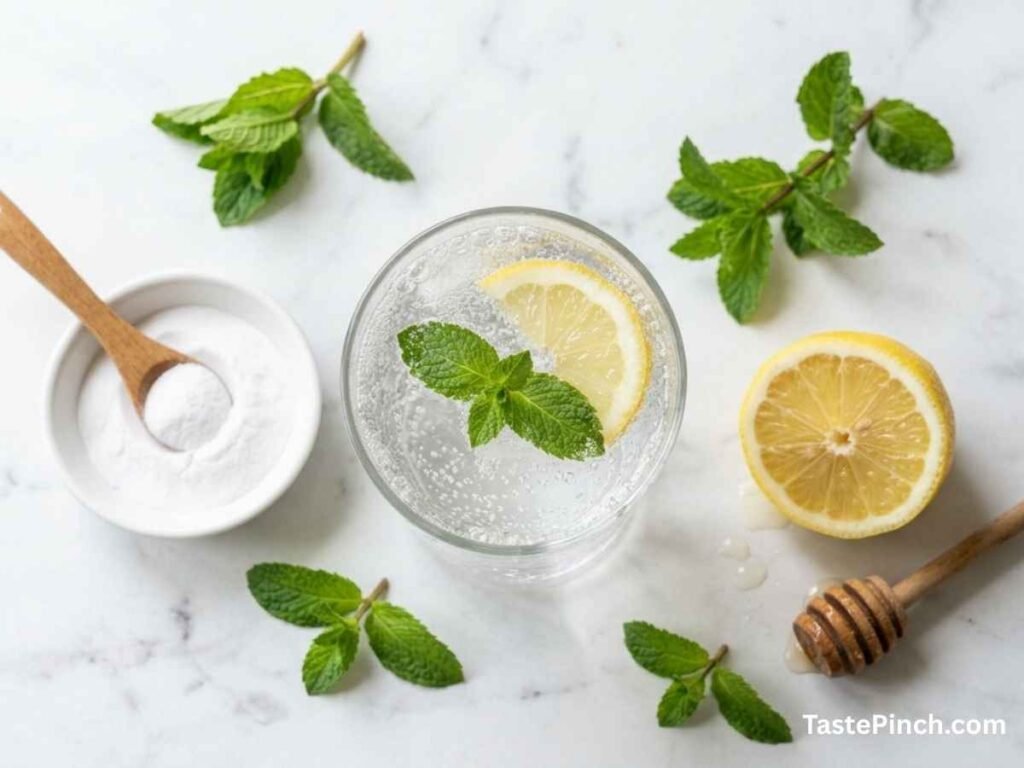
Baking Soda for Weight Loss Recipe – Does It Work?
Baking Soda Water Shot Recipe for Weight Loss
The baking soda water shot is the fastest, most concentrated way to take your daily baking soda dose — done in one quick sip rather than sipped slowly over several minutes. The formula is simple: dissolve ¼ teaspoon of food-grade baking soda in 2 oz of room-temperature filtered water. Stir for 20 seconds until completely dissolved and all fizzing has stopped. Add a small squeeze of fresh lemon juice — about ½ teaspoon — to improve palatability and add a brief citrus reaction that makes the shot easier to take. Drink it in one or two sips, then follow immediately with 6 to 8 oz of plain water.
Take the shot 20 to 30 minutes before your largest meal of the day for the best appetite-management effect, or 30 minutes before exercise if you want the lactic acid buffering benefit. The shot format works better than the full glass version for people who find the slightly salty, mildly soapy taste of plain baking soda water difficult to drink slowly. Because the volume is smaller, the taste is over faster — and the lemon addition cuts the alkaline flavor significantly. Do not take the shot on a completely empty stomach if you have a history of acid reflux or gastric sensitivity — have a small snack first and always follow with a full glass of water.
Top Tips
Small adjustments make a genuine difference in both the safety and long-term consistency of this baking soda weight loss drink routine. These are the tips that experienced wellness drink makers consistently recommend — and that Dana has confirmed through personal testing.
Use food-grade baking soda only. The standard box in your baking cabinet is correct. Industrial or cleaning-grade sodium bicarbonate is never safe for consumption. Check the label — it should say sodium bicarbonate, with no added ingredients.
Stick to the ¼ teaspoon rule without exception. More is not better with this drink. Ingesting excess baking soda can trigger metabolic alkalosis, cause dangerous electrolyte imbalances, and in severe cases lead to serious health complications. The therapeutic window here is genuinely narrow — measure every time and do not estimate.
Variations
The basic baking soda for weight loss recipe is versatile, and the three versions above can be further adjusted based on your taste preferences and health goals. Understanding what each addition actually does helps you make smart adjustments rather than random ones.
The most popular variations keep the baking soda base unchanged and layer in additional functional ingredients. The lemon version is the most beginner-friendly — the citrus flavor masks the salty, slightly soapy taste of plain baking soda water in a way that most people find dramatically more palatable. The ACV version is stronger and sharper but brings additional digestive support through acetic acid that the other versions do not provide.

Baking Soda for Weight Loss Recipe – Does It Work?
Flavor and Function Additions
A small pinch of raw honey softens the sharpness of both the lemon and ACV versions without adding meaningful calories. A pinch of ground ginger adds warming digestive properties and a pleasant spice note. Some people add a small pinch of pink Himalayan salt, particularly in the pre-workout version, to support electrolyte balance during exercise. Fresh mint leaves steeped briefly in warm water before adding the other ingredients create a cooling, refreshing variation that works particularly well in summer.
When to Drink and How Often
The ideal window for drinking the baking soda weight loss recipe is 20 to 30 minutes before a meal or 30 minutes before moderate-to-high intensity exercise. Both timing strategies align with the drink’s two main documented effects: pre-meal use supports temporary bloating relief and digestive readiness, while pre-workout use targets the lactic acid buffering effect studied in sports medicine research. Short-term use of one to two weeks is generally safe for healthy adults — daily long-term use is not recommended without medical supervision, as it can reduce natural stomach acid production and affect nutrient absorption over time.
For another homemade drink idea, check out this easy Cold Brew Coffee Concentrate Recipe.
FAQs
Does baking soda actually help with weight loss?
Baking soda does not directly cause fat loss. No controlled human study has found that the doses used in this recipe — ¼ to ½ teaspoon in water — burn stored body fat or meaningfully raise resting metabolic rate. What it can do is reduce temporary bloating, support pre-meal digestion, and potentially improve exercise endurance, which indirectly supports a weight management routine when combined with a calorie deficit and regular movement. Think of this baking soda for weight loss recipe as a supportive daily habit — not a standalone solution.
How much baking soda should I use per day?
Stick to ¼ teaspoon per serving and no more than one serving per day. This is the amount most commonly referenced in research settings and the threshold where digestive benefit is possible without excess sodium intake. Never increase the amount hoping for faster results — the risk of side effects including nausea, vomiting, and in rare cases metabolic alkalosis increases significantly above this dose.
Can I drink baking soda water every day?
Short-term use for one to two weeks is generally safe for healthy adults without relevant health conditions. Daily use beyond that is not recommended without a doctor’s approval, because prolonged intake can reduce natural stomach acid production, affect how your body absorbs certain nutrients, and contribute to elevated blood pressure over time due to sodium load. Take regular breaks between usage periods.
Is baking soda with lemon or ACV better?
Both are good options with different advantages. The lemon version provides vitamin C, a cleaner flavor, and is the easiest to drink consistently. The ACV version offers additional digestive support through acetic acid — small studies suggest it may help moderate post-meal blood glucose and improve satiety — but the taste is significantly sharper. Neither is superior in terms of weight loss. For pure palatability and daily consistency, lemon wins. For digestive support as the primary goal, ACV is worth trying.


Baking Soda for Weight Loss Recipe
Ingredients
Equipment
Method
- Step 1: Measure Your Baking Soda Measure exactly ¼ teaspoon of food-grade baking soda. Do not estimate — precision matters both for effectiveness and safety. Add it to your 8 oz glass.
- Step 2: Add Your Acid (if using) For the lemon version: squeeze fresh lemon juice directly into the glass before adding water. For the ACV version: pour 1–2 tablespoons of raw apple cider vinegar into the glass first. You will see an immediate fizzing reaction — this is normal.
- Step 3: Wait for Fizzing to Stop This step is critical and often skipped. Wait for all bubbling and fizzing to stop completely before adding water or drinking. Drinking a highly carbonated mixture can cause significant bloating and discomfort. Fizzing takes 15–45 seconds depending on which version you are making.
- Step 4: Add Filtered Water and Stir Pour 8 oz of room-temperature filtered water into the glass. Stir for about 20 seconds until all ingredients are fully combined and the baking soda is completely dissolved. The water may appear slightly cloudy at first — this is normal and clears quickly.
- Step 5: Drink and Timing Drink slowly, 20–30 minutes before a meal or 30 minutes before exercise. Do not drink this on a completely full stomach as gas production can cause discomfort. Drink the full glass within five minutes of preparation for best effect.
Notes
NUTRITION
(For the plain baking soda water version — Version 1) Serving Size: 8 oz (1 glass) Calories: 0–5 Total Fat: 0 g Saturated Fat: 0 g Carbohydrates: 0–1 g Sugar: 0 g Fiber: 0 g Protein: 0 g Sodium: 300 mg Potassium: 0 mg Vitamin C: 0 mg (Version 2 with lemon adds ~15mg) Calcium: 0 mg Iron: 0 mg Nutritional values are estimates. The lemon version adds approximately 3–5 calories and 15mg of Vitamin C. The ACV version adds approximately 3 calories. Values vary by exact ingredient brands used.WPRM RECIPE CARD — WP Recipe Maker Fields
📋 BASIC INFO TAB
Recipe Name: Baking Soda for Weight Loss Recipe
Recipe Description: This baking soda for weight loss recipe is a simple, low-calorie morning wellness drink made with sodium bicarbonate, filtered water, and your choice of lemon juice or apple cider vinegar. It supports digestion and temporary bloating relief. Includes three variations — plain, lemon, and ACV — with honest science-backed guidance. Ready in under 3 minutes.
Recipe Author: Dana Whitfield
⏱️ TIME TAB
Prep Time: 2 minutes Cook Time: 0 minutes Total Time: 2 minutes
📊 SERVINGS TAB
Servings: 1 Yield: 1 glass (8 oz)
🌍 DETAILS TAB
Cuisine: American Category: Healthy & Diet Cooking Method: No Cook Diet: Vegan, Low Calorie, Gluten Free
Keywords: baking soda for weight loss recipe, baking soda weight loss drink, sodium bicarbonate morning drink, baking soda lemon drink, baking soda apple cider vinegar, baking soda detox drink, baking soda water shot, viral weight loss drink 2026, bloating relief drink, morning wellness drink
🥃 EQUIPMENT TAB
Equipment 1: Name: 8 oz Glass or Mug Notes: Use a clear glass to watch the fizzing reaction clearly
Equipment 2: Name: Measuring Teaspoon (¼ tsp) Notes: Precise measurement is important — do not estimate. Use a proper measuring spoon.
Equipment 3: Name: Spoon or Stirrer Notes: Stir for 20 seconds until baking soda is fully dissolved
Equipment 4: Name: Citrus Juicer (optional) Notes: For the lemon version — squeeze fresh lemon juice directly into the glass
Equipment 5: Name: Fine Mesh Strainer (optional) Notes: Strain lemon seeds if juicing by hand without a juicer
🧂 INGREDIENTS TAB
— VERSION 1: Simple Baking Soda Water —
Ingredient 1: Amount: ¼ | Unit: tsp | Name: Baking Soda (food grade sodium bicarbonate) Notes: Do not use baking powder — must be pure baking soda
Ingredient 2: Amount: 8 | Unit: oz | Name: Filtered Water (room temperature) Notes: Room temperature dissolves baking soda faster than cold water
— VERSION 2: Lemon and Baking Soda Drink (add to above) —
Ingredient 3: Amount: 1 | Unit: tbsp | Name: Fresh Lemon Juice (from ½ lemon) Notes: Fresh-squeezed preferred — bottled lemon juice works but is less flavorful
— VERSION 3: ACV and Baking Soda Drink (replace lemon with) —
Ingredient 4: Amount: 1–2 | Unit: tbsp | Name: Raw Unfiltered Apple Cider Vinegar Notes: Use ACV with “the mother” — Bragg is the most widely available brand
Ingredient 5 (Optional): Amount: 1 | Unit: pinch | Name: Raw Honey Notes: Softens sharpness — use sparingly to keep calories minimal
📝 INSTRUCTIONS TAB
Step 1: Measure Your Baking Soda Measure exactly ¼ teaspoon of food-grade baking soda. Do not estimate — precision matters both for effectiveness and safety. Add it to your 8 oz glass.
Step 2: Add Your Acid (if using) For the lemon version: squeeze fresh lemon juice directly into the glass before adding water. For the ACV version: pour 1–2 tablespoons of raw apple cider vinegar into the glass first. You will see an immediate fizzing reaction — this is normal.
Step 3: Wait for Fizzing to Stop This step is critical and often skipped. Wait for all bubbling and fizzing to stop completely before adding water or drinking. Drinking a highly carbonated mixture can cause significant bloating and discomfort. Fizzing takes 15–45 seconds depending on which version you are making.
Step 4: Add Filtered Water and Stir Pour 8 oz of room-temperature filtered water into the glass. Stir for about 20 seconds until all ingredients are fully combined and the baking soda is completely dissolved. The water may appear slightly cloudy at first — this is normal and clears quickly.
Step 5: Drink and Timing Drink slowly, 20–30 minutes before a meal or 30 minutes before exercise. Do not drink this on a completely full stomach as gas production can cause discomfort. Drink the full glass within five minutes of preparation for best effect.
📝 NOTES TAB
DOSAGE RULE: Always use exactly ¼ teaspoon per 8 oz of water. Never exceed this amount.

FIZZING: Always wait for all fizzing to stop before drinking — in the lemon and ACV versions this is essential.

TIMING: Best taken 20–30 minutes before a meal or 30 minutes before exercise. Avoid on a completely full stomach.

FREQUENCY: Limit to one serving per day. Short-term use (1–2 weeks) recommended. Take breaks between usage periods. Not recommended for daily long-term use without medical guidance.

MEDICAL DISCLAIMER: Consult a doctor before using if you have high blood pressure, kidney disease, heart disease, or take prescription medications. Not recommended during pregnancy. Not suitable for children under 5. This drink is not a proven weight loss treatment.

SODIUM CONTENT: Each serving contains approximately 300 mg of sodium. Track this if you follow a low-sodium diet.

TASTE TIP: The plain version tastes salty and slightly soapy. The lemon version is significantly more palatable. Start with lemon if you are new to this drink.

DO NOT CONFUSE: Use baking soda (sodium bicarbonate) — not baking powder. They are different products with different compositions.
🔢 NUTRITION TAB
(For the plain baking soda water version — Version 1)
Serving Size: 8 oz (1 glass) Calories: 0–5 Total Fat: 0 g Saturated Fat: 0 g Carbohydrates: 0–1 g Sugar: 0 g Fiber: 0 g Protein: 0 g Sodium: 300 mg Potassium: 0 mg Vitamin C: 0 mg (Version 2 with lemon adds ~15mg) Calcium: 0 mg Iron: 0 mg
Nutritional values are estimates. The lemon version adds approximately 3–5 calories and 15mg of Vitamin C. The ACV version adds approximately 3 calories. Values vary by exact ingredient brands used.
Dana Whitfield is a recipe developer and food writer with a love for bold flavors and creative drinks. From restaurant copycat recipes to handcrafted cocktails like the Pistachio Martini and Blackberry Margarita, Dana believes great food should be approachable — no culinary school required. She’s spent years testing and perfecting recipes across cuisines, specialty diets, and everything in between. TastePinch is her corner of the internet where every pinch of flavor tells a story.
This blog made me satisfying. It Really helped to understand weight loss using baking soda.