

Medical Disclaimer: The information in this article is for general educational purposes only and does not constitute medical advice. Always consult your bariatric surgeon, healthcare provider, or registered dietitian before making changes to your post-surgery diet or weight loss plan. Every patient’s nutritional needs following bariatric surgery are different.
The bariatric gelatin recipe for weight loss is one of the most practical, gentle, and genuinely satisfying snacks in the post-bariatric diet toolkit — and the numbers behind it make that case clearly: approximately 38 calories, 6 to 8 grams of protein, zero added sugar, and a soft texture that is easy on a healing stomach at every post-op stage. Dana here, and I developed this recipe specifically for people who need a snack that works hard nutritionally without making a recovering digestive system work hard back. Three ingredients, ten minutes of active prep, and two hours of refrigerator time are all it takes.
This bariatric gelatin recipe for weight loss guide covers everything from the exact calorie breakdown to step-by-step blooming instructions, flavor variations for every taste preference, troubleshooting for gels that do not set, storage guidelines, and an honest explanation of the so-called “gelatin trick” that keeps appearing on social media. Whether you are in the clear liquid phase post-surgery, the soft food stage, or simply following a calorie-controlled eating plan and looking for a reliable high-protein low-calorie snack, this recipe is built for you.
Calories in Bariatric Gelatin Recipe for Weight Loss
<cite index=”20-1″>Each serving of this bariatric gelatin recipe for weight loss contains approximately 35 to 40 calories and delivers 6 to 8 grams of protein with zero added sugar.</cite> Those numbers make it one of the most calorie-efficient protein sources in any post-bariatric meal plan — a standard serving of Greek yogurt delivers similar protein at nearly three times the calories, and most commercial protein bars clock in at 200 calories or higher.
The full calorie breakdown by ingredient is straightforward and transparent. Unflavored gelatin (one packet, approximately 7 grams) contributes about 25 calories and 6 grams of protein. Sugar-free fruit juice or electrolyte water adds 10 to 15 calories depending on the brand. Water contributes zero calories. The optional protein powder upgrade adds 30 to 40 calories per serving but pushes protein to 15 to 18 grams — a significant improvement for patients trying to hit their daily protein targets while managing very small stomach capacity.
Calorie Comparison Per Serving:
| Snack Option | Calories | Protein | Sugar |
|---|---|---|---|
| This Bariatric Gelatin Recipe | 38 | 7g | 0g |
| Sugar-Free Jello Cup (commercial) | 10 | 1g | 0g |
| Greek Yogurt (½ cup non-fat) | 65 | 9g | 4g |
| Protein Shake (standard) | 150 | 25g | 3g |
| Standard Jello Box (with sugar) | 80 | 2g | 19g |
This recipe fills the gap between the near-zero protein of commercial sugar-free gelatin cups and the higher calorie load of yogurt and protein shakes — making it uniquely useful in the early post-op phases when every calorie and every gram of protein counts.
Ingredients You’ll Need for Bariatric Gelatin Recipe for Weight Loss
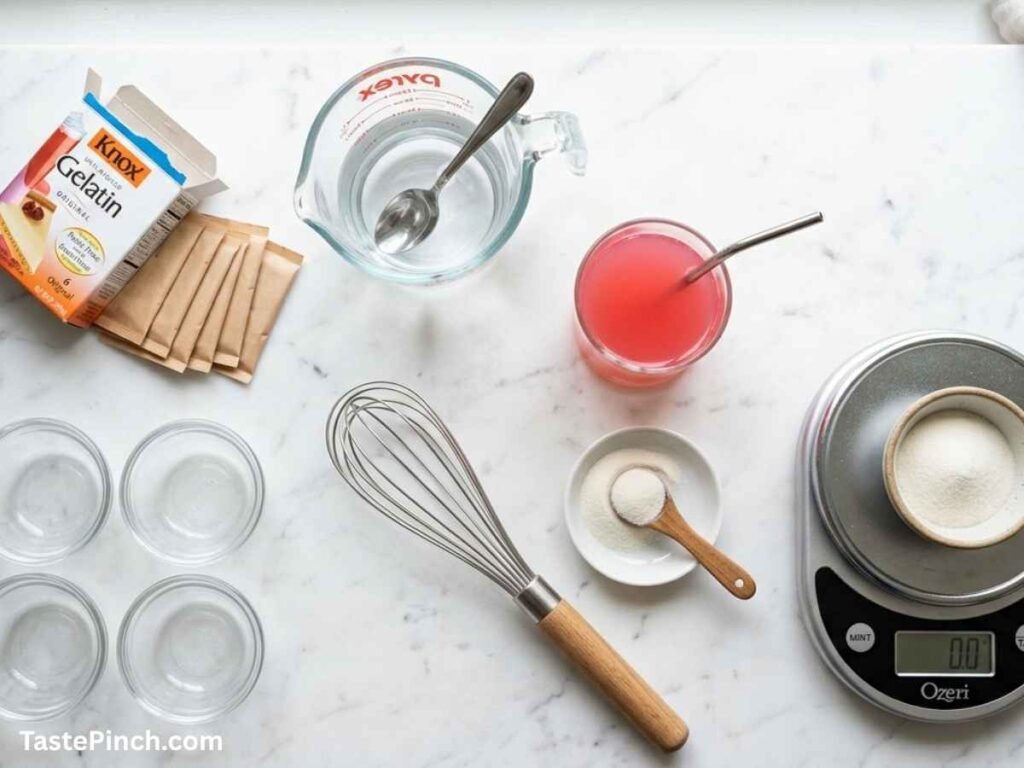
This bariatric gelatin recipe for weight loss uses three core ingredients that are widely available, inexpensive, and shelf-stable. No specialty health food store required — Knox unflavored gelatin is in most grocery stores, and sugar-free juice or electrolyte water is available at any pharmacy or supermarket.
Bariatric Gelatin Recipe for Weight Loss
<cite index=”13-1″>Unlike store-bought gelatin snacks that are packed with sugar, this version uses sugar-free fruit juice and unflavored gelatin, helping you meet your protein needs while curbing sweet cravings.</cite> The distinction matters: a standard commercial gelatin cup contributes almost no protein, while this three-ingredient homemade version delivers a meaningful amount from the unflavored gelatin itself — before any protein powder enhancement.
Core Ingredients (Serves 4):
- 2 packets (14g total) unflavored gelatin powder — Knox or Great Lakes brand recommended
- 1 cup cold filtered water — for blooming
- 1½ cups sugar-free fruit juice, electrolyte water, or sugar-free drink mix diluted in water
Optional Protein Upgrades:
- 1 scoop unflavored whey protein isolate OR
- 2 tablespoons collagen peptides (Vital Proteins or Great Lakes Wellness)
- These add 15 to 18 grams of protein per serving and dissolve seamlessly into the warm liquid
Ingredient Notes:
| Ingredient | Best Choice | Why It Matters |
|---|---|---|
| Unflavored Gelatin | Knox Original, Great Lakes Beef Gelatin | Food-grade, widely available, consistent set |
| Sugar-Free Juice | Crystal Light, Liquid IV, Mio, sugar-free lemonade | Zero sugar — essential for bariatric compliance |
| Collagen Peptides | Vital Proteins, Great Lakes Wellness | Dissolves clear, no taste, supports gut and tissue healing |
| Whey Protein Isolate | Premier Protein Unflavored, Isopure Zero Carb | Highest protein per calorie, dissolves smoothly in warm liquid |
What to Avoid:
- Do not use regular sugar fruit juice — the sugar content can trigger dumping syndrome in gastric bypass patients
- Do not use flavored gelatin mixes (like standard Jello) — they contain sugar, artificial dyes, and very low protein
- Do not substitute agar-agar for Knox gelatin — agar sets differently and produces a firmer, less digestible texture for post-op patients
Step-by-Step Instructions for Bariatric Gelatin Recipe for Weight Loss
The three-step method below produces a perfectly set, smooth, soft bariatric gelatin every time. The most important rule: never skip the blooming step and never add dry gelatin directly to hot liquid. <cite index=”17-1″>Blooming first gives the gelatin a better texture and helps the final rounds set evenly.</cite>
Step 1 — Bloom the Gelatin
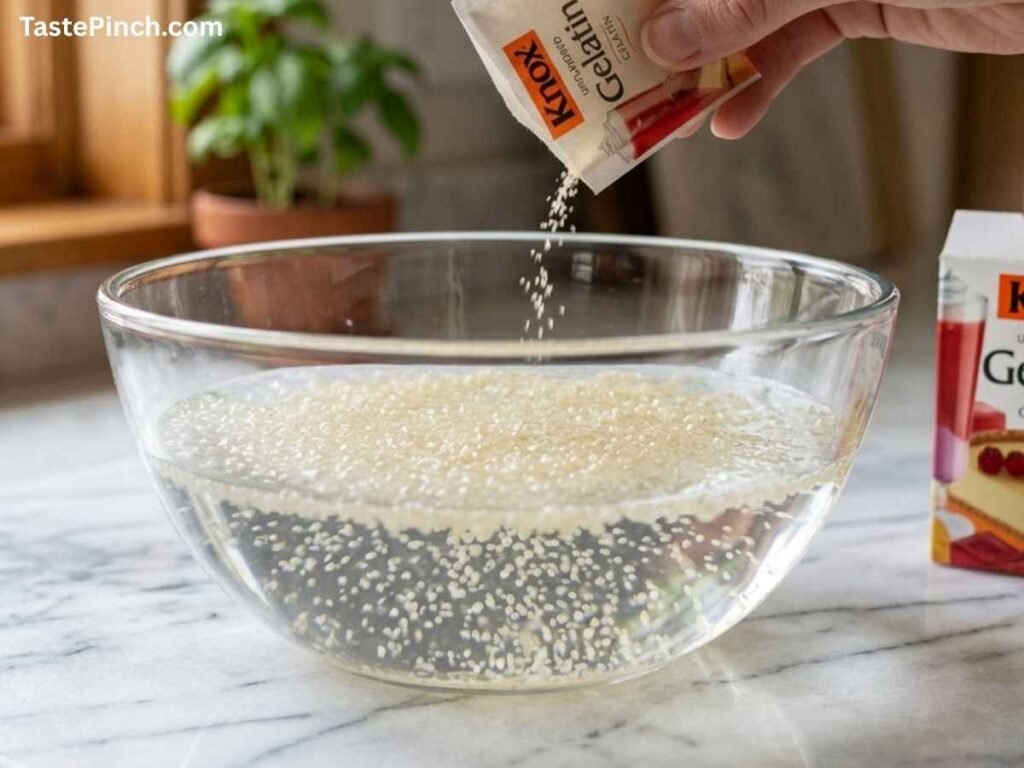
Pour 1 cup of cold filtered water into a medium heatproof bowl. Sprinkle both packets of unflavored gelatin evenly over the surface of the cold water — do not stir yet. Let the gelatin sit undisturbed for exactly 5 minutes. During this time the granules absorb the cold water and swell, a process called blooming. The mixture will look lumpy and gel-like after 5 minutes — this is correct and expected.
<cite index=”17-1″>Do not dump dry gelatin directly into hot juice. It can clump almost instantly and leave you with rubbery pieces instead of a smooth set.</cite> The blooming step in cold water first prevents this and gives you a uniformly smooth texture in the finished gelatin.
Step 2 — Warm the Juice
While the gelatin blooms, warm 1½ cups of your chosen sugar-free juice in a small saucepan over medium-low heat. Heat until steaming — approximately 160 to 170°F — but do not bring to a boil. Boiling destroys the protein structure in gelatin and prevents the mixture from setting correctly.
Pour the warm juice directly over the bloomed gelatin. Whisk immediately and continuously for 2 minutes until the gelatin is completely dissolved and the liquid is uniformly clear with no visible granules or lumps. If you are adding collagen peptides or whey protein isolate, add them now and whisk until fully incorporated. The liquid should be smooth, slightly glossy, and completely lump-free at this stage.
Step 3 — Pour and Set
Let the mixture cool at room temperature for 10 minutes — pouring very hot gelatin into plastic cups can warp them, and it also speeds up the setting slightly if the refrigerator door is opened frequently. After cooling, pour the mixture evenly into 4 individual serving cups, ramekins, or a single shallow container. Cover each cup loosely with plastic wrap or a lid.
Refrigerate for a minimum of 2 hours. For the firmest, cleanest texture, refrigerate for 4 hours or overnight. Do not place in the freezer to speed up the process — freezing breaks the gelatin’s protein matrix and produces an icy, grainy texture when thawed.


Bariatric Gelatin Recipe for Weight Loss: Only 38 Calories
Expert Tips, Variations, and Troubleshooting for Bariatric Gelatin Recipe for Weight Loss
Tips for Best Results
Use a kitchen scale to measure gelatin by weight rather than by packet count. One standard Knox gelatin packet is approximately 7 grams — if you are using a bulk bag of gelatin powder, weigh 14 grams total for this recipe. This precision matters because under-measuring gelatin produces a soft, soupy set, and over-measuring produces a rubbery, overly firm texture that is uncomfortable for post-op patients.
Use room temperature or warm juice — not hot from the stove and not cold from the refrigerator. <cite index=”15-1″>Heat the remaining hot water until steaming but not boiling. Pour it over the bloomed gelatin while whisking until completely dissolved and clear.</cite> The target temperature is 160 to 170°F. A simple kitchen thermometer takes the guesswork out of this step completely.
Whisk thoroughly and patiently. Under-whisked gelatin leaves streaks and protein powder lumps in the finished product. Two full minutes of continuous whisking after adding the warm juice is the standard — use a balloon whisk rather than a fork for the most efficient mixing.
For post-surgery patients in the earliest recovery phases: strain the finished liquid through a fine-mesh sieve before pouring into cups. This catches any undissolved particles and produces the smoothest possible texture for a healing stomach.
Flavor Variations
Lemon-Ginger Bariatric Gelatin: Use sugar-free lemonade as the juice base. Add ¼ teaspoon fresh grated ginger after whisking. Bright, slightly spicy, and excellent for nausea relief in early post-op weeks.
Berry Electrolyte Gelatin: Use Liquid IV Berry flavor diluted in water as the base. No additional flavoring needed — the electrolyte mix provides a natural sweetness and adds sodium and potassium that are important for post-surgery hydration management.
Peach Collagen Gelatin: Use sugar-free peach juice or peach-flavored Crystal Light. Add 2 tablespoons of Vital Proteins unflavored collagen peptides for a protein upgrade that is completely invisible in color and flavor.
Mint Herbal Tea Gelatin: Brew 1½ cups of peppermint herbal tea, cool to 160°F, and use as the base liquid. Caffeine-free, soothing, and ideal for patients who are sensitive to acidic juices in the early healing phase. <cite index=”21-1″>This version stays clean and functional combining unflavored gelatin, herbal tea, and whey isolate or collagen peptides to create a filling, low-volume snack.</cite>
High-Protein Greek Yogurt Fluff (Soft Stage): After the gelatin is set, blend one serving with 2 tablespoons of plain non-fat Greek yogurt until smooth and fluffy. This variation is appropriate for the soft food stage (weeks 3 to 6 post-op) and pushes protein content to approximately 12 to 14 grams per serving with minimal calorie increase.
Troubleshooting Common Issues
| Problem | Most Likely Cause | Fix |
|---|---|---|
| Gelatin did not set / too liquid | Gelatin not fully dissolved OR juice was too cold | Re-warm gently and whisk again — do not reboil |
| Gelatin is rubbery / too firm | Too much gelatin used | Reduce to 1¼ packets next batch |
| Grainy or gritty texture | Protein powder not fully dissolved | Add protein to warm liquid before gelatin; whisk longer |
| Cloudy appearance | Juice was boiled | Use juice heated to 160–170°F only — not boiling |
| Lumpy texture | Gelatin was added to hot liquid without blooming | Always bloom in cold water first — this step is not optional |
| Sour or metallic taste | Juice quality issue OR whey protein brand | Switch to a higher quality sugar-free juice; try collagen instead of whey |
| Sweating / water pooling on surface | Covered too tightly while still warm | Cool to room temperature before covering; use loose-fitting wrap |
Storage Instructions for Bariatric Gelatin Recipe for Weight Loss
<cite index=”14-1″>Store leftover bariatric gelatin in an airtight container in the refrigerator for up to 5 days.</cite> Individual portion cups work best for storage because they eliminate the need to cut or portion later — for post-op patients managing small portions, being able to grab a pre-measured cup without any additional handling is a genuine practical advantage.
Keep the gelatin covered at all times during storage. Uncovered gelatin in the refrigerator develops a dry, slightly leathery skin on the surface after 24 hours — this does not affect food safety but changes the texture and mouthfeel significantly. Cover each cup with plastic wrap pressed directly against the surface, or use small airtight lids.
Do not freeze prepared bariatric gelatin. Freezing breaks the protein bonds in the gelatin matrix — when thawed, the texture becomes watery, icy, and grainy. If you need longer storage, keep the dry ingredients (weighed gelatin, measured protein powder) pre-portioned in small bags and make fresh batches as needed. Each batch takes under 10 minutes of active time.
Reheating and No-Waste Ideas
If a batch of bariatric gelatin becomes too firm or dries out around the edges, do not discard it. Place the cup in a bowl of warm (not hot) water for 2 to 3 minutes until the gelatin softens back to a smooth texture. Alternatively, warm very gently in the microwave for 5 to 8 seconds at 50% power — check every 5 seconds and stop the moment it starts to liquify. Re-refrigerate for 30 minutes to reset.
For no-waste use of gelatin that has become too liquid or did not set properly: warm the liquid gently back to 160°F, add another ¼ packet of bloomed gelatin, whisk thoroughly, and re-refrigerate. One rescue per batch is usually successful.
Leftover gelatin that is no longer at its best texture can be blended with a small amount of Greek yogurt and frozen in a silicone popsicle mold for bariatric-friendly frozen treats — a useful option for patients who experience nausea with warm foods in early recovery.
What is the Gelatin Trick to Lose Weight With Bariatric Gelatin Recipe for Weight Loss?
The “gelatin trick” for weight loss that circulates widely on social media — often linked to the “Dr. Oz pink gelatin hack” or the Jillian Michaels gelatin recipe — is a simplified version of what this bariatric gelatin recipe does in a more structured, nutritionally complete way. <cite index=”20-1″>The idea is to eat one serving 15 to 30 minutes before your largest meal to naturally reduce hunger and support portion control — especially useful during post-bariatric or high-protein eating routines.</cite>
The mechanism behind this is not magic — it is basic satiety science. Gelatin is primarily composed of collagen-derived protein and water. Protein is the most satiating macronutrient per calorie, and consuming a small amount of protein 15 to 30 minutes before a meal has consistent research support for reducing total calorie intake at that meal. The water content adds volume to the stomach without calories. The result is a pre-meal appetite reduction that is real, measurable, and achievable with a 38-calorie serving.
<cite index=”17-1″>This is not a magic weight-loss trick.</cite> Bariatric gelatin does not burn fat directly, does not boost metabolism, and does not replace a complete nutritional plan. What it does reliably is provide a soft, high-protein, zero-sugar snack that fits the strict texture and nutrition requirements of post-bariatric diets while supporting satiety and protein intake goals. Used consistently as part of a complete plan — guided by your bariatric surgeon and dietitian — it is a genuinely useful tool.
Pairing Ideas and Serving Suggestions for Bariatric Gelatin Recipe for Weight Loss
Bariatric gelatin for weight loss works best as part of a structured snack or light meal rather than as a standalone item. The 38-calorie serving is intentionally small and is designed to pair with other bariatric-compliant foods to build a complete light meal within the calorie and portion guidelines of your specific post-op phase.
Post-Surgery Phase Pairings:
During the clear liquid phase (weeks 1 to 2 post-op), serve the plain gelatin (no protein powder) on its own as a complete approved snack. The smooth texture and cold temperature are soothing and easy to consume in the small amounts required during this phase.
During the full liquid and soft food phase (weeks 3 to 6), pair one serving of the protein-boosted gelatin with 2 to 3 tablespoons of plain non-fat Greek yogurt on the side, or a small portion of blended cottage cheese. This combination delivers 15 to 20 grams of protein in a complete soft-food snack with under 150 calories total.
For general weight loss (not post-surgery), pair one serving of bariatric gelatin with a small handful of raw cucumber slices, one hard-boiled egg, or a 3-ounce portion of plain cooked chicken breast for a high-protein, low-calorie light lunch that stays under 200 calories total.
Serving Temperature Tips: The gelatin is best served cold — directly from the refrigerator. Cold temperature makes gelatin firmer in texture and more refreshing, which supports the satiety effect. Serving at room temperature makes it softer and slightly less filling. Some patients in early recovery prefer the gelatin slightly warmed (not hot) — 10 seconds in the microwave softens it to a near-liquid pudding consistency that is easier to consume in very small amounts.
You may try Gluten Free Gnocchi Recipe.
If you are also exploring other low-calorie morning wellness drinks, our baking soda for weight loss recipe is another simple, science-backed option worth trying.
Bariatric Gelatin Recipe for Weight Loss FAQs
What is the gelatin trick to lose weight?
The gelatin trick refers to eating a small serving of high-protein, sugar-free gelatin 15 to 30 minutes before a meal to reduce appetite and total calorie intake. The protein and water volume in the gelatin trigger early satiety signals, helping portion control at the main meal. This bariatric gelatin recipe for weight loss is the structured, nutritionally complete version of that concept — with documented calorie and protein counts, safe ingredients, and appropriate portions.
What phase after bariatric surgery can I eat gelatin?
Plain sugar-free gelatin — made with unflavored gelatin and clear liquid — is approved during the clear liquid phase beginning in week 1 post-op for most bariatric programs. The protein-boosted version using collagen peptides is typically appropriate in the full liquid phase (weeks 2 to 3). The Greek yogurt fluff variation is appropriate in the soft food stage (weeks 3 to 6). Always confirm the specific foods appropriate for your surgery type and recovery phase with your bariatric surgeon or dietitian before trying any new food.
Can I eat bariatric gelatin every day?
For most people following a bariatric diet or calorie-controlled eating plan, one to two servings of this bariatric gelatin recipe for weight loss per day is safe and practical. It supports protein intake, hydration, and appetite management without adding meaningful calories. Long-term daily use is generally well-tolerated. Monitor sodium intake if using electrolyte-based juice as your liquid, as some electrolyte products are high in sodium.
Is Knox gelatin good for weight loss?
Knox unflavored gelatin is one of the most practical choices for this bariatric gelatin recipe for weight loss because it is widely available, inexpensive, and produces a reliable, consistent set. It provides approximately 6 grams of protein per packet from collagen-derived amino acids. It does not directly burn fat or boost metabolism, but as an ingredient in this recipe it contributes meaningful protein at near-zero calorie cost, which supports appetite management and protein goals during weight loss.
Why didn’t my bariatric gelatin set properly?
The three most common causes: the juice was too hot when added to the bloomed gelatin (boiling destroys the setting ability), the gelatin was not fully dissolved before refrigerating, or the ratio of liquid to gelatin was too high. Fix by warming the mixture gently back to 160°F, adding a quarter packet of fresh bloomed gelatin, whisking thoroughly, and re-refrigerating for 4 hours.
Can I make bariatric gelatin without sugar-free juice?
Yes. You can use plain filtered water, herbal tea (caffeine-free), electrolyte water, or diluted sugar-free drink mix. Flavored options are generally more palatable, but the recipe works with plain water if flavor sensitivity is a concern in early post-op recovery. Some patients add a single drop of food-grade flavor extract (vanilla, peppermint, or orange) to plain water gelatin for gentle flavor without any added sugar or artificial sweeteners.
For more high-protein, low-calorie snack and drink ideas, browse our full Healthy & Diet recipes collection — every recipe is designed with clean ingredients and realistic nutrition in mind.
For a complete healthy snack routine, pair this gelatin with our apple cider vinegar drink recipe in the morning — both are low-calorie, gut-supportive, and bariatric-friendly.


Bariatric Gelatin Recipe for Weight Loss
Ingredients
Equipment
Method
- Step 1: Bloom the Gelatin Pour 1 cup of cold filtered water into a medium heatproof bowl. Sprinkle both packets of unflavored gelatin evenly over the surface. Do not stir. Let sit undisturbed for 5 minutes until the gelatin granules have fully absorbed the water and the mixture looks lumpy and gel-like.
- Step 2: Warm the Juice Heat 1½ cups of sugar-free juice in a small saucepan over medium-low heat until steaming — approximately 160 to 170°F. Do not boil. If adding protein powder or collagen, add it to the warm juice now and whisk until dissolved.
- Step 3: Combine and Dissolve Pour the warm juice mixture directly over the bloomed gelatin. Whisk immediately and continuously for 2 minutes until all gelatin is completely dissolved and the liquid is uniformly clear with no visible granules. The mixture should be smooth and slightly glossy.
- Step 4: Cool and Pour Let the mixture cool at room temperature for 10 minutes. Divide evenly among 4 individual serving cups or ramekins. Cover loosely with plastic wrap.
- Step 5: Refrigerate and Set Refrigerate for a minimum of 2 hours. For best texture, refrigerate for 4 hours or overnight. Do not freeze. Serve cold directly from the refrigerator.
Notes
NUTRITION
(Per serving — 1 of 4 servings, plain version without protein powder) Serving Size: ½ cup (approximately 4 oz) Calories: 38 Total Fat: 0 g Saturated Fat: 0 g Trans Fat: 0 g Carbohydrates: 1 g Sugar: 0 g Fiber: 0 g Protein: 7 g Sodium: 14 mg Cholesterol: 0 mg Potassium: 20 mg Vitamin C: 2 mg Calcium: 8 mg Iron: 0.1 mg Nutritional values are estimates. Adding 2 tablespoons of unflavored collagen peptides increases protein to approximately 16–18g per serving and adds 30–35 calories. Values vary by brand of gelatin and juice used.Dana Whitfield is a recipe developer and food writer with a love for bold flavors and creative drinks. From restaurant copycat recipes to handcrafted cocktails like the Pistachio Martini and Blackberry Margarita, Dana believes great food should be approachable — no culinary school required. She’s spent years testing and perfecting recipes across cuisines, specialty diets, and everything in between. TastePinch is her corner of the internet where every pinch of flavor tells a story.