

Ginger turmeric tea is a warm, golden herbal drink made by simmering fresh ginger and turmeric in water. It has a mildly spicy, earthy flavor that tastes delicious with lemon and honey. This simple homemade ginger turmeric tea recipe needs just a few ingredients and about 20 minutes. You can enjoy it on chilly mornings, relaxing evenings, or whenever you want a comforting caffeine-free drink.
This recipe combines ginger and turmeric as its main ingredients, making it different from traditional ginger tea or ginger cinnamon tea. Both roots bring distinctive flavors and naturally occurring plant compounds to the cup. Although people traditionally enjoy these ingredients as part of their wellness routines, this tea is not a proven treatment for any medical condition. Medical disclaimer: Consult your healthcare professional before regularly consuming concentrated amounts of ginger or turmeric, especially if you take medication, have a medical condition, or are pregnant.
What Is Ginger Turmeric Tea?
Ginger turmeric tea is a caffeine-free herbal infusion made by simmering ginger root and turmeric in water. Unlike traditional black tea or green tea, it does not contain leaves from the tea plant (Camellia sinensis).
The drink combines two flavorful roots:
- Ginger: Adds a warm, peppery taste with a slightly citrusy aroma.
- Turmeric: Gives the tea its golden-yellow color and earthy, mildly bitter flavor.
Together, they create a balanced drink that tastes warming without needing complicated ingredients. You can enjoy ginger turmeric tea plain or customize it with lemon, honey, cinnamon, or black pepper.
If you enjoy homemade herbal drinks, explore more recipes on the TastePinch homepage.
What Are the Ingredients in Ginger Turmeric Tea?
You only need a handful of everyday ingredients to make this homemade ginger turmeric tea. Fresh roots provide a pleasant flavor, while optional additions let you adjust the taste.
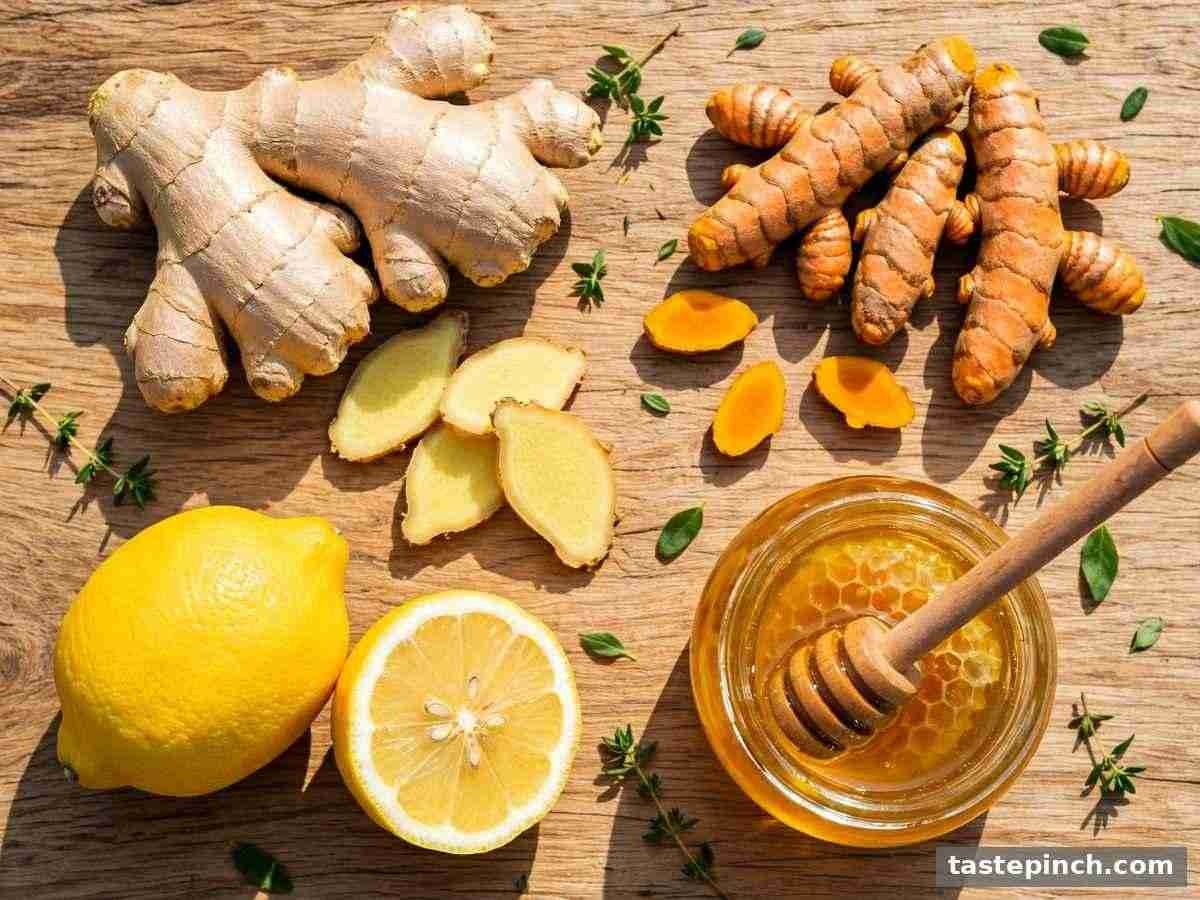
- Fresh ginger (1 tablespoon) — Use peeled and thinly sliced fresh ginger. It creates the tea’s signature spicy warmth. You can grate it instead if you prefer a stronger flavor.
- Fresh turmeric (1 tablespoon) — Fresh turmeric gives the tea a deep golden color and earthy taste. If fresh turmeric is not available, substitute 1/2 teaspoon ground turmeric. Learn more about turmeric and its culinary uses.
- Water (2 cups) — Use filtered drinking water for a clean, neutral base. Adjust the quantity if you want a stronger or milder infusion.
- Honey (1-2 teaspoons) — Honey adds natural sweetness and balances the earthy flavor. Adjust the amount to your preference or leave it out.
- Fresh lemon juice (1 tablespoon) — Lemon adds a bright citrus flavor that balances ginger and turmeric. Freshly squeezed juice works best.
- Black pepper (1 small pinch) — Black pepper adds a subtle spicy note. Traditional turmeric preparations often combine turmeric with black pepper because piperine can influence curcumin absorption. This does not establish a medical benefit from drinking the tea.
How to Make Ginger Turmeric Tea
Making ginger turmeric tea at home is straightforward. You will simmer fresh ginger and turmeric to release their flavors, strain the mixture, and finish it with lemon and honey.
Step 1: Prepare the Ginger and Turmeric
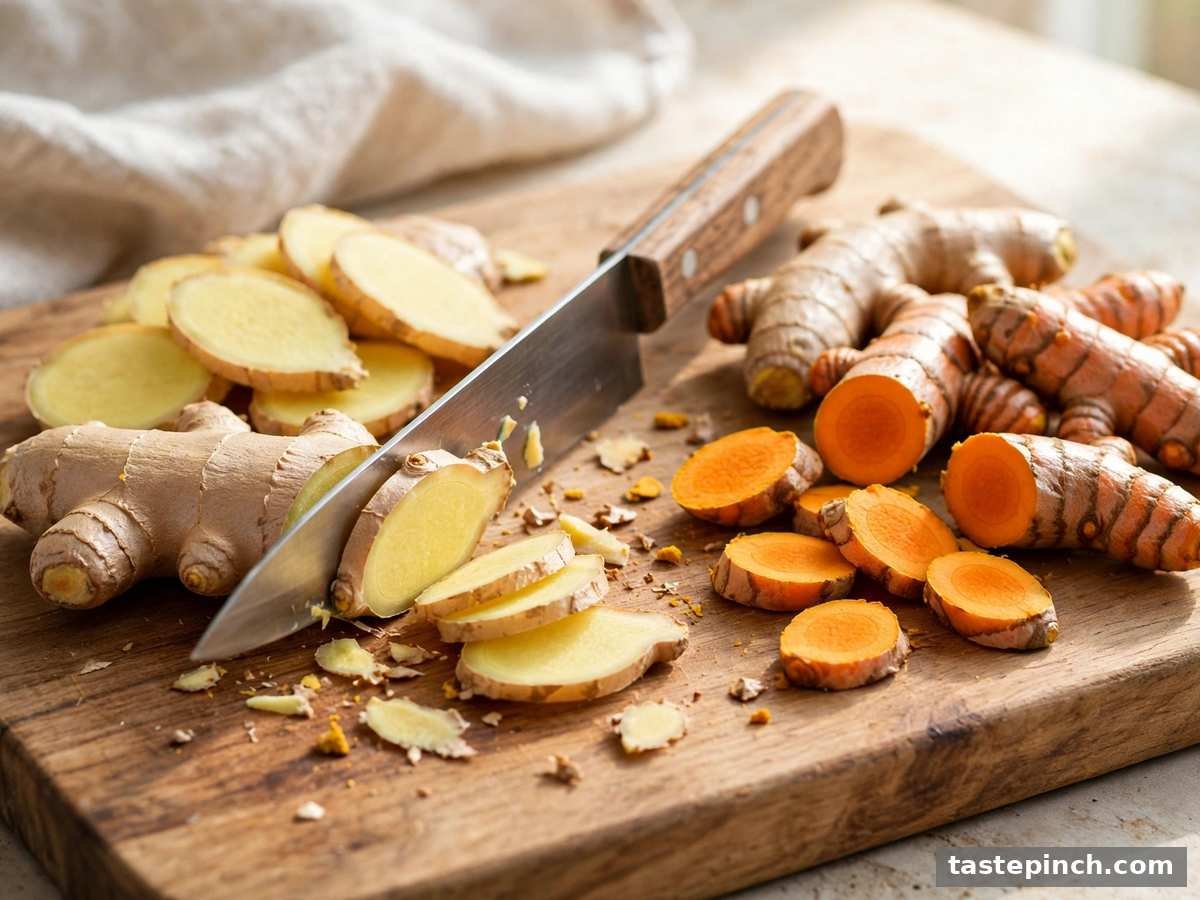
Wash the ginger and turmeric roots under running water. Remove any dirt and gently scrape their skins with a spoon. Slice the ginger into thin pieces. Chop or thinly slice the fresh turmeric. Wear kitchen gloves if you want to avoid temporary yellow stains on your fingers. Turmeric can also stain cutting boards, countertops, and light-colored utensils.
Step 2: Heat the Water
Pour 2 cups of water into a small saucepan. Place it over medium-high heat and bring it to a gentle boil. Avoid using an excessively high temperature once the water starts boiling. A gentle simmer extracts the ingredients’ flavors without reducing the liquid too quickly.
Step 3: Add Ginger and Turmeric
Add the sliced ginger and fresh turmeric to the saucepan. If you are using ground turmeric instead, add 1/2 teaspoon and stir thoroughly. Ground turmeric can settle at the bottom, so mixing helps distribute it throughout the liquid.
Step 4: Simmer the Tea
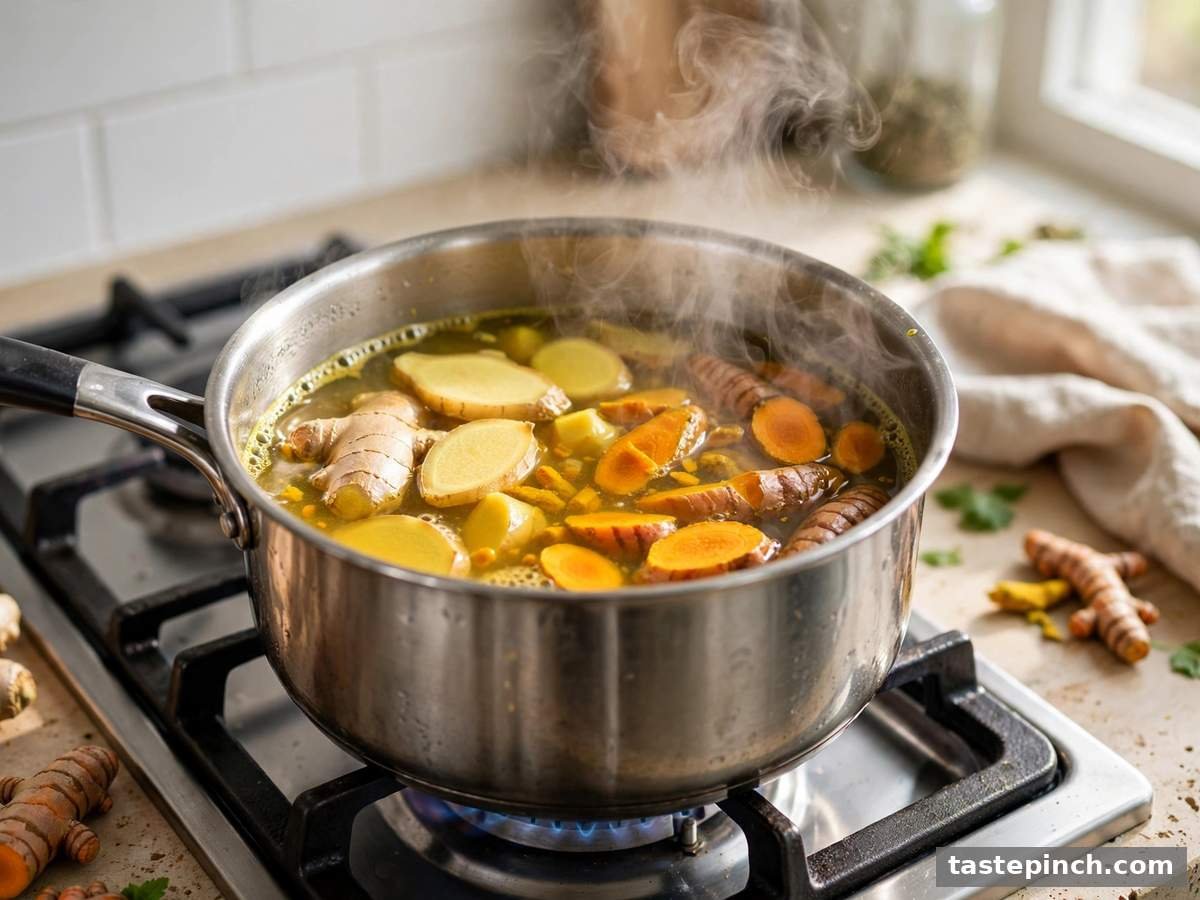
Reduce the heat to low and simmer for 10-15 minutes. The longer simmering time creates a deeper, spicier flavor. If you prefer a lighter drink, start checking the taste after 10 minutes.
Step 5: Strain the Mixture
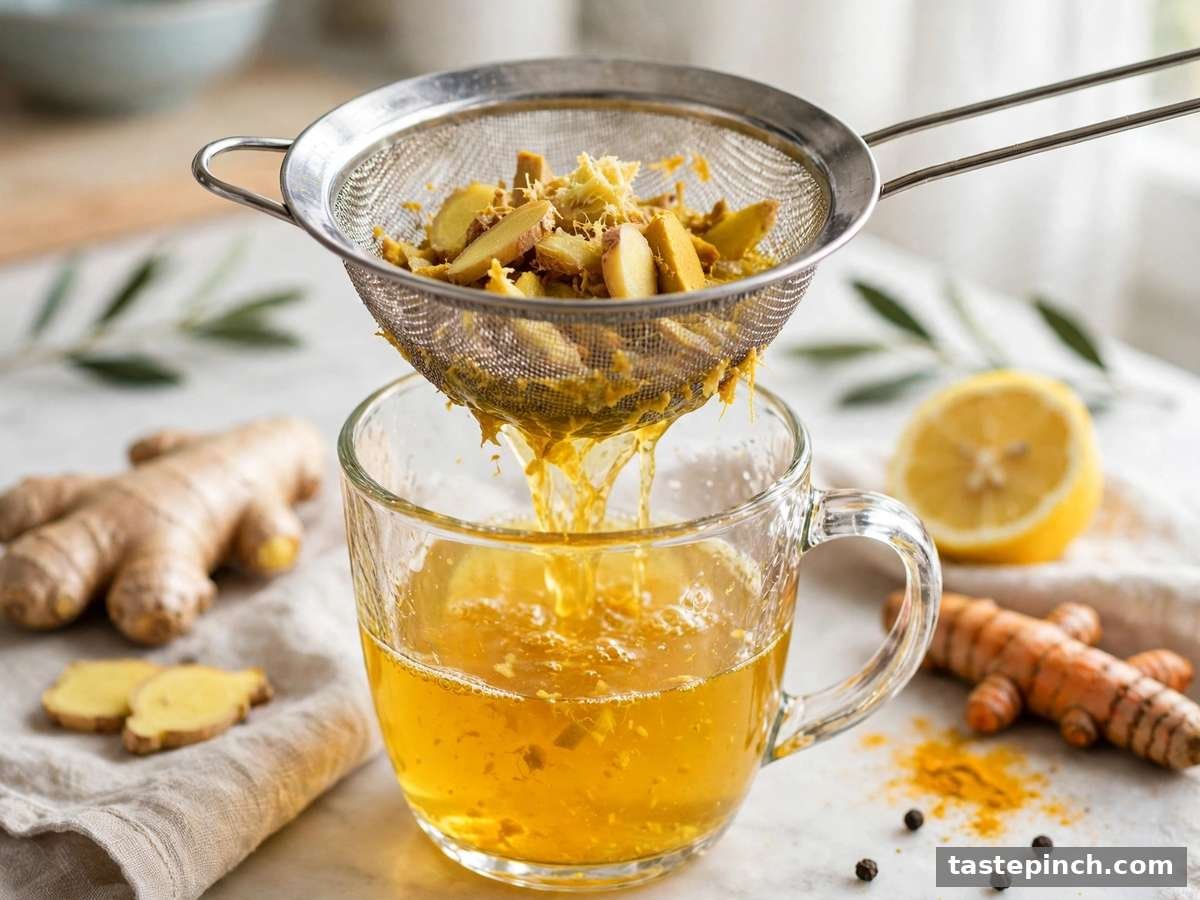
Turn off the heat and let the tea rest for approximately one minute. Pour it through a fine-mesh strainer into two heat-safe mugs. Discard the ginger and turmeric pieces. If you used ground turmeric, some fine particles may remain in the finished drink. This is normal.
Step 6: Add Lemon, Honey, and Black Pepper
Allow the tea to cool slightly before adding the finishing ingredients. Stir in fresh lemon juice and honey. Add a small pinch of black pepper if desired. Taste the tea and adjust the sweetness or lemon according to your preference.
Your homemade ginger turmeric tea is ready to enjoy!
What Are the Potential Benefits of Ginger Turmeric Tea?
Ginger and turmeric contain naturally occurring plant compounds that have attracted scientific interest. However, research on individual compounds does not automatically establish health benefits from drinking this homemade tea.
- Provides Plant Compounds — Ginger contains gingerols and related compounds, while turmeric contains curcuminoids, including curcumin. These substances are studied for their antioxidant and other biological properties. However, the amount extracted into a homemade cup varies with the ingredients and preparation method.
- Makes a Warming, Comforting Drink — Fresh ginger gives this tea a naturally warming sensation. Turmeric adds an earthy flavor that makes the drink especially enjoyable during colder weather. Many people enjoy warm herbal drinks as part of their relaxing morning or evening routines.
- Supports Everyday Hydration — The main ingredient in this recipe is water. Drinking unsweetened herbal tea can contribute to your overall daily fluid intake. It also provides a flavorful alternative to sugary sodas and sweetened beverages.
- Offers a Caffeine-Free Alternative — Ginger and turmeric do not naturally contain caffeine. Therefore, this recipe is suitable for people looking for a caffeine-free drink. Just avoid adding caffeinated black tea or green tea if you want to keep it caffeine-free.
- Provides a Flavorful Alternative to Sweetened Drinks — You control the honey and other ingredients when preparing this tea at home. A lightly sweetened or unsweetened cup can be a practical alternative to beverages containing substantial added sugar.
Important: Ginger turmeric tea is not a proven treatment for inflammation, arthritis, infections, digestive disorders, or weight loss. Enjoy it as a beverage rather than a substitute for medical treatment.
What Are the Best Tips for Making Ginger Turmeric Tea?
A few simple preparation techniques can improve the color, aroma, and overall flavor of your ginger turmeric tea.
- Choose fresh roots: Firm ginger and turmeric roots generally provide better flavor than old, dried-out pieces.
- Slice the roots thinly: Smaller pieces expose more surface area to the water.
- Do not rush simmering: Allow 10-15 minutes for the ingredients to infuse properly.
- Adjust the turmeric: Too much turmeric can make the drink overly earthy or bitter.
- Use a fine-mesh strainer: This removes larger pieces and creates a smoother drink.
- Add honey after simmering: Stir it into the finished tea rather than boiling it with the ingredients.
- Taste before serving: Adjust lemon, honey, and pepper to suit your preferences.
- Protect your kitchen surfaces: Fresh turmeric can leave stubborn yellow stains on porous materials.
What Are the Best Variations of Ginger Turmeric Tea?
Once you have prepared the basic recipe, you can experiment with different ingredients. These variations maintain the ginger and turmeric combination while introducing new flavors.
Ginger Turmeric Tea With Lemon
Lemon gives the tea a refreshing citrus flavor. Add an extra teaspoon of lemon juice or a thin lemon slice to each mug. This version works particularly well if you prefer a brighter taste rather than a strong earthy flavor.
Ginger Turmeric Tea With Honey
Honey creates a smoother, sweeter drink and balances the natural sharpness of ginger. Add one teaspoon to each serving and stir until dissolved. You can use maple syrup instead if you prefer a plant-based sweetener.
Ginger Turmeric Tea With Black Pepper
Black pepper is a traditional addition to turmeric preparations. It contains piperine, a compound that can influence the absorption of curcumin. Add only a small pinch because too much pepper can overpower the drink. Remember that this traditional combination does not make the tea a proven medical treatment.
Ginger Turmeric Cinnamon Tea
Add one small cinnamon stick while simmering the ginger and turmeric. Remove it before serving. Cinnamon contributes a sweet, woody aroma that complements both roots. This variation is especially enjoyable during fall and winter. For a drink centered on a different flavor combination, try our Ginger Cinnamon Tea.
Iced Ginger Turmeric Tea
Prepare the tea as usual, strain it, and let it cool to room temperature. Refrigerate until chilled, then pour over ice. Add lemon slices and a little honey if desired. This refreshing version is useful during warmer months when you want the flavor of ginger and turmeric without a hot drink.
When Is the Best Time to Drink Ginger Turmeric Tea?
There is no scientifically established best time to drink ginger turmeric tea. You can enjoy it whenever it fits your daily routine.
- In the morning: Enjoy a warm cup alongside breakfast.
- In the afternoon: Use it as a caffeine-free alternative to another hot beverage.
- After dinner: Serve a small cup as a comforting end to your meal.
- During colder weather: Enjoy its warming flavor on chilly days.
If you enjoy other homemade herbal drinks, explore Ginger Tea for a simpler ginger-only infusion. For a different caffeine-free evening option, read Chamomile Tea for Sleep.
How Do You Serve Ginger Turmeric Tea?
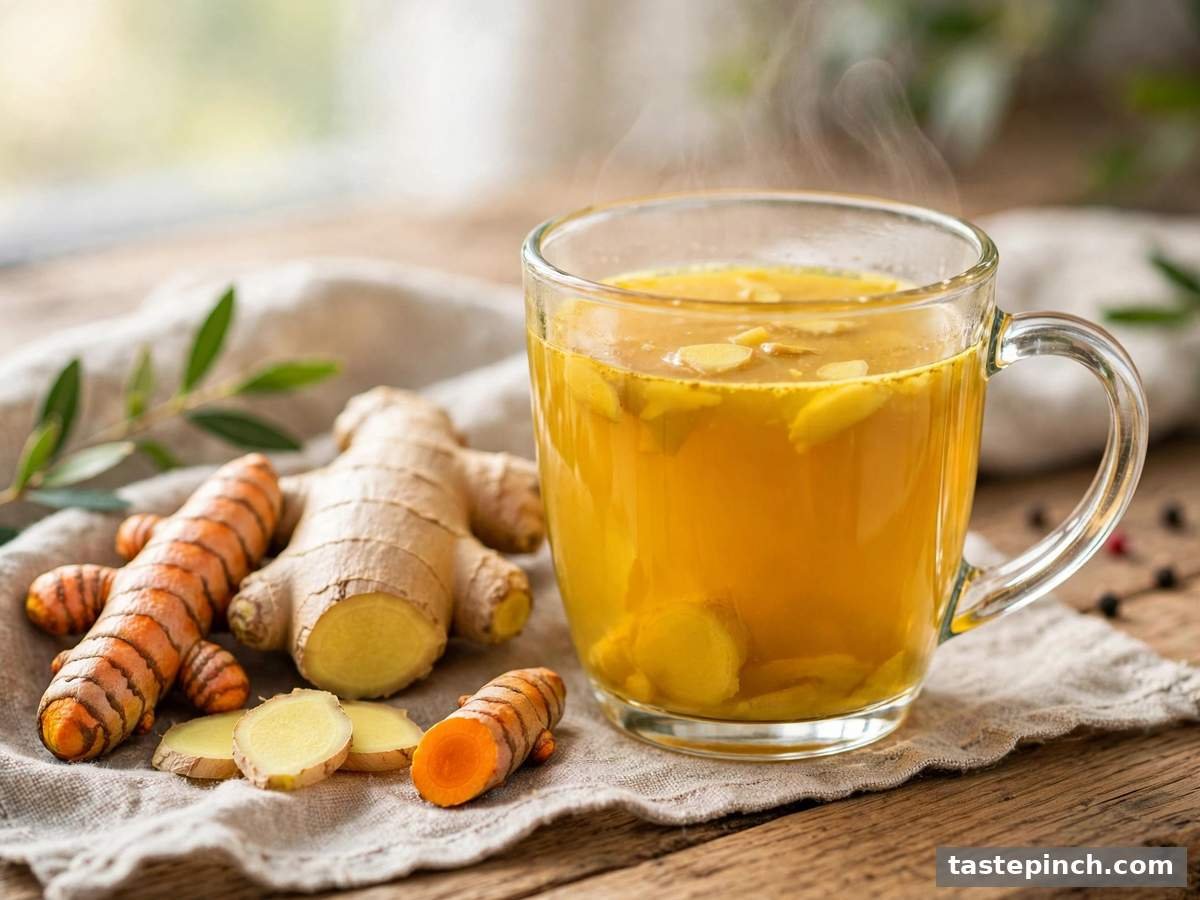
Serve ginger turmeric tea immediately after brewing while it is comfortably warm. A ceramic mug works well because it retains heat. You can also use a clear glass cup to show off the beautiful golden color.
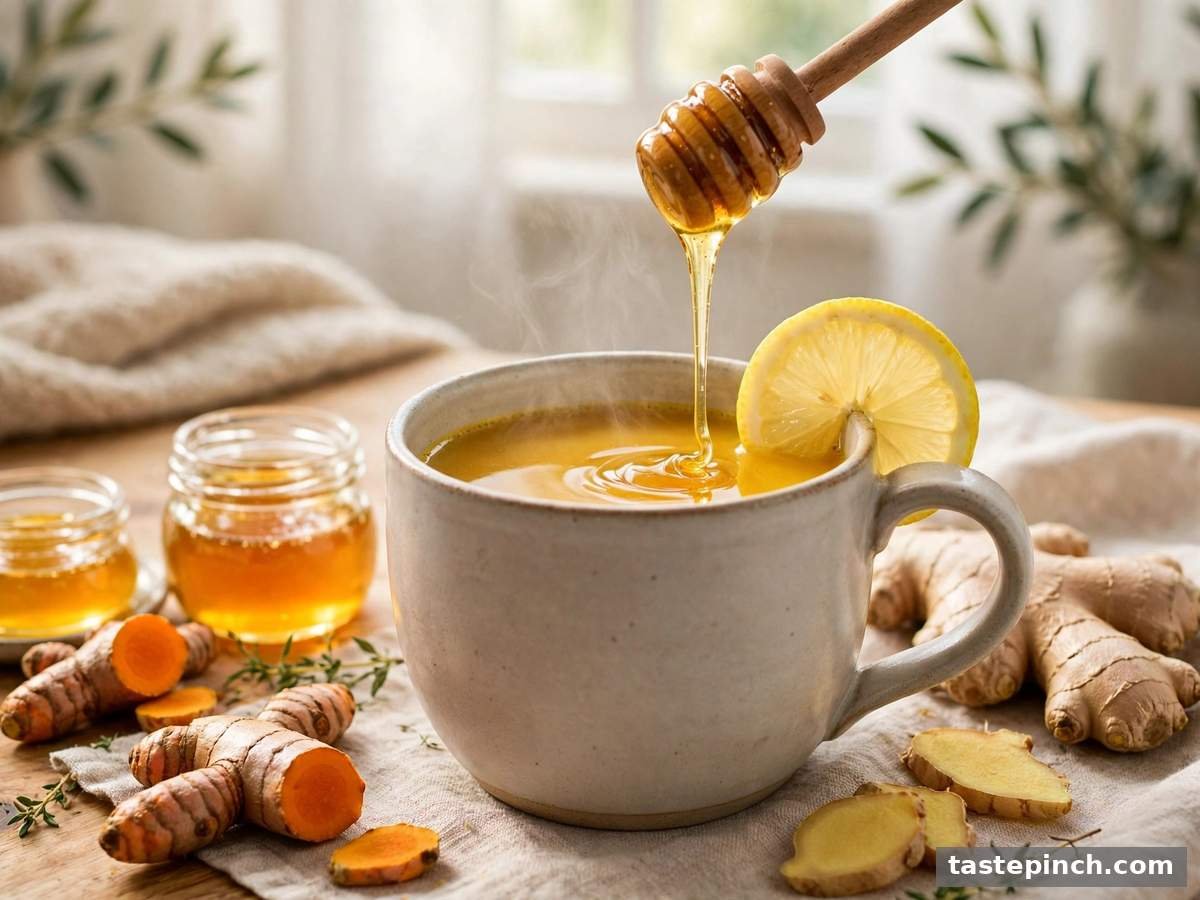
Here are a few serving ideas:
- Add a fresh lemon wheel to the rim of your mug.
- Garnish with a thin slice of fresh ginger.
- Add a cinnamon stick for extra aroma.
- Serve with a small amount of honey on the side.
- Pour chilled tea over ice with fresh lemon slices.
If you are exploring more herbal drinks, our guides to Herbal Tea Benefits and Best Tea for Weight Loss offer additional reading.
How Do You Store Ginger Turmeric Tea?
Freshly brewed ginger turmeric tea tastes best immediately, but you can prepare extra servings for later.
Follow these storage recommendations:
- Let the tea cool after straining.
- Transfer it into a clean, airtight glass container.
- Refrigerate promptly.
- Keep the container covered to protect the flavor.
- Use refrigerated leftovers within 3-4 days for best quality.
When you are ready to drink it, pour the desired amount into a saucepan and reheat gently. Avoid repeatedly heating the entire batch.
You can also serve refrigerated tea cold over ice. Add fresh lemon and honey just before serving for the best flavor.
Do not leave brewed tea sitting at room temperature for extended periods. Discard it if you notice an unusual smell, appearance, or other signs of spoilage.
What Are the Possible Side Effects and Precautions?
Although ginger turmeric tea uses familiar kitchen ingredients, it is not automatically suitable for everyone.
A few precautions are worth considering:
- Stomach sensitivity: Ginger and turmeric may cause heartburn, nausea, or stomach discomfort in some people.
- Medication interactions: Concentrated turmeric and ginger products may interact with certain medications. Ask your healthcare professional about regular consumption if you take prescription medicines, including blood thinners.
- Gallbladder concerns: People with gallbladder conditions should seek medical advice before regularly consuming concentrated turmeric preparations.
- Pregnancy and breastfeeding: Ask your healthcare professional before using large or concentrated amounts of these ingredients.
- Allergies: Avoid ingredients that cause an allergic reaction.
Normal culinary amounts are not the same as concentrated supplements. If you have health concerns, get individualized advice before making this tea a daily wellness routine.
Frequently Asked Questions About Ginger Turmeric Tea
What does ginger turmeric tea taste like?
Ginger turmeric tea has a warm, spicy, earthy flavor. Ginger provides a slightly sharp taste, while turmeric adds mild bitterness and an earthy aroma. Lemon and honey create a smoother, more balanced flavor.
Can I make ginger turmeric tea with ground turmeric?
Yes. Replace 1 tablespoon of fresh turmeric with approximately 1/2 teaspoon of ground turmeric. Stir it into the simmering water and strain if desired. Some fine particles may remain in your cup.
Is ginger turmeric tea caffeine-free?
Yes. Ginger and turmeric naturally contain no caffeine. This recipe uses water rather than traditional tea leaves, making it a caffeine-free beverage.
Can I drink ginger turmeric tea every day?
Many people enjoy ginger and turmeric in ordinary food amounts. However, individual tolerance and health conditions vary. Consult your healthcare professional before regularly consuming concentrated preparations, particularly if you take medication.
Can I drink ginger turmeric tea before bed?
Yes, you can enjoy a warm cup of ginger turmeric tea before bed if it suits your routine. The recipe contains no caffeine, although ginger’s spicy flavor may cause discomfort for people prone to heartburn.
Does black pepper belong in ginger turmeric tea?
Black pepper is an optional traditional addition. It contains piperine, which can influence curcumin absorption. Use just a small pinch because its flavor can become overpowering.
Can I use ginger powder instead of fresh ginger?
Yes. Use approximately 1/2 teaspoon ground ginger instead of 1 tablespoon fresh ginger. Adjust the amount according to your preferred flavor and strain if needed.
How long should I boil ginger turmeric tea?
Simmer the ginger and turmeric for approximately 10-15 minutes. This allows their flavors to infuse into the water. Avoid prolonged, aggressive boiling because it can reduce the liquid too quickly.
Can I drink ginger turmeric tea cold?
Absolutely. Prepare the recipe, strain it, and refrigerate until chilled. Serve over ice with fresh lemon slices for a refreshing caffeine-free drink.
Final Thoughts
Ginger turmeric tea is an easy homemade beverage with a beautiful golden color and warming flavor. Fresh ginger and turmeric create a naturally aromatic combination that works beautifully with lemon, honey, and a little black pepper.
You do not need expensive equipment or complicated ingredients to prepare ginger turmeric tea. Simply simmer the roots, strain the liquid, and customize each cup to your taste.
Enjoy it warm on chilly mornings or chilled during summer. For more homemade tea recipes and everyday kitchen inspiration, visit TastePinch.
More from TastePinch
If you liked this ginger turmeric tea, try our Ginger Tea and Ginger Cinnamon Tea, or read Chamomile Tea for Sleep, Herbal Tea Benefits, and Best Tea for Weight Loss.
Ginger Turmeric Tea
Ingredients
Equipment
Method
- Wash the fresh ginger and turmeric. Peel them and slice into thin pieces.
- Pour 2 cups of water into a small saucepan and bring it to a gentle boil.
- Add the sliced ginger and turmeric to the saucepan.
- Reduce the heat and simmer gently for 10-15 minutes.
- Remove the saucepan from the heat and let the tea rest for one minute.
- Strain the mixture into two heat-safe mugs using a fine-mesh strainer.
- Add fresh lemon juice and honey to the tea.
- Stir in a small pinch of black pepper if desired.
- Taste, adjust the sweetness, and serve warm.
Notes

Dana Whitfield is a recipe developer and food writer with a love for bold flavors and creative drinks. From restaurant copycat recipes to handcrafted cocktails like the Pistachio Martini and Blackberry Margarita, Dana believes great food should be approachable — no culinary school required. She’s spent years testing and perfecting recipes across cuisines, specialty diets, and everything in between. TastePinch is her corner of the internet where every pinch of flavor tells a story.