

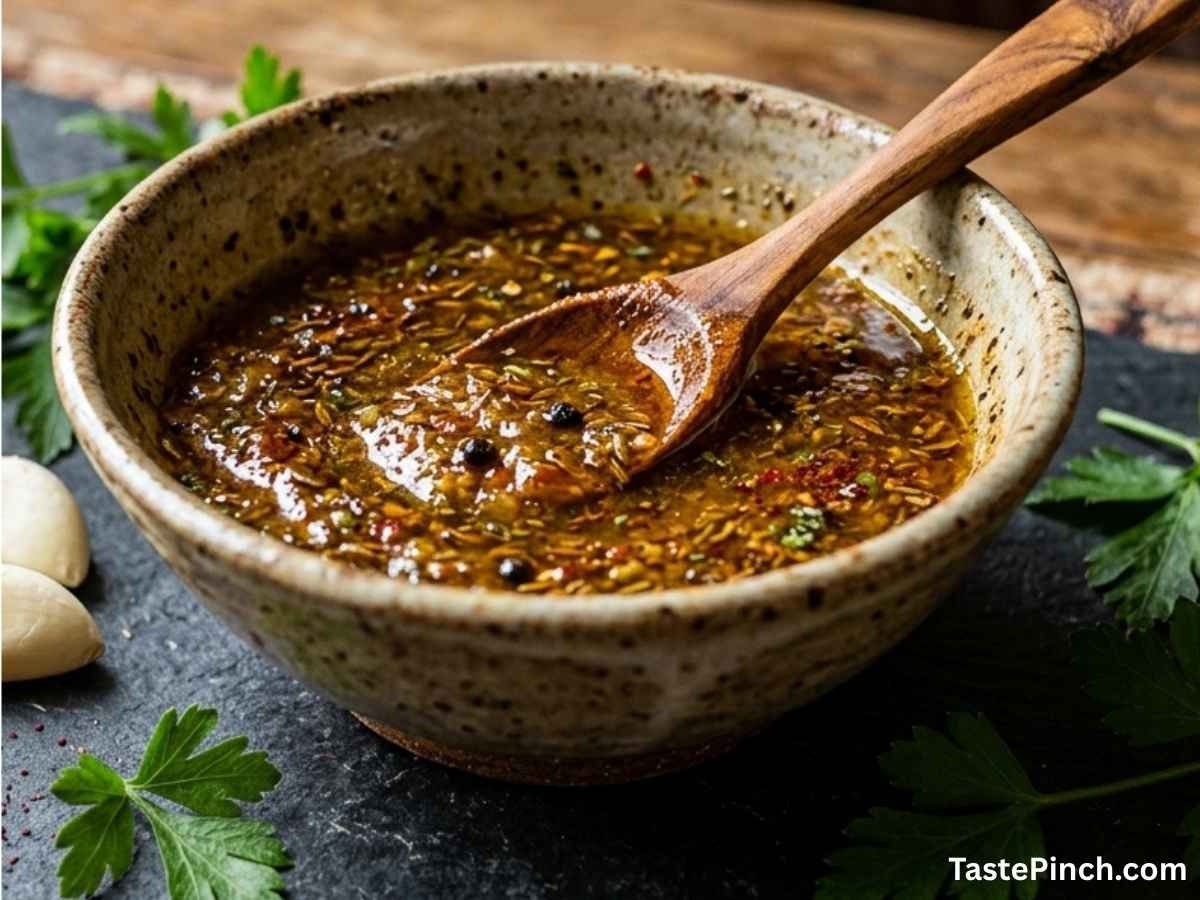
Pharaoh sauce is a rich and flavorful condiment inspired by the culinary traditions of ancient Egypt — and in 2026, it has quietly become one of the most searched, most shared, and most versatile sauces in the American home kitchen. Dana here, and the first time I made this sauce from scratch — toasted cumin seeds, freshly ground coriander, sumac, garlic, olive oil, and a generous hit of lemon juice — it immediately earned a permanent spot on my weekly meal prep list.
It is creamy, tangy, and mildly spiced — a condiment that sits somewhere between a creamy garlic sauce and a mild spicy sauce, with a smooth texture and balanced flavor inspired by Middle Eastern street food that works on everything from shawarma to roasted vegetables to fries.
This guide is the most complete Pharaoh sauce resource you will find — covering the authentic ancient-style oil-based version, the modern creamy version with mayonnaise and Greek yogurt, four variations (spicy, vegan, keto, and Egyptian ancient style), step-by-step instructions with every timing and temperature detail, storage and shelf life guidance for up to two weeks, full nutrition information, and seven specific serving applications.
The flavors actually get better after sitting overnight — something about letting all those spices hang out together works magic — and once you understand the two-version formula (oil-based vs creamy), making Pharaoh sauce becomes a completely repeatable five to twenty-five minute process depending on which version you choose.
What Is Pharaoh Sauce? (History, Origin & Meaning)
Pharaoh sauce is a creamy, tangy, and mildly spiced condiment inspired by Middle Eastern and Egyptian flavors. It usually contains garlic, lemon juice, mustard, paprika, cumin, chili flakes, sumac, and olive oil. Some modern versions use mayonnaise, roasted peppers, yogurt, or honey to create different textures and flavor profiles. The name “Pharaoh” is distinctly modern — it was coined to evoke the regal, ancient, and luxurious nature of Egyptian cuisine rather than to reference a specific historical dish.
The Ebers Papyrus from 1500 BCE lists spices used for both food and medicine, showing the ingredients found in today’s Egyptian Pharaoh sauce. Records from Thebes document cumin and fenugreek trades with Syria and Nubia — evidence of the early spice networks that shaped this culinary tradition. While the exact ancient recipe is not documented, the spice profile — cumin, coriander, fenugreek, garlic, and citrus — maps directly to ingredients used in Egyptian kitchens for over 3,500 years, making Pharaoh sauce the most historically grounded of all modern Egyptian-inspired condiments.
Why Pharaoh Sauce Is Trending in 2026
Food enthusiasts are currently obsessed with Pharaoh sauce in 2026 because it offers a healthy alternative to sugary ketchups. Social media influencers love showcasing its vibrant color and creamy texture in viral cooking videos. The demand for global flavors has pushed this unique Pharaoh dipping sauce into the spotlight this year. The timing is not accidental — 2025 and 2026 have seen a significant American audience shift toward Mediterranean and North African flavors driven by the popularity of shawarma shops, Egyptian street food content on TikTok, and the mainstream success of hummus and tahini as everyday condiments.
The rise of Mediterranean flavors in fast-casual dining has created a ready audience for a sauce that delivers the same bold spice complexity at home for a fraction of restaurant cost. Pharaoh sauce fills a specific gap in the American condiment market: it is more complex than ranch, less sweet than barbecue sauce, more aromatic than sriracha, and naturally compatible with the grilled proteins, grain bowls, and flatbreads that dominate modern American weeknight cooking. It is also genuinely easy to make — the quick creamy version takes under five minutes — which explains why it keeps appearing on meal prep channels and food blogs throughout 2026.
Ingredients for Pharaoh Sauce (Authentic & Modern Versions)
Pharaoh sauce exists in two distinct formats — the authentic oil-based version built on toasted whole spices, and the modern creamy version that uses mayonnaise or Greek yogurt as a base. Both are excellent and serve different culinary purposes. The oil-based version is more historically accurate, naturally vegan and keto-friendly, and works best as a drizzle or marinade. The creamy modern version is thicker, richer, better as a dip, and the version most American home cooks recognize from shawarma restaurants.
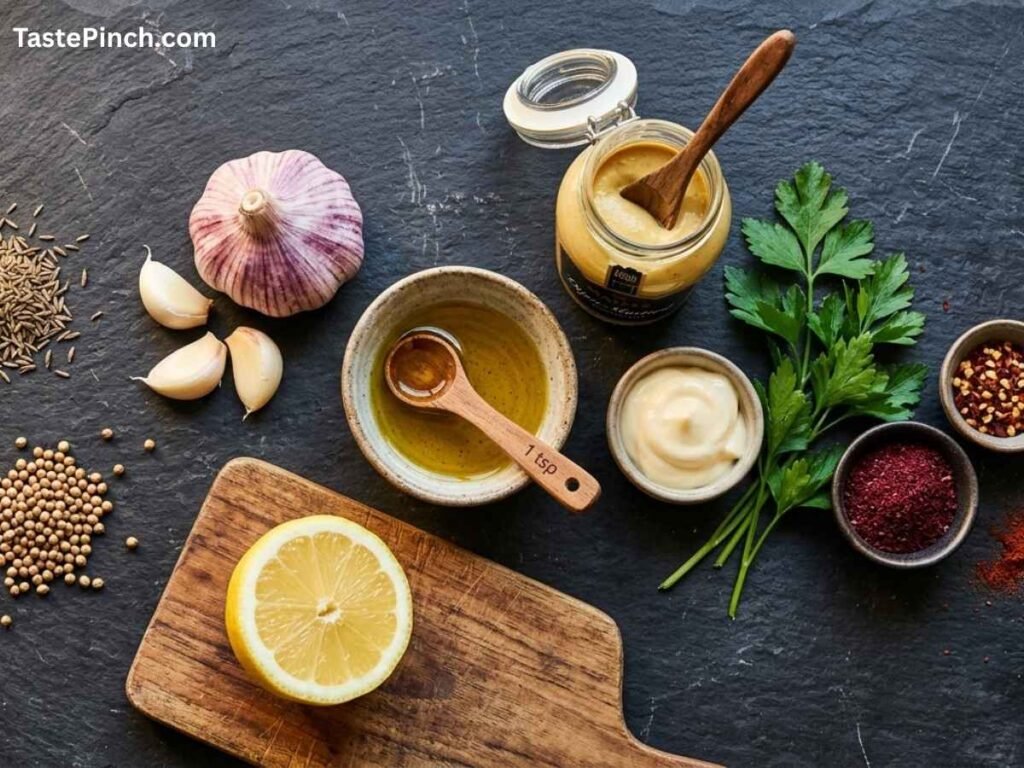
Pharaoh Sauce Recipe – Ingredients
Understanding the role of each ingredient helps you make smart substitutions when specific items are unavailable. Many recipes share similar bases — the core ingredients across traditional, creamy, spicy, or modern variations remain consistent: garlic, lemon juice, olive oil, cumin, and paprika. Sumac is the one ingredient most people have not worked with before and the one most worth seeking out — it provides a tart, lemony, slightly fruity flavor with no citrus that cannot be replicated by any direct substitute.
Version 1 — Authentic Oil-Based Pharaoh Sauce (Serves 8):
- 1 teaspoon whole cumin seeds
- 1 teaspoon whole coriander seeds
- 4 garlic cloves, finely minced
- 3 tablespoons extra virgin olive oil
- 1 tablespoon fresh lemon juice
- 1 teaspoon lemon zest
- 1 teaspoon ground sumac
- ½ teaspoon fenugreek powder
- ½ teaspoon smoked paprika
- ¼ teaspoon chili flakes (adjust to heat preference)
- Salt and cracked black pepper to taste
Version 2 — Modern Creamy Pharaoh Sauce (Serves 8):
- ½ cup mayonnaise (regular or vegan)
- 2 tablespoons Greek yogurt (omit for dairy-free)
- 2 garlic cloves, finely minced or pressed
- 1 tablespoon fresh lemon juice
- 1 teaspoon Dijon mustard
- 1 teaspoon smoked paprika
- ½ teaspoon ground cumin
- ½ teaspoon ground sumac
- ¼ teaspoon chili flakes
- Salt and black pepper to taste
Ingredient Role Guide
| Ingredient | Role | Substitute |
| Cumin (toasted whole) | Earthy, warm base flavor | Ground cumin (less aroma) |
| Coriander seeds | Citrusy, floral depth | Ground coriander |
| Sumac | Tart, fruity, lemony acidity | Lemon zest + pinch citric acid |
| Fenugreek | Bitter-sweet, maple-like warmth | Omit or replace with celery seed |
| Smoked Paprika | Color, smokiness | Regular sweet paprika |
| Garlic (fresh) | Aromatic sharpness | Roasted garlic for milder flavor |
| Lemon Juice (fresh) | Brightness, acid balance | White wine vinegar |
| Olive Oil | Richness, texture base | Avocado oil |
| Mayonnaise (modern) | Creaminess, body | Vegan mayo, cashew cream |
| Dijon Mustard | Emulsification, subtle heat | Whole grain mustard |
| Chili Flakes | Heat layer | Cayenne, harissa paste |
How to Make Pharaoh Sauce at Home
Version 1 — Authentic Oil-Based (25 minutes)
Step 1 — Toast the Spices
Place a dry cast iron or heavy-bottomed skillet over medium heat. Add the whole cumin seeds and coriander seeds. Toast for 2 to 3 minutes, shaking the pan every 30 seconds, until the spices are fragrant and very slightly darkened — you will smell a warm, nutty aroma when they are ready. Remove from heat immediately and transfer to a plate to stop the cooking. Do not leave them in the hot pan — carryover heat will burn them in under 30 seconds.
Step 2 — Grind the Spices
Let the toasted spices cool for 2 minutes. Transfer to a mortar and pestle or spice grinder. Grind to a fine powder — the finer the grind, the smoother and more integrated the sauce texture. If using a mortar and pestle, grind in a circular motion with firm downward pressure for 2 to 3 minutes.
Step 3 — Build the Base
In a medium bowl, combine the freshly ground spices with the minced garlic, extra virgin olive oil, fresh lemon juice, lemon zest, sumac, fenugreek, smoked paprika, and chili flakes. Stir thoroughly until all ingredients are fully combined and the mixture is fragrant and slightly glossy.
Step 4 — Simmer (Optional but Recommended)
Simmer the mixture over medium-low heat for about 10 minutes, stirring occasionally to meld the flavors. This step is optional for the quick version but strongly recommended for the authentic version — heat opens up the spice compounds and dramatically deepens the flavor. If simmering, transfer the mixture to a small saucepan. Do not boil. Keep heat at medium-low throughout.
Step 5 — Cool and Store
Remove from heat and let the sauce cool to room temperature before tasting and adjusting seasoning. The flavors shift as the sauce cools — it will taste slightly more balanced and integrated at room temperature than when hot. Transfer to a clean glass jar. Refrigerate for at least 1 hour before serving — overnight is better.
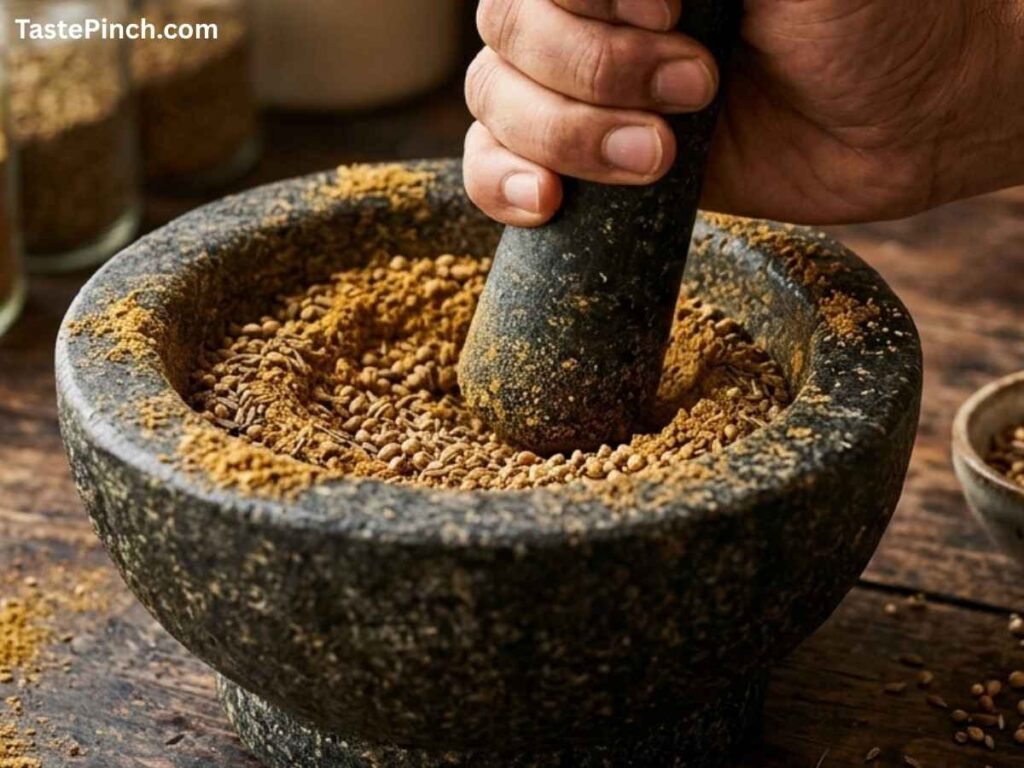
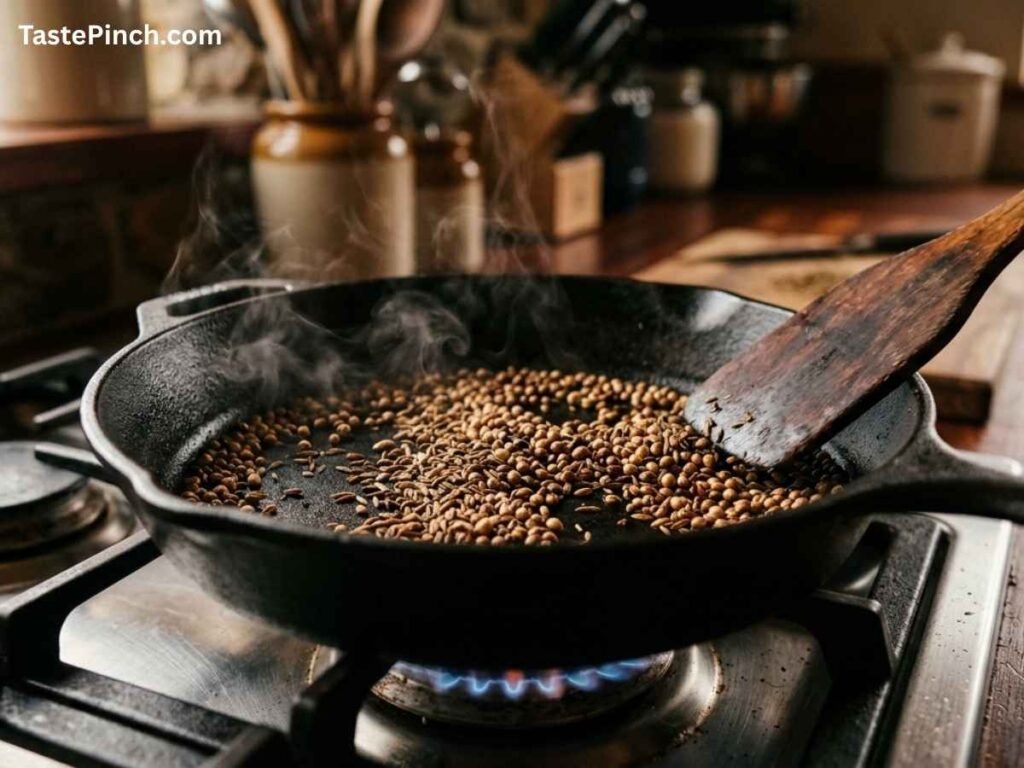
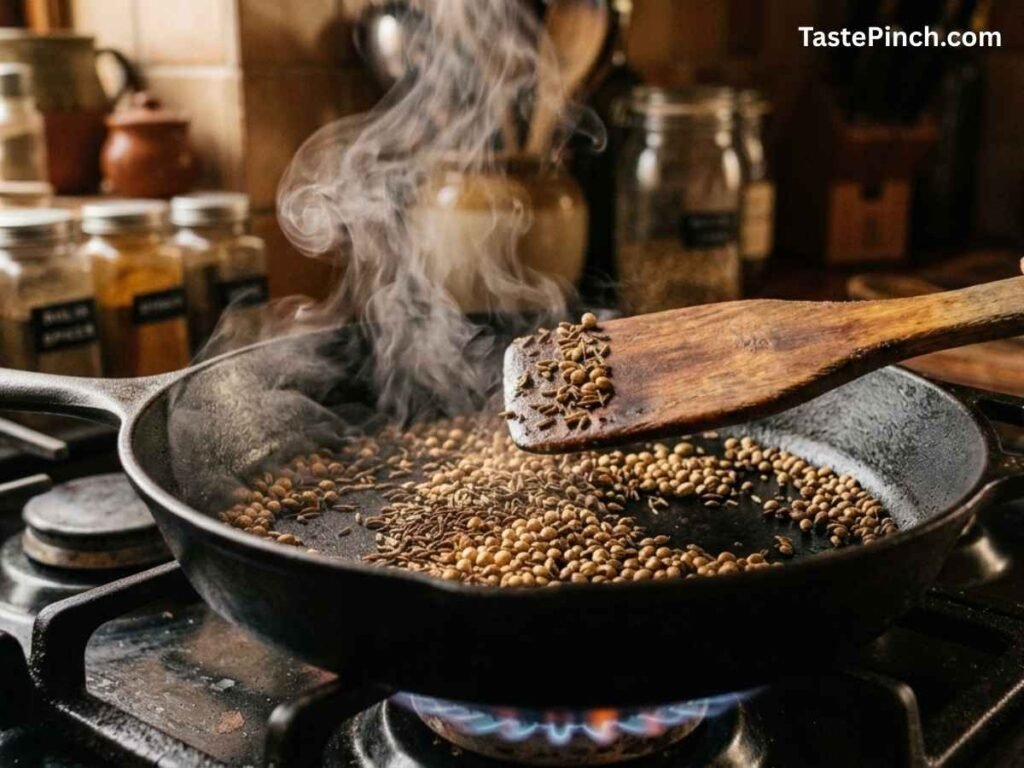

Pharaoh Sauce Recipe – Ready in 25 Min! Bold Egyptian Flavor
Version 2 — Modern Creamy (5 minutes, no cooking)
Step 1 — Combine Base
Add mayonnaise and Greek yogurt (if using) to a medium bowl. Whisk until completely smooth.
Step 2 — Add Flavor
Add minced garlic, fresh lemon juice, Dijon mustard, smoked paprika, ground cumin, sumac, chili flakes, salt, and black pepper. Whisk vigorously for 60 seconds until all ingredients are fully incorporated and the sauce is uniform in color and texture.
Step 3 — Taste and Adjust
Taste the sauce. Adjust lemon juice for more brightness, sumac for more tartness, chili flakes for more heat, or salt as needed. The creamy version should taste tangy, slightly spicy, and garlic-forward — if it tastes flat, add a pinch more sumac and a small squeeze of lemon.
Step 4 — Rest and Serve
Cover and refrigerate for at least 30 minutes before serving. The flavor improves significantly after resting — the garlic mellows, the spices hydrate, and the acid balances into the cream base.
Pharaoh Sauce Variations
Variation 1 — Spicy Pharaoh Sauce (Harissa Style)
Start with the authentic oil-based recipe. Double the chili flakes to ½ teaspoon, add 1 tablespoon of harissa paste, and add 4 to 6 deseeded red chili peppers (bird’s eye or cayenne) sautéed in olive oil for 3 to 4 minutes before building the rest of the sauce. The key ingredient in the spicy version is Pharaoh’s Pepper — a blend of fiery chili peppers known for their intense heat and smoky undertones — paired with vinegar, garlic, and warm spices to create a sauce that is complex and deeply flavorful. Use this version on lamb kebabs, grain bowls, or anywhere you want heat front and center.
Variation 2 — Vegan Pharaoh Sauce
Use the modern creamy formula with vegan mayonnaise (Just Mayo or Hellmann’s Vegan) in place of regular mayo and omit the Greek yogurt entirely. Add 1 tablespoon of tahini for extra richness and a traditional Middle Eastern flavor depth. The tahini adds sesame nuttiness that complements the cumin and coriander beautifully and gives the sauce a slightly looser, more drizzleable consistency. This version is also dairy-free and naturally plant-based.
Variation 3 — Keto Pharaoh Sauce
Both the authentic oil-based version and the mayo-based creamy version are naturally keto-friendly — neither contains sugar, flour, or high-carb ingredients. For the keto-optimized version, use full-fat mayonnaise, skip the Greek yogurt (which has trace carbs), and add 1 tablespoon of MCT oil alongside the olive oil for additional healthy fat content. Each 2-tablespoon serving contains approximately 0.5g net carbs.
Variation 4 — Ancient Egyptian Style (No Modern Ingredients)
This version uses only ingredients available in ancient Egypt — no mayonnaise, no Dijon mustard, no modern condiments. Toast and grind cumin and coriander. Combine with raw minced garlic, extra virgin olive oil, fresh lemon juice, fenugreek, sumac, fresh dill, and a small amount of honey (ancient Egyptians used honey extensively as a flavor balancer). Simmer for 10 minutes. This version is thinner, more intensely herbal, and less creamy than the modern versions — serve it as a drizzle over flatbreads, roasted lamb, or lentil dishes.
Pro Tips, Common Mistakes & Troubleshooting
Pro Tips:
- Let toasted spices cool for 2 minutes before grinding — grinding hot spices produces moisture that makes them clump instead of powdering cleanly. Two minutes of cooling produces a consistently fine grind every time.
- Always use fresh lemon juice. Bottled lemon juice contains preservatives that add a faint metallic bitterness — in a sauce where lemon is a primary flavor element, this difference is clearly detectable. Fresh-squeezed lemon takes 30 seconds and the flavor impact is significant.
- Rest the sauce. Both versions taste noticeably better after resting for at least 30 minutes — overnight is ideal. The rest period allows garlic to mellow from sharp to rounded, spices to hydrate into the base, and acid to integrate from bright to balanced.
Common Mistakes and Fixes:
| Mistake | Result | Fix |
| Burning the spices while toasting | Bitter, acrid sauce | Reduce heat to medium, shake pan constantly, remove immediately at first aroma |
| Using pre-ground spices only | Flat, one-dimensional flavor | Toast whole seeds and grind fresh for authentic depth |
| Skipping the rest period | Sharp, unbalanced garlic flavor | Refrigerate minimum 30 minutes, ideally overnight |
| Over-salting before tasting | Sauce too salty to correct | Season at the end, after all other flavors are balanced |
| Not emulsifying creamy version fully | Oil pools on surface | Whisk for a full 60 seconds — the emulsion needs time to form |
| Using garlic powder instead of fresh | Muted, synthetic garlic note | Always use fresh minced garlic — it is the primary aromatic |
| Boiling during the simmer step | Spices turn harsh and bitter | Keep heat at medium-low throughout — steam not boil |
Best Ways to Serve & Use Pharaoh Sauce
Pharaoh sauce is one of the most versatile condiments in the Middle Eastern-inspired kitchen — it works as a dip, a drizzle, a marinade, a sandwich spread, and a salad dressing. The authentic oil-based version is thinner and better suited to drizzling and marinating. The modern creamy version is thicker and better for dipping, spreading, and coating.
It pairs beautifully with shawarma, gyros, wraps, sandwiches, fries, and grilled chicken. Beyond those obvious pairings, Pharaoh sauce works exceptionally well in these specific applications that most recipe guides overlook: drizzled over roasted cauliflower (the spice profile complements caramelized vegetables perfectly), stirred into plain hummus to create a spiced dipping sauce, used as a marinade for chicken thighs (coat and refrigerate 4 hours before grilling), tossed with roasted chickpeas for a high-protein snack with significant flavor, and spooned over fried eggs on pita for an Egyptian-inspired breakfast bowl.
Serving Pairing Guide
| Dish | Best Version | Serving Style |
| Grilled lamb or chicken | Authentic oil-based | Drizzle over finished dish |
| Shawarma wrap | Modern creamy | Spread on flatbread |
| Sweet potato fries | Modern creamy | Dipping sauce |
| Roasted vegetables | Authentic oil-based | Toss before roasting as marinade |
| Grain bowls (farro, quinoa) | Either version | Drizzle on top |
| Pita and hummus platter | Modern creamy | Side dipping bowl |
| Grilled fish | Authentic oil-based | Drizzle and squeeze extra lemon |
| Burgers | Modern creamy | Spread on bun like aioli |
| Chicken marinade | Authentic oil-based | Coat and refrigerate 2–4 hours |
| Salad dressing | Authentic thinned with water | Thin to pour consistency |
Storage, Shelf Life & Make-Ahead Tips
Both versions of Pharaoh sauce store well, making them ideal for weekly meal prep. Store the sauce in an airtight glass jar in the fridge for up to 2 weeks. The flavors actually get better after sitting overnight.
Authentic Oil-Based Version:
Store in a sealed glass jar in the refrigerator for up to 2 weeks. The olive oil may solidify slightly when refrigerated — this is normal. Let the jar sit at room temperature for 10 minutes before serving and the sauce returns to its liquid, drizzleable consistency. Do not microwave to warm — heat alters the flavor of fresh garlic and lemon significantly.
Modern Creamy Version:
Store in an airtight container in the refrigerator for up to 7 days. The mayonnaise base does not freeze well — the emulsion breaks on thawing and the sauce becomes watery and separated. If you notice liquid pooling on top after refrigerator storage, simply stir back in — this is normal separation and does not indicate spoilage.
Make-Ahead Strategy:
Both versions are genuinely better made 24 hours ahead. The overnight rest period transforms the flavor — garlic mellows from sharp to sweet, cumin and coriander bloom fully into the base, and sumac’s tartness integrates without dominating. Make both versions on Sunday evening for the most flavorful results throughout the week.
Scaling:
The recipe scales cleanly. Double the batch for a family-sized portion or triple for party platters and large dinner gatherings. When scaling, taste and adjust after combining — spice compounds intensify proportionally and a triple batch may need slightly less sumac and chili than three times the single recipe amount.
Nutrition Facts, Health Benefits & FAQs
Nutrition Facts — Per 2 Tablespoon Serving
| Nutrient | Authentic Oil-Based | Modern Creamy |
| Calories | 65 kcal | 95 kcal |
| Total Fat | 7g | 9g |
| Saturated Fat | 1g | 1.5g |
| Carbohydrates | 1.5g | 1.5g |
| Net Carbs | 1g | 1g |
| Sugar | 0.2g | 0.3g |
| Fiber | 0.5g | 0.2g |
| Protein | 0.4g | 0.5g |
| Sodium | 85mg | 140mg |
| Vitamin C | 3mg | 2mg |
| Iron | 0.8mg | 0.3mg |
Health Benefits
Cumin contains thymoquinone, a compound with documented anti-inflammatory properties. Garlic contains allicin — a sulfur compound associated with immune support and cardiovascular health in multiple clinical studies. Sumac is one of the highest antioxidant-containing spices measured by ORAC score, significantly higher than blueberries per gram.
Olive oil provides monounsaturated fats associated with Mediterranean diet cardiovascular benefits. Coriander has been studied for its role in blood sugar regulation. Together, these five ingredients make Pharaoh sauce one of the most nutritionally dense condiments per serving in the home kitchen.
You try this sauce with these recipes for best combination:
Buona Beef Tuna Genovese Copycat Recipe
Asparagus Mushroom Red Pepper Pasta
Frequently Asked Questions
Is there a Pharaoh sauce?
Pharaoh sauce is a creamy, tangy, and mildly spiced condiment inspired by Middle Eastern and Egyptian flavors. The name is more modern than ancient — it reflects the flavor inspiration drawn from Egyptian spices and cooking traditions rather than a direct historical recipe. It is a real condiment found in Egyptian-inspired restaurants, nutrition-forward cafés, and increasingly in home kitchens across the United States, though no single standardized ancient recipe exists. The modern version is a creative interpretation of spice profiles documented in ancient Egyptian records.
What is the sauce they use at In-N-Out Burger?
The signature sauce at In-N-Out Burger is called “Spread” — it is a Thousand Island-style sauce made with mayonnaise, ketchup, sweet pickle relish, and vinegar. It is not related to Pharaoh sauce in any way — no Middle Eastern spices, no cumin, no sumac. The comparison comes up in searches because both are creamy condiments used as burger or dipping sauces, but they are entirely different flavor profiles. Pharaoh sauce is significantly more complex, spiced, and less sweet than In-N-Out Spread.
What did the Pharaohs eat in ancient Egypt?
Ancient Egyptians commonly used cumin, coriander, fenugreek, and garlic as primary flavoring agents in their food. The Egyptian diet was built around bread, lentils, fava beans, onions, garlic, leeks, fish from the Nile, and roasted meats. Spices were traded extensively with Syria, Nubia, and Arabia. Honey was the primary sweetener. Olive oil and sesame oil were both used for cooking and flavoring. The spice profile of modern Pharaoh sauce — cumin, coriander, garlic, fenugreek, citrus — maps almost exactly to documented ancient Egyptian flavoring ingredients, making it the most historically plausible of all modern Egyptian-inspired condiments.
Is this a gluten-free sauce?
Yes — both the authentic oil-based version and the modern creamy version of Pharaoh sauce are naturally gluten-free. None of the core ingredients contain gluten. If using Dijon mustard in the creamy version, check the label — most Dijon mustards are gluten-free but some brands use vinegar derived from gluten-containing grains. Annie’s Organic and Maille Dijon are both certified gluten-free options
Can I freeze this sauce?
The authentic oil-based version can be frozen in an airtight container for up to 3 months — the oil base freezes and thaws without structural breakdown. Thaw overnight in the refrigerator and stir well before using. The modern creamy version (mayonnaise-based) cannot be frozen — mayonnaise emulsions break during freezing and thawing, resulting in a watery, separated sauce that does not recover even with vigorous stirring.
What does sumac spice add?
Sumac is a dried, ground berry from the Rhus coriaria plant native to the Middle East. It adds a tartness that is simultaneously lemony, fruity, and slightly astringent — without any actual citrus fruit. Sumac provides the tart, lemony, slightly fruity flavor with no citrus that cannot be replicated by any direct substitute. In Pharaoh sauce, sumac performs the same brightening function as lemon juice but adds complexity and a slightly darker, more earthy acid note that fresh lemon alone cannot produce. Available at Middle Eastern grocery stores, Whole Foods, and Amazon.
Is this good for keto?
Yes — both versions of Pharaoh sauce are naturally keto-compatible. The authentic oil-based version contains approximately 1g net carbs per 2-tablespoon serving. The modern creamy version contains approximately 1g net carbs per 2-tablespoon serving (check your mayonnaise label — most contain 0 to 1g carbs per serving). Neither version contains sugar, flour, or high-carb thickeners. Both are rich in healthy fats from olive oil and mayonnaise, making them an excellent keto condiment for proteins, salads, and vegetables.

Pharaoh Sauce Recipe
Ingredients
Equipment
Method
- Step 1: Toast the Spices Place a dry cast iron skillet over medium heat. Add whole cumin seeds and coriander seeds. Toast for 2 to 3 minutes, shaking the pan every 30 seconds, until fragrant and very slightly darkened. Remove from heat immediately. Transfer to a plate to cool for 2 minutes.
- Step 2: Grind the Spices Transfer cooled spices to a mortar and pestle or spice grinder. Grind to a fine powder. Set aside.
- Step 3: Build the Base In a medium bowl, combine freshly ground spices, minced garlic, olive oil, fresh lemon juice, lemon zest, sumac, fenugreek, smoked paprika, and chili flakes. Stir until fully combined and glossy.
- Step 4: Simmer (Optional) Transfer mixture to a small saucepan. Simmer over medium-low heat for 10 minutes, stirring occasionally. Do not boil. This step deepens the flavor significantly.
- Step 5: Cool, Season, and Store Remove from heat. Cool to room temperature. Taste and adjust seasoning — add salt, more lemon, or more chili flakes as needed. Transfer to a glass jar. Refrigerate at least 1 hour before serving — overnight is best.
- (For Modern Creamy Version: Combine all creamy version ingredients in a bowl. Whisk 60 seconds until fully smooth and emulsified. Taste and adjust. Refrigerate 30 minutes minimum before serving.)
Notes
NUTRITION
(Per serving — 2 tablespoons, Authentic Oil-Based Version) Serving Size: 2 tablespoons Calories: 65 Total Fat: 7 g Saturated Fat: 1 g Unsaturated Fat: 6 g Trans Fat: 0 g Carbohydrates: 1.5 g Sugar: 0.2 g Fiber: 0.5 g Protein: 0.4 g Net Carbs: 1 g Sodium: 85 mg Cholesterol: 0 mg Potassium: 45 mg Vitamin C: 3 mg Calcium: 20 mg Iron: 0.8 mg Nutritional values are estimates. Modern creamy version has approximately 95 calories and 9g fat per 2-tablespoon serving due to mayonnaise content. Values vary by brand.Dana Whitfield is a recipe developer and food writer with a love for bold flavors and creative drinks. From restaurant copycat recipes to handcrafted cocktails like the Pistachio Martini and Blackberry Margarita, Dana believes great food should be approachable — no culinary school required. She’s spent years testing and perfecting recipes across cuisines, specialty diets, and everything in between. TastePinch is her corner of the internet where every pinch of flavor tells a story.