

When I first tried making a gluten free gnocchi recipe, I ended up with dense, gummy potato bullets that practically glued my jaw shut. If you’ve been searching for that authentic, pillowy texture reminiscent of Northern Italy, you’re in the right place. Creating tender gluten free pasta isn’t about perfectly mimicking wheat; it’s about respecting the ingredients. This foolproof method guarantees light, fluffy dumplings that float to the top of your boiling water every single time.
Most guides skip this, but from experience, the secret to easy gluten-free gnocchi isn’t just the flour blend—it’s exactly how moisture, starch, and temperature work together. We’re removing the excess moisture before it ever touches your gluten-free flour blend. If you’re tired of sticky dough that requires endless dusting and always falls apart in the pot, this approach changes everything. Let’s roll up our sleeves and make some seriously good Italian comfort food.
Why this is the best gluten free gnocchi recipe
Here’s the thing: traditional wheat gnocchi relies heavily on gluten development—a network of proteins (glutenin and gliadin) that forms elastic chains—to hold the dumplings together. Without it, you need a different structural approach. This recipe works flawlessly because it leans entirely on the natural starches of the potato combined with a high-quality gluten-free flour, creating a binder that won’t disintegrate in boiling water.
What surprised me most was how forgiving this dough becomes when you control the moisture variables. By utilizing a potato ricer and baked russets, we create a fluffy, airy base that practically melts in your mouth. You won’t need to overwork it, and you certainly won’t end up with that dreaded gummy texture common in wheat-free potato dumplings.
Gluten free gnocchi ingredients
You don’t need a massive grocery haul to pull this off. Keeping the ingredient list short is essential for letting the potato flavor shine through.
| Ingredient | Role in the Dough | Substitution Notes |
| Russet Potatoes | Provides fluffy, starchy base structure | Avoid waxy potatoes (red or gold) entirely |
| GF Flour Blend | Absorbs moisture and binds the dough | Must contain xanthan gum for elasticity |
| Egg Yolk | Adds richness and acts as a secondary binder | Can be omitted for a vegan option (see below) |
| Sea Salt | Enhances flavor | Kosher salt works equally well |
Best potatoes for making gnocchi
If you only remember one rule, make it this: use Russet potatoes. The reason is purely scientific. Russet potatoes contain roughly 18–22% starch content compared to just 12–14% in waxy varieties like red skin potatoes. That higher starch level means you need significantly less flour, which keeps the gnocchi light and flavorful instead of dense and doughy.
The best gluten free flour for gnocchi
Honestly, not all blends are created equal. You want a high-quality 1-to-1 gluten-free flour blend formulated with xanthan gum (like Bob’s Red Mill or King Arthur). Because starch-based flours (rice, tapioca, potato) don’t form elastic networks, xanthan gum acts as the unsung hero. It creates a polysaccharide web that mimics gluten’s behavior, giving your dough the stretch it needs to roll into ropes without cracking.
How to make gluten free potato gnocchi
The process is remarkably straightforward, but the order of operations matters. We’ll start by preparing the potatoes, combining them gently with the dry ingredients, and then moving straight into shaping.
Baking and cooling the potatoes
Preheat your oven to 400°F (200°C). Pierce your Russet potatoes several times with a fork to allow steam to escape, then bake them directly on the rack for 45 to 60 minutes.
Here is the move that separates great gluten-free gnocchi from mediocre: once baked, let the potatoes cool for 15-20 minutes before processing. This cooling period triggers what food scientists call starch retrogradation—the cooked amylose starch in the potato re-crystallizes slightly as it cools, making the mash firmer and less sticky. Working with scorching hot potatoes gives you a gluey, unworkable dough.
Making the gluten free gnocchi dough
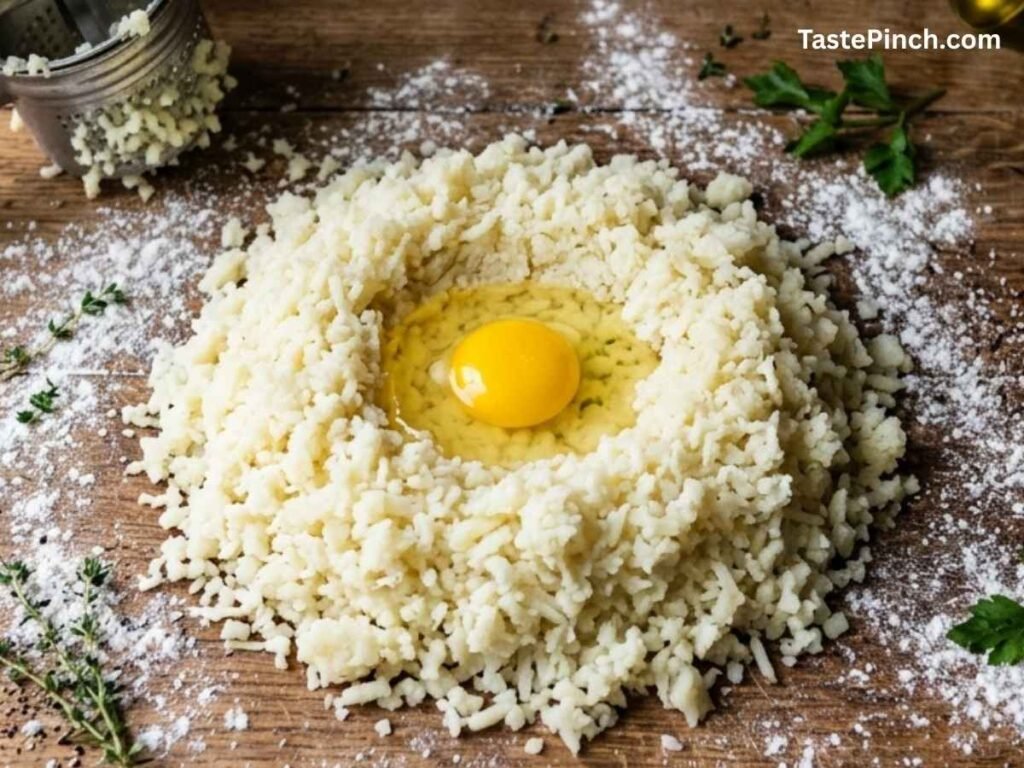
Once cooled enough to handle, peel the potatoes and push the flesh through a potato ricer onto your counter. Make a well in the center of the fluffy potato mound, add your egg yolk and salt, and gradually sprinkle your gluten-free flour over the top. Gently fold it together using a bench scraper until a shaggy dough forms. Treat the dough like a delicate pastry; press it together just until combined.
The brilliant “Test-Dumpling” check
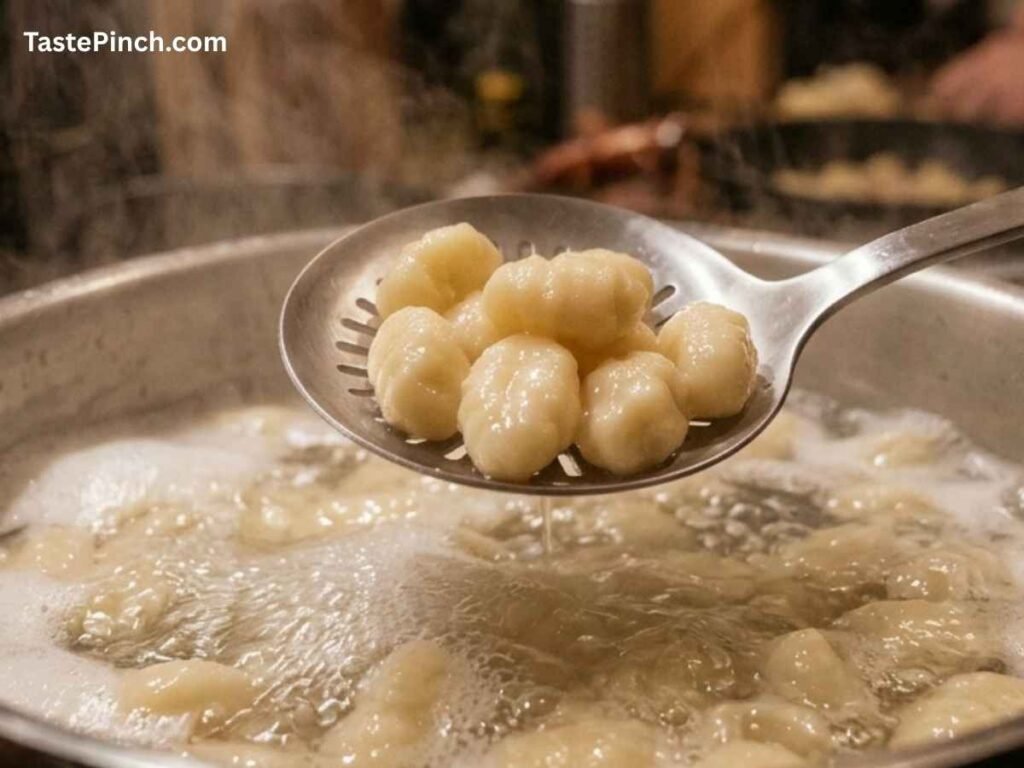
Before shaping the entire batch, take one small, bite-sized piece of dough and drop it into salted, simmering water. If it holds together and floats, your dough is perfect. If it breaks apart, your dough has too much moisture and needs another tablespoon of flour. This simple 2-minute check is the ultimate safeguard—it catches a problem while there’s still time to fix it, saving your entire dinner.
The Best Gluten Free Gnocchi Recipe
Shaping the gnocchi
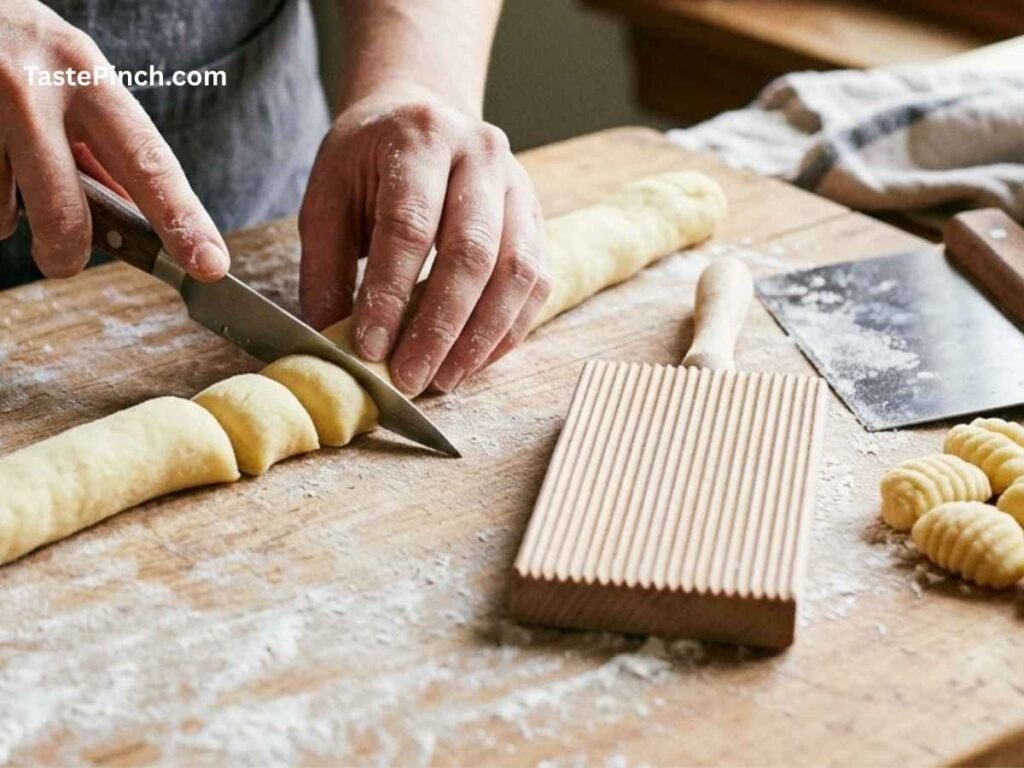
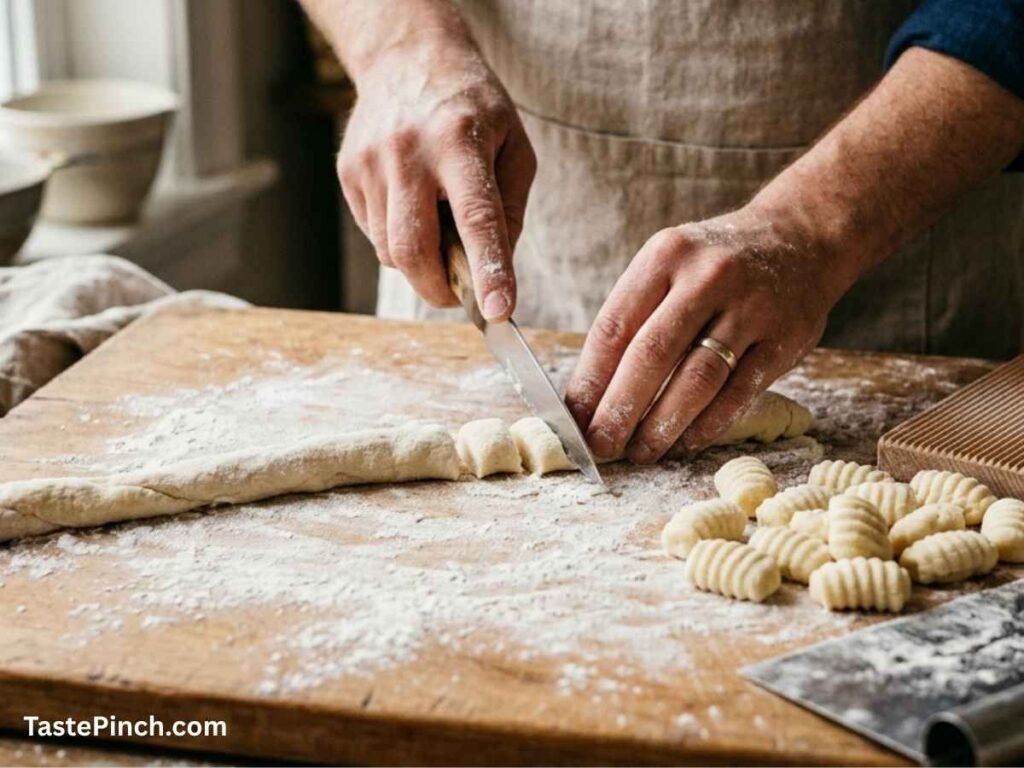
Cut the dough into four equal sections. Gently roll each section out into long ropes about half an inch thick. Using your bench scraper, cut the ropes into bite-sized, one-inch pieces. For that classic look, you can gently roll each piece over the tines of a fork or a wooden gnocchi board to create ridges. Those ridges aren’t just decorative—they create surface area that holds your sauce.
Cross-Contamination Warnings for Celiac Disease
If you have celiac disease (not just a mild gluten sensitivity), making gluten-free pasta at home requires strict kitchen hygiene.
If your regular pasta colander has ever touched wheat pasta, it may harbor gluten in its crevices. Use a dedicated gluten-free strainer or a slotted spoon to remove gnocchi from the water. The same applies to your cutting board and rolling surface. Furthermore, when dusting your counter, use your GF flour blend exclusively—even a small puff of all-purpose wheat flour from a shared canister can contaminate your entire batch.
Troubleshooting Gummy or Mushy Gluten Free Gnocchi
The mistake almost everyone makes is over-kneading. Unlike traditional bread, kneading gluten-free potato dough activates the starches too aggressively, turning the mixture into a gluey paste.
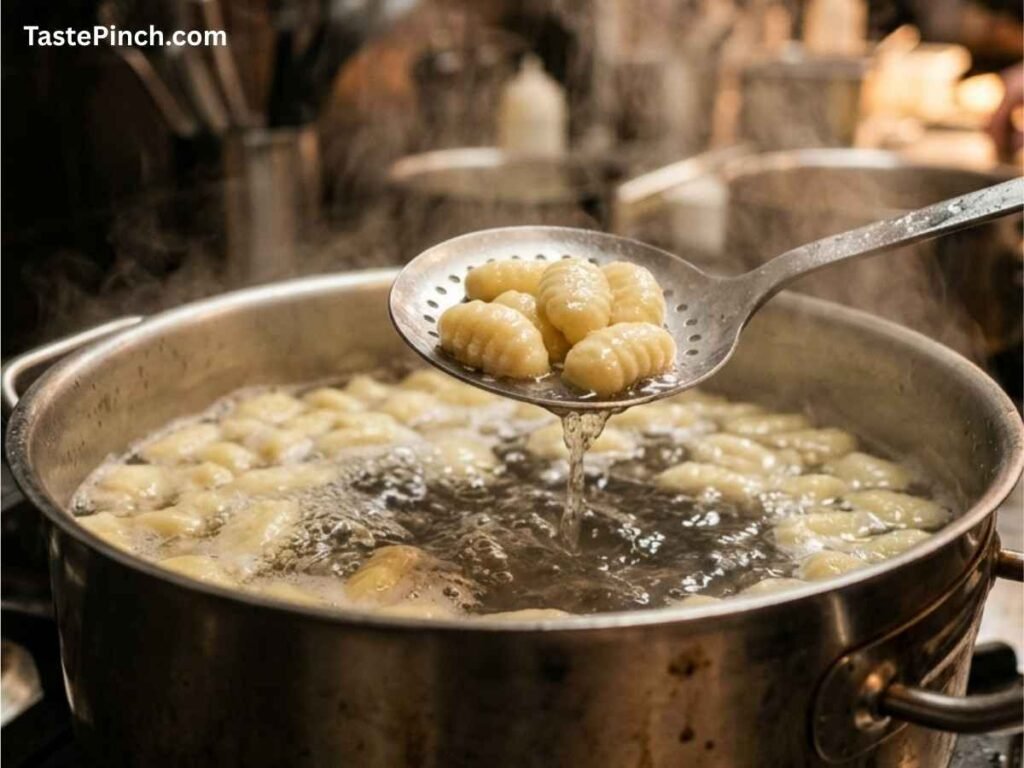
If your gnocchi still turns out mushy, your cooking water might not have been at a rolling boil, or you overcrowded the pot. Overcrowding causes the water temperature to drop too dramatically, stressing the dumplings while they’re still soft. Drop them into salted boiling water in small batches. The moment they come floating to the top, give them exactly 30 seconds more, then immediately remove them with a slotted spoon.
Dietary Adjustments: Egg-free, Vegan, and FODMAP options
Because we baked the potatoes to minimize moisture, this dough can hold together without the egg yolk binder. If you skip the egg for a vegan option, lean into a flour blend that contains chickpea flour, as its higher protein content provides extra binding strength.
For those on FODMAP or chickpea-sensitive diets, buckwheat flour can work as a partial substitute to stabilize an egg-free dough, though the texture will be slightly heavier and more earthy in flavor.
Storage instructions
Gluten-free gnocchi is genuinely freezer-friendly. To freeze for later, arrange the uncooked gnocchi in a single layer on a parchment paper-lined baking sheet. Freeze until solid (about two hours), then transfer them to a freezer-safe bag. When you’re ready to eat, do not thaw them. Drop them straight from the freezer into boiling water, adding about an extra minute to the cook time.
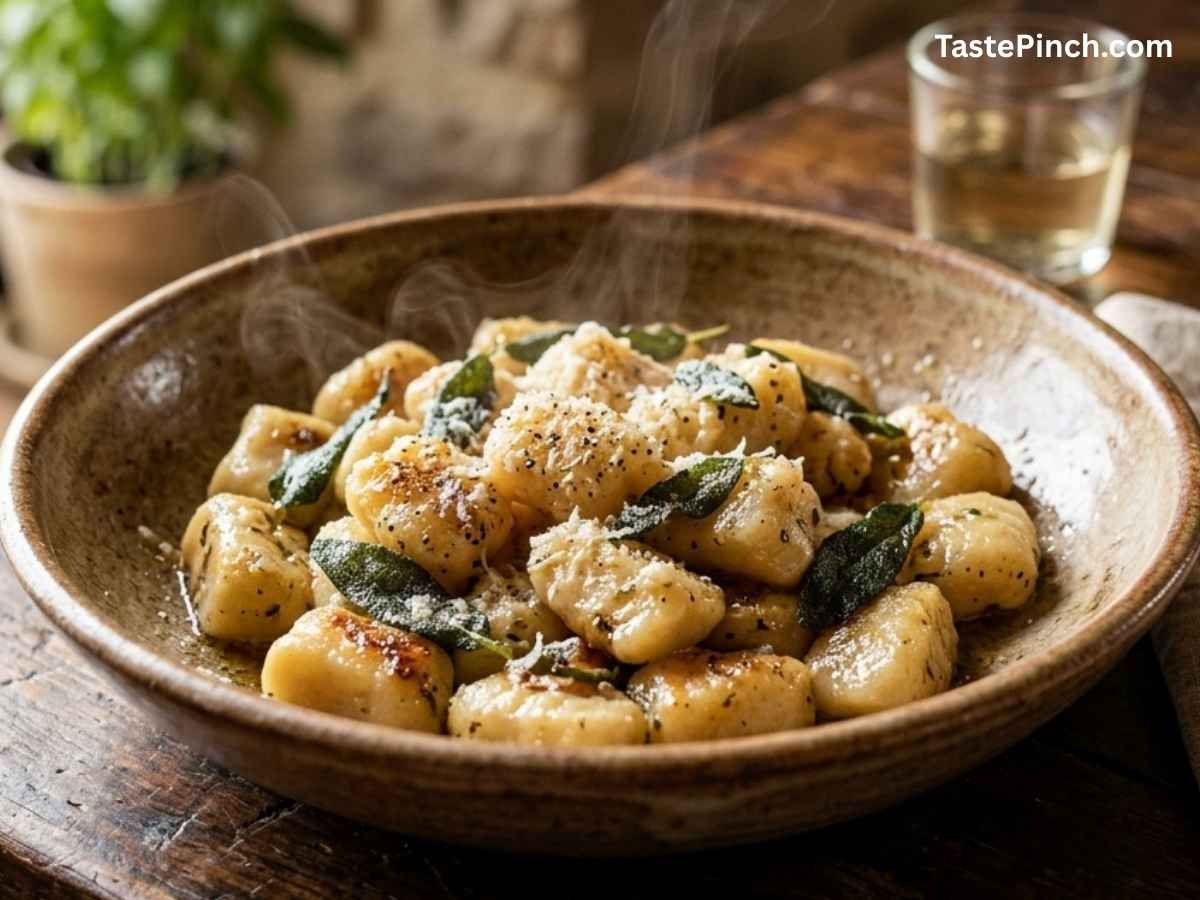
Making a gluten free gnocchi recipe doesn’t have to end in frustration. Once I embraced the potato ricer, allowed my baked russets to cool, and utilized the test-dumpling method, my pasta game transformed entirely. Toss these pillowy dumplings in brown butter sage or a rich tomato sauce, and I promise, nobody at your table will even realize they’re eating gluten-free.
You can try an other recipe of Bariatric Gelatin Recipe for Weight Loss.
FAQ
What flour is best for gluten-free gnocchi?
A high-quality 1-to-1 gluten-free flour blend containing xanthan gum is ideal (like Bob’s Red Mill or Better Batter). The xanthan gum mimics traditional gluten, allowing you to roll the dough into ropes without it crumbling. Avoid single-ingredient flours like plain almond or coconut flour.
Why is my gluten-free gnocchi mushy?
Mushy gnocchi happens for three main reasons: boiling the potatoes instead of baking them (introducing too much water), working with hot potatoes before the starches can cool and set, or over-kneading the dough into a sticky paste.
How do you know when gnocchi is done cooking?
Gluten-free gnocchi are done when they float to the surface of the boiling water. This floating happens because gelatinizing starch reduces the dumpling’s density below that of water. Remove them promptly; leaving them in the pot too long makes them waterlogged.
Can you freeze gluten-free gnocchi dough?
You shouldn’t freeze the raw dough as a solid ball. Instead, completely shape and cut the gnocchi, freeze them in a single layer on a baking sheet to prevent sticking, and then store them in a freezer bag. Boil them directly from frozen.

Homemade Gluten-Free Gnocchi
Ingredients
Equipment
Method
- Step 1: Bake the Potatoes
- Preheat your oven to 400°F (200°C). Pierce the Russet potatoes several times with a fork to allow steam to escape. Bake them directly on the middle oven rack for 45 to 60 minutes, or until completely tender when pierced with a knife.
- Step 2: Cool and Rice
- Remove the potatoes from the oven and let them cool for 15-20 minutes. This cooling step allows the starch to set. Peel the potatoes and push the flesh through a potato ricer directly onto a clean work surface.
- Step 3: Form the Dough
- Make a small well in the center of the riced potatoes. Add the egg yolk and sea salt. Gradually sprinkle the gluten-free flour over the top. Using a bench scraper, gently fold and press the mixture together just until a shaggy dough forms. Do not over-knead, or the dough will become gummy.
- Step 4: The Test-Dumpling Check (Crucial)
- Pinch off a small, bite-sized piece of dough and drop it into a small pot of salted, simmering water. If it holds together and floats, the dough is ready. If it falls apart, gently fold 1 to 2 more tablespoons of GF flour into your main dough.
- Step 5: Shape and Cut
- Divide the dough into 4 equal sections. Lightly dust your surface with GF flour. Gently roll each section into a rope about 1/2-inch thick. Use the bench scraper to cut the ropes into 1-inch pieces.
- Step 6: Add Ridges
- Gently roll each cut piece over the tines of a dinner fork or a wooden gnocchi board to create ridges for the sauce to cling to.
- Step 7: Boil the Gnocchi
- Bring a large pot of generously salted water to a rolling boil. Drop the gnocchi into the water in small batches to avoid dropping the temperature. Once they float to the surface, give them exactly 30 seconds more, then immediately remove them with a slotted spoon.
- Step 8: Serve or Pan-Fry
- Toss immediately with your favorite sauce (like brown butter and sage or marinara), or pan-fry them in a little butter for 2 minutes to get a crispy golden exterior.
Notes
Nutrition
Serving Size: 1 bowl Calories: 310 Carbohydrates: 65g Protein: 6g Fat: 2g Sodium: 600mg Fiber: 5gDana Whitfield is a recipe developer and food writer with a love for bold flavors and creative drinks. From restaurant copycat recipes to handcrafted cocktails like the Pistachio Martini and Blackberry Margarita, Dana believes great food should be approachable — no culinary school required. She’s spent years testing and perfecting recipes across cuisines, specialty diets, and everything in between. TastePinch is her corner of the internet where every pinch of flavor tells a story.